Roofing Questions, Answered
The questions we hear most, from what a new roof costs to snow load, ice dams, and insurance claims. If yours isn’t here, text us and a roofer answers.
Cost and estimates
How to get started, what the free inspection gets you, and what goes into the price.
Text my rooferCall or text (907) 701-2233, or book online. Someone who works on roofs gets back to you, usually the same day, and sets a time for the free inspection. A few photos of the roof and any stains inside help us see what we’re walking into. Contact us →
Yes. A roofer goes up on the roof and into the attic, and you pay nothing for the visit, the photos, or the written price. There’s no pressure after it. If the roof needs only a small fix, or nothing at all, the report says that too. Roof inspections →
Within 24 hours of the inspection, you get a photo report and a written price. The photos show each problem and where it is. The price lists each part of the job on its own line, says whether it’s a repair, a tear-off, or a re-roof and why, and gives the timeline. Our process →
It depends on square footage, pitch, how many layers come off, and whether the decking underneath is sound. Metal costs more up front than asphalt and lasts longer. We won’t guess at a number over the phone. The inspection tells us what’s actually up there, and the written estimate breaks it out line by line. Roof replacement cost →
Ask about financing on full replacements. If you’d rather spread out the cost of a new roof, bring it up when we go over your written estimate. Either way, the inspection and the written price cost you nothing. Financing →
Roof replacement
How long a new roof takes, what’s included, and when it can go over the old one.
Text my rooferMost homes take two to four days, depending on size, pitch, tear-off or re-roof, and how much decking needs replacing. When the job starts depends on the season, since full replacements are scheduled around temperature and snow. The timeline is in your written estimate before we start. Our process →
Over one sound layer, often yes, if the decking checks out from the attic. That saves the tear-off labor and the landfill trip, and metal over asphalt is the common version. Code generally allows one roof-over, so two layers already, a failing roof, or decking that needs work means a tear-off. The inspection tells us which, and the reason goes in writing. Roof replacement →
No. Decking is included in the replacement price, so there’s no per-sheet charge on the final invoice. We check it on every replacement, replace any rotten or delaminated sheets, and photograph every one, so you can see what was under there.
It depends on where you live. In Anchorage’s Building Safety Service Area, yes, on a roof job worth more than $10,000, tear-off or re-roof, and on any structural work like replacing decking. Inside Palmer city limits, yes, when all the old roofing comes off or new sheathing goes on. In Eagle River and Girdwood it’s optional, and Wasilla, Big Lake, and the rest of the borough outside the cities don’t require a building permit. Service areas →
Yes, with any full roof replacement. You get seamless aluminum gutters, sized for the roof, that go up with the new roof so the drip edge and flashing tie into them. There’s no separate gutter bill. Ask for the details when you book. Gutters →
Metal roofing
Stone-coated steel and standing seam, and how each one handles an Alaska winter.
Text my rooferFor a house you plan to keep, usually yes. Metal lasts somewhere past forty years, usually outlasts two asphalt roofs, and needs fewer repairs along the way. If you’re selling soon or the budget is tight, architectural asphalt can be the better spend, and we’ll tell you so. Metal roofing →
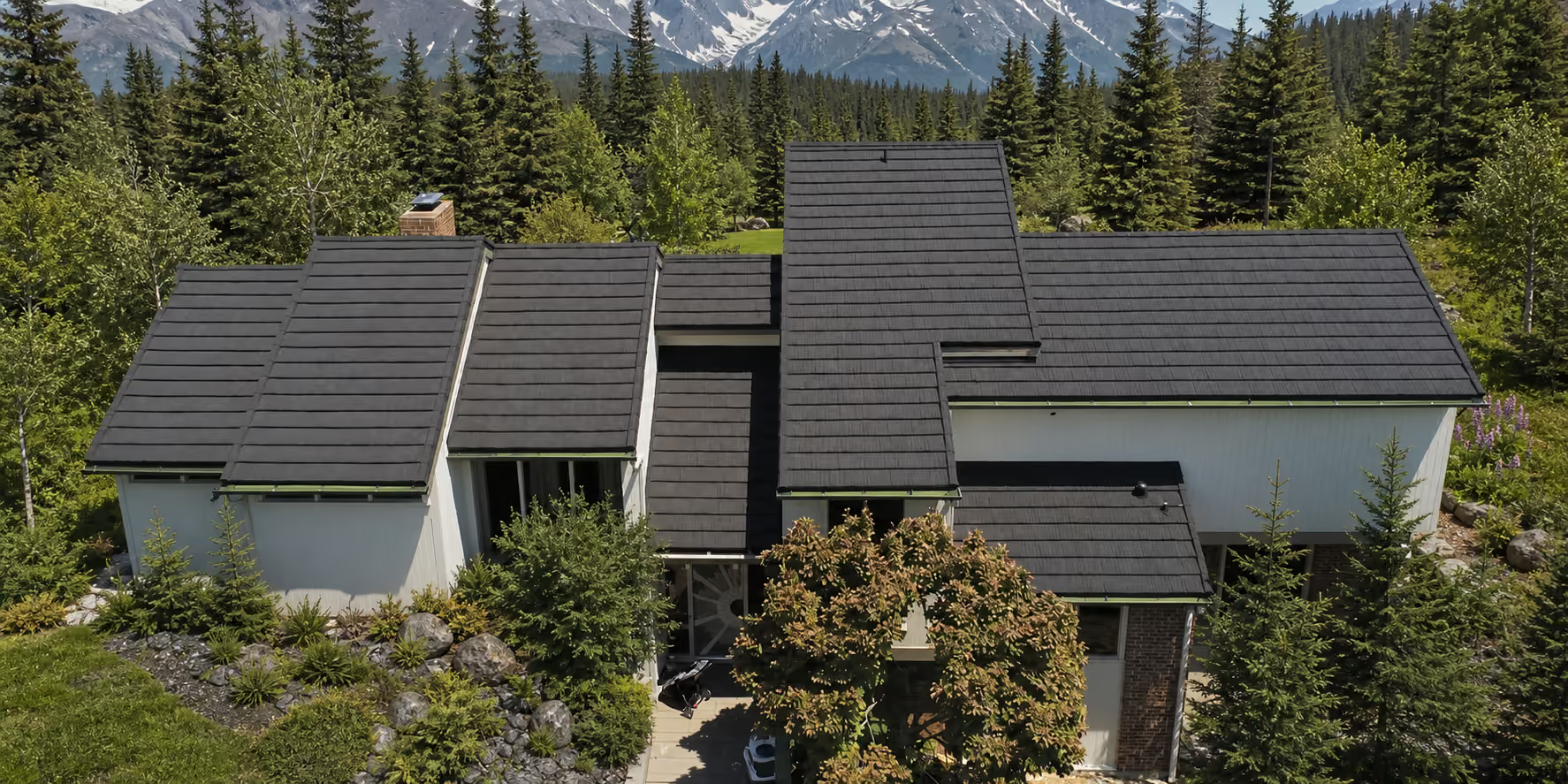
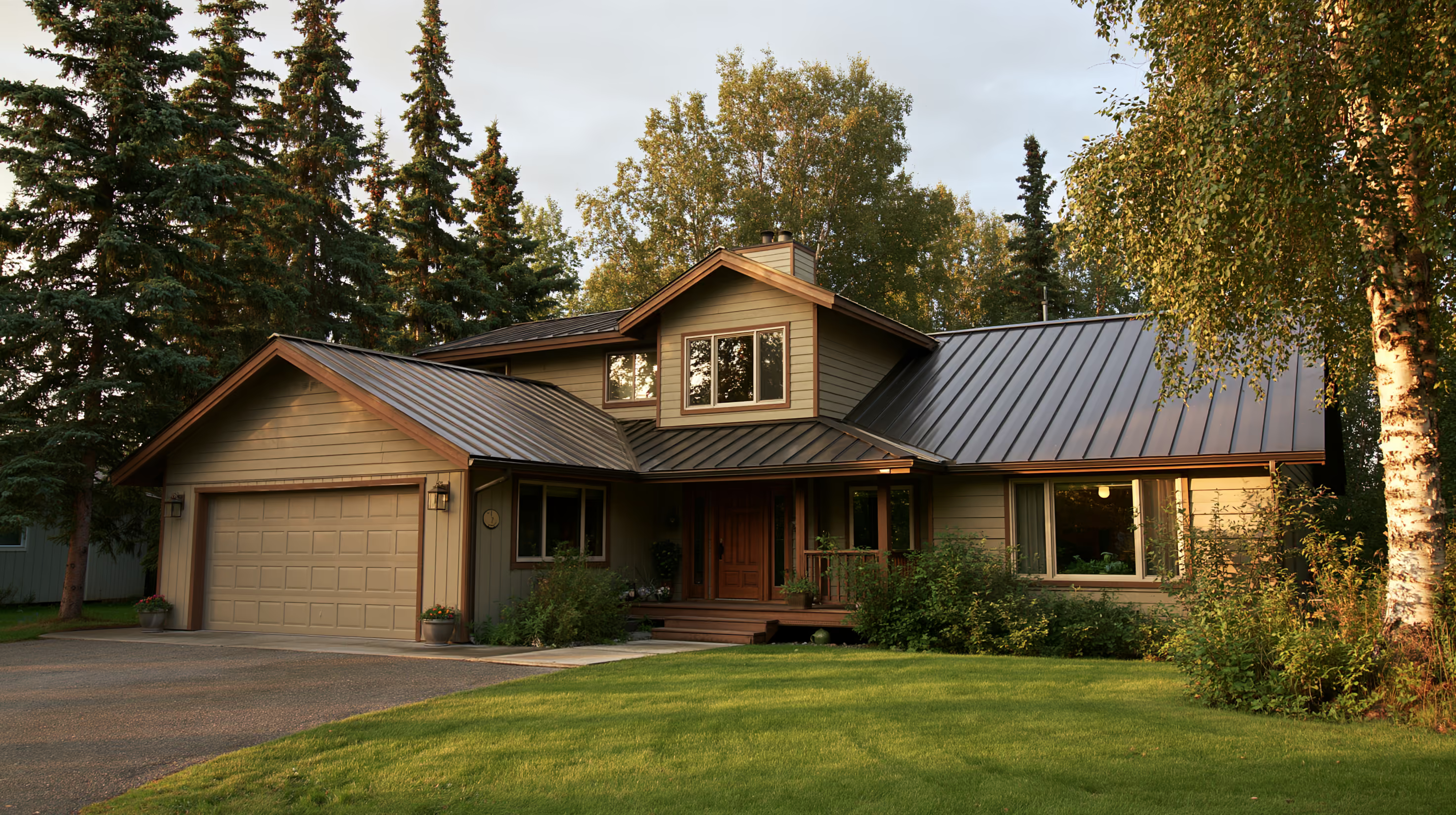
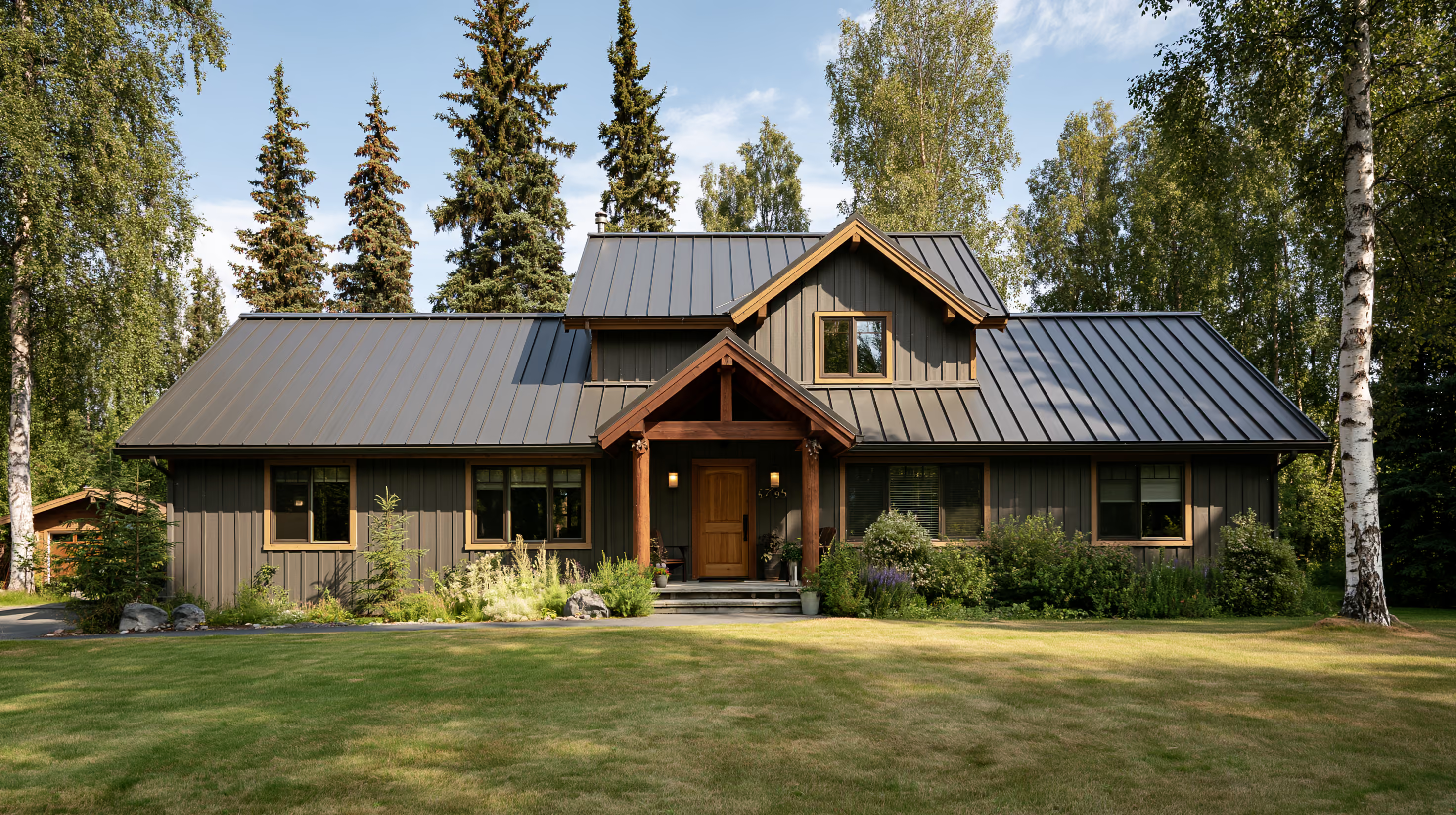
Neither wins on every house. Standing seam has clean lines and hidden fasteners, but snow slides off it fastest, so it gets snow guards wherever a slide would land. Stone-coated steel looks like shingles or shake, holds snow in place much like a shingle roof, and usually lets go in smaller slides, but still gets guards over doors, decks, and walkways. We’ll tell you which one we’d put on yours and why. Metal shingles vs. standing seam →
If anything under the eaves could be hurt by a slide, yes. Standing seam lets go of snow all at once, so guards go over entries, walkways, decks, driveways, gutters, and meters. Stone-coated steel holds snow in place much like a shingle roof and usually lets go in smaller slides, so it needs fewer guards, but it still gets them over doors, decks, and walkways. Snow guards →
Stone-coated steel is about as quiet as a shingle roof. It goes down over a solid deck and underlayment, so rain doesn’t drum on it the way it does on bare panels over an open shop. On most houses the attic sits between the roof and your ceiling, too. Metal shingles →
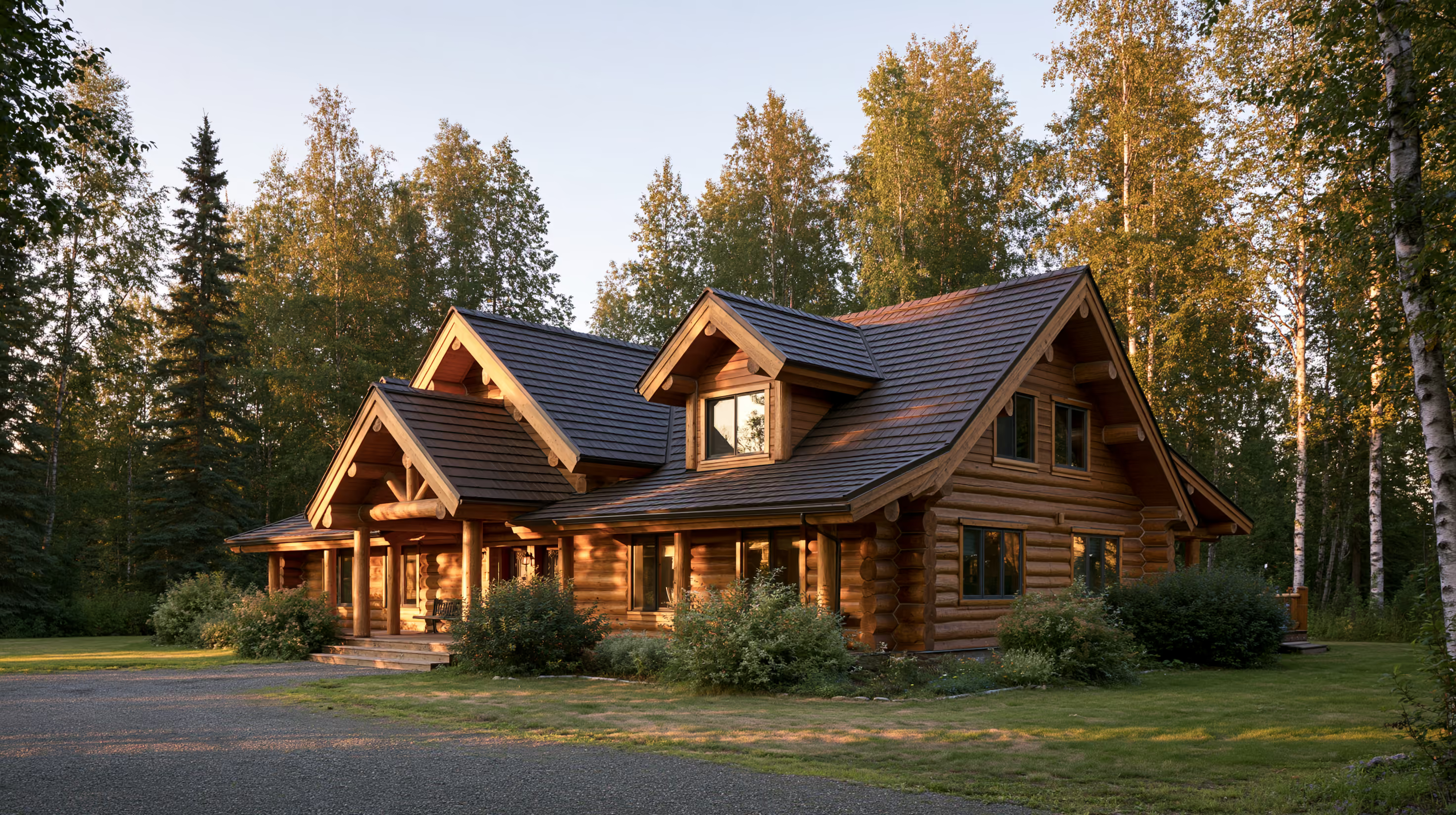
Yes. Stone-coated steel comes in a shake profile with deep shadow lines and wood-tone colors, so it reads like shakes from the street with steel underneath. It can be Class A for fire with the right underlayment, and untreated cedar carries no fire rating. It suits log and timber homes and houses coming off a worn-out cedar roof. Metal shake →
Repairs and emergencies
What to do when water is coming in, and how fast a repair happens.
Text my rooferText us photos first and we’ll tell you whether it can wait. Active leaks with water inside the house go to the front of the line. Most repairs are inspected within a couple of days and done the same week. Roof repair →
Catch the water, move what you can, and if you can reach the breaker panel without standing in water, shut off power to any fixture near the leak. Then text photos to (907) 701-2233, the same number we use for emergencies. We’re open Monday to Saturday, 7am to 7pm, and water inside the house puts you at the top of the list. Emergency roof repair →
Yes. The snow around the damage comes off first, then we track the water to where it’s getting in. Some materials won’t seal below freezing, so a winter repair is sometimes a proper temporary fix, with the permanent repair in the first warm stretch. We say up front whether it’s temporary or permanent, and what’s left to do.
Look at the age and the pattern. A roof with years left and one problem gets repaired. An older roof with problems in several places usually gets replaced, because patching it means paying twice. The inspection report says which, in writing, with the reason. Roof inspections →
Start from the ground: missing shingles, pieces in the yard, bent trim, or a ragged ridge line. What you can’t see from there is creased shingles that lost their seal, and those can tear off or leak later. A free inspection, with photos from up top and from the attic, is how you know for sure. Storm damage repair →
There’s no single depth, because weight is what counts. Ten to twelve inches of fresh snow is about 5 pounds per square foot, and a few inches of old, packed snow or an inch of ice weighs about the same. Sticking doors, new drywall cracks, and a sagging ceiling are warning signs: get everyone out of the building, then call. Snow load and ice dams →
From the ground, with a roof rake, yes. Pulling snow off the bottom few feet helps with ice dams and takes some weight off. Keep the rake away from the power line to the house, don’t climb onto a snowy roof, and don’t stand under the eaves of a metal roof while you rake. Anything the rake can’t reach is a job for us.
Yes. Roof snow removal is our winter service, for homes and flat commercial roofs in every Southcentral town we serve. We clear with fall protection and plastic tools, and leave a thin layer of snow to protect the roofing. After a big storm everyone calls at once, so text us a photo and the address for a straight answer on timing. Roof snow removal →
Heat escaping into the attic melts snow on the upper roof, and the water refreezes at the cold eaves. A new roof, metal included, won’t fix that by itself. Air sealing and insulation do most of the work, ventilation cuts down on ice dams, and ice and water membrane at the eaves is the backstop. That’s why our inspection goes into the attic. Ice dam prevention →
No. A cold attic is the goal. Closed vents trap warm, moist air up there, which builds frost on the sheathing and melts the snow that becomes ice dams. Keeping the house warm is the job of the insulation and a sealed ceiling. Leave the vents open all year. Attic ventilation →
Warm, moist house air reaching a cold attic and freezing on the underside of the deck. The usual sources are bath fans venting into the attic and air leaks at lights, the hatch, and plumbing and chimney chases. On a warm day it melts and drips, which is why it gets mistaken for a leak. Roof care →
Insurance claims
What we do on a claim, and what stays between you and your insurer.
Text my rooferWe help with the roof side. We photograph the damage, write a scope that matches it, and meet your adjuster on site. You file the claim and it stays yours, and your insurer decides what’s covered. We don’t negotiate coverage. That’s a job for an attorney. Insurance claims →
Sometimes. If a windstorm, a falling tree, or snow load damaged it badly enough, often yes. If the roof is simply old, usually not. Your adjuster decides from the policy and the damage. We document what’s there either way and tell you straight whether it looks like a claim.
If you can see damage, call your insurer right away, since most policies require prompt notice. If you aren’t sure, a free inspection tells you, with photos and a written scope. Either way, photograph everything before cleanup and keep receipts for any temporary fix. Filing a storm damage claim →
Often, when an ice dam leak causes sudden damage inside: stained ceilings, wet walls and insulation. The dam itself, and wear or age on the roof, usually aren’t covered. Your policy and your adjuster decide. Call your agent, and we’ll document the roof side.
No. The deductible is your share of the claim, and you pay it. Be wary of any contractor who offers to cover it, whether it’s called a discount, a rebate, or something else. Your written price shows what the work costs, and your insurer’s paperwork shows what’s yours.
Commercial roofs
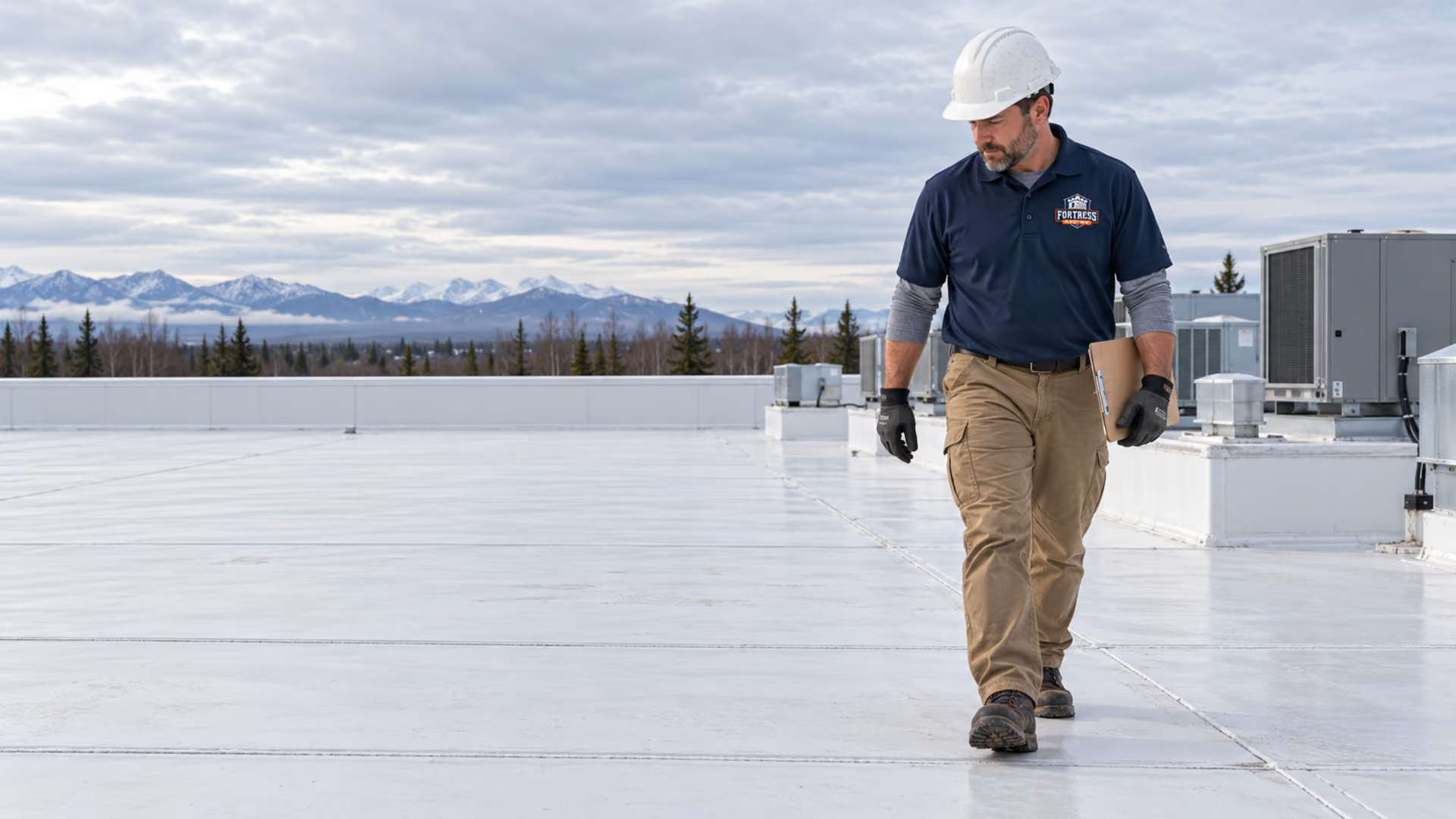
Shops, warehouses, hangars, and offices get the same process, starting with a free roof assessment.
Text my rooferFour systems: TPO, EPDM, and modified bitumen on low-slope roofs, and standing seam or exposed-fastener metal panels. They go on shops, hangars, warehouses, retail and office buildings, and flat sections on homes like garages and additions. We’ll tell you which one we’d use and why. Commercial roofing →
There’s no real number until someone has walked the roof. A small shop and a warehouse with wet insulation are different jobs. The free assessment gives you options with written budgets, line by line, so you can compare repair, maintenance, and replacement before you commit.
Yes. We assess, repair, and maintain roofs we didn’t put on. The free assessment is where we learn the roof: the system, how it drains, and what’s been patched. You get photos of all of it, which are useful whatever you decide next.
Yes. We plan the schedule around how the building is used: tenants, customer entrances, deliveries, hangar doors, and where material can sit. We agree on the sequence before we start, so your people know which areas are affected and when.
If it’s still there 48 hours after rain, yes. That’s ponding, and it means the slope or a drain isn’t doing its job. Up here a pond freezes, adds weight, and holds the next melt against the seams. A puddle that’s gone by the next day isn’t worth worrying about. Flat roofing →
Palmer. We work across Anchorage, Eagle River, Wasilla, Palmer, Big Lake, and Girdwood, and schedule planned jobs in Fairbanks. Outside those towns, call or text (907) 701-2233 and ask. If it’s too far for us, we’ll tell you. Service areas →
Yes, for planned work: roof replacements, metal roofs, and inspections, scheduled as trips. We don’t do emergency repairs or snow removal there. Fairbanks is about seven hours from us, and those calls need someone close by. Roofing in Fairbanks →
Yes. Fortress Roofing is licensed and insured in Alaska, license AK #260001. You can look it up on the State of Alaska Professional License Search, and it’s worth checking any roofer that way before you sign, especially one knocking on doors after a big wind. Checking a roofer’s license →
Monday to Saturday, 7am to 7pm. Call or text (907) 701-2233, or book online, and emergency calls go to the same number. Texting photos of the roof is the fastest way to a straight answer. Contact us →
Yes. Repairs, emergency calls, inspections, and roof snow removal happen all winter. Full replacements are scheduled around temperature and snow, because shingles need warmth to seal and a roof shouldn’t be open in a winter wind. If your job should wait, we’ll tell you straight, and a fall inspection can get you a spot in spring.
Our crew has twenty-five years on houses and buildings in Alaska and the Pacific Northwest. The Fortress name is new; the crew behind it is not. Metal is our specialty, both stone-coated steel and standing seam, and we install architectural asphalt too. About us →
Ask a roofer
Text a photo to (907) 701-2233 and a roofer will tell you what we see, or book a free inspection. You get a photo report and a written price within 24 hours of the inspection.