Standing Seam Metal Roofing in Anchorage & the Mat-Su Valley
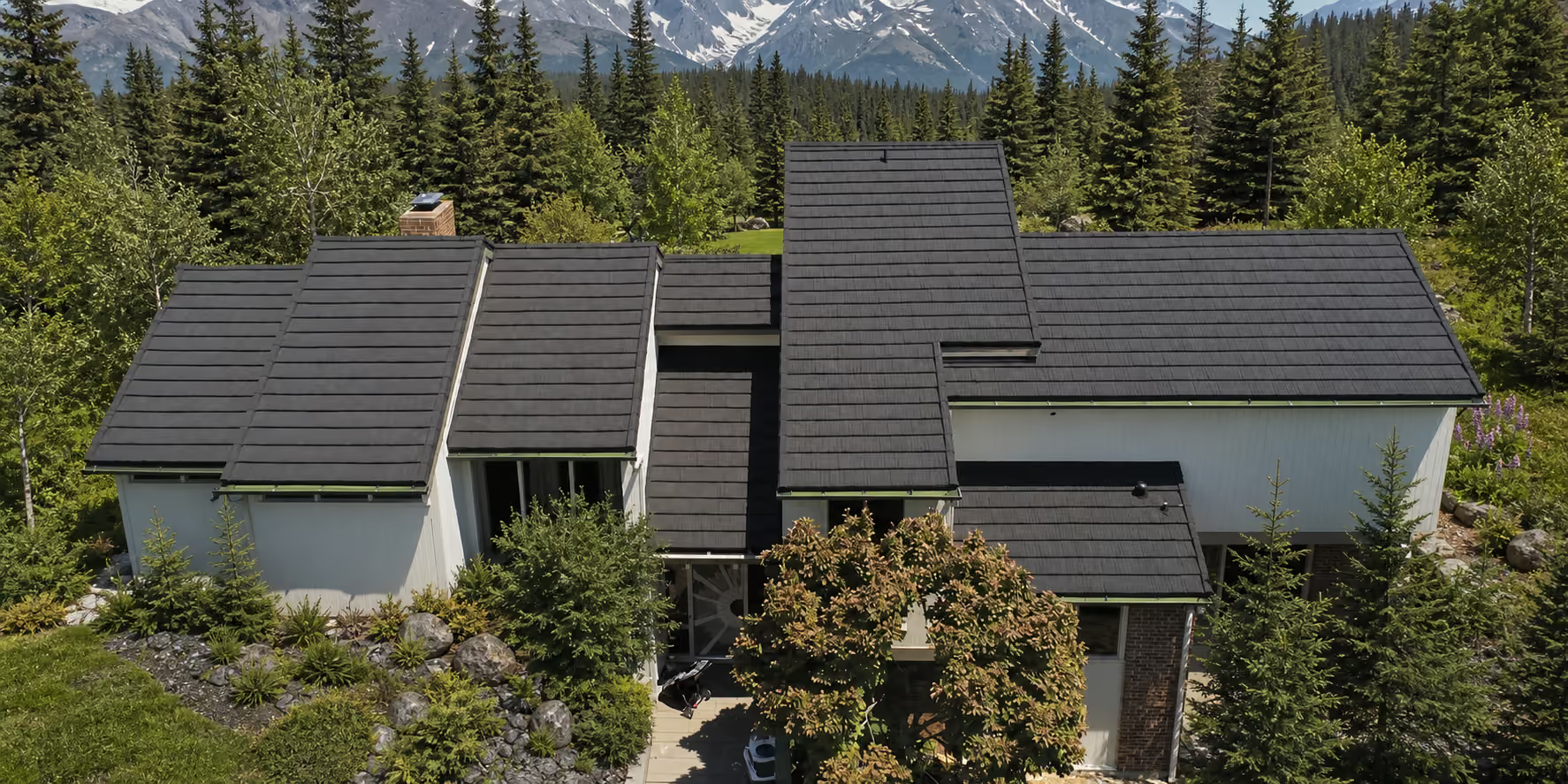
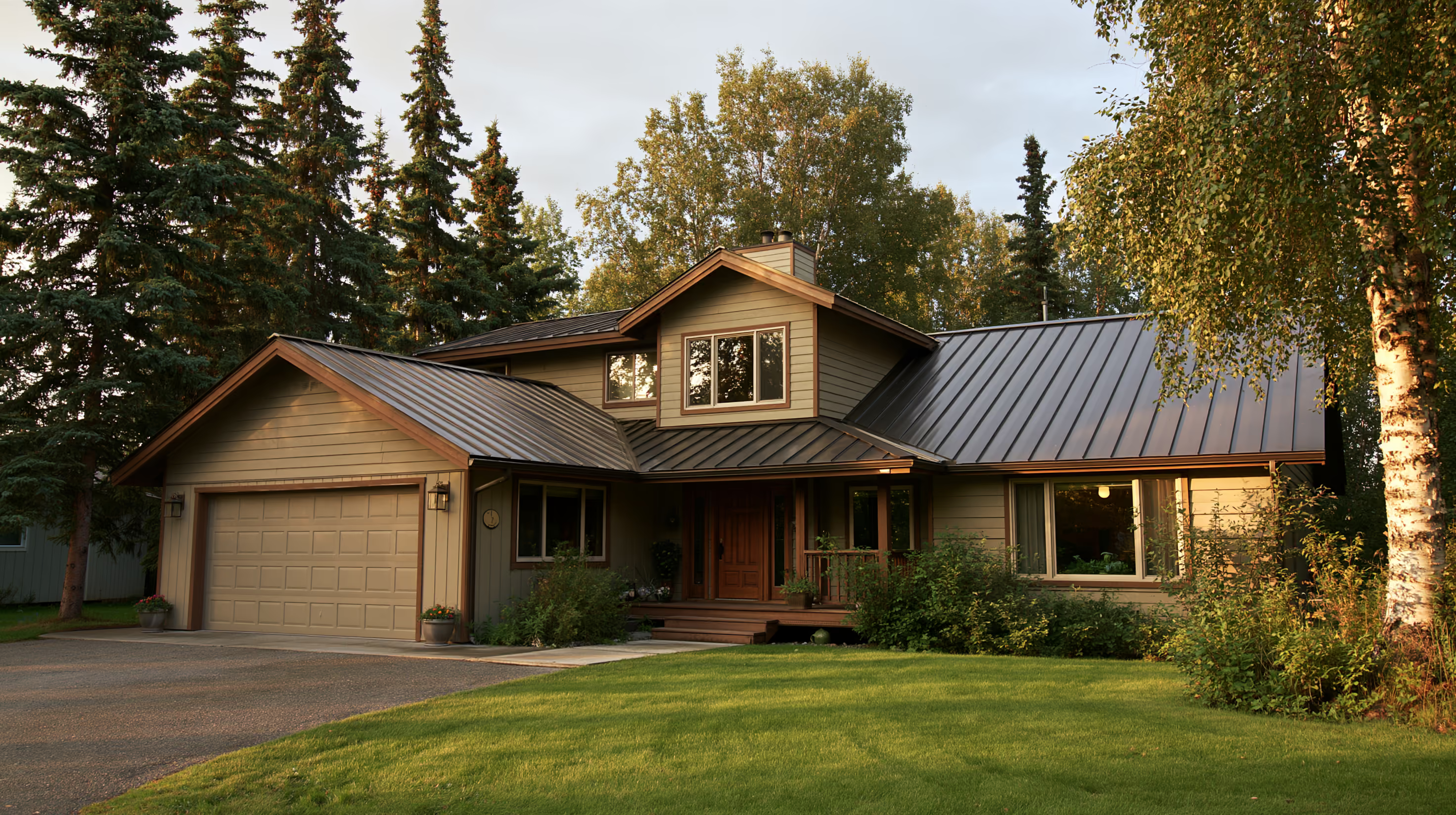
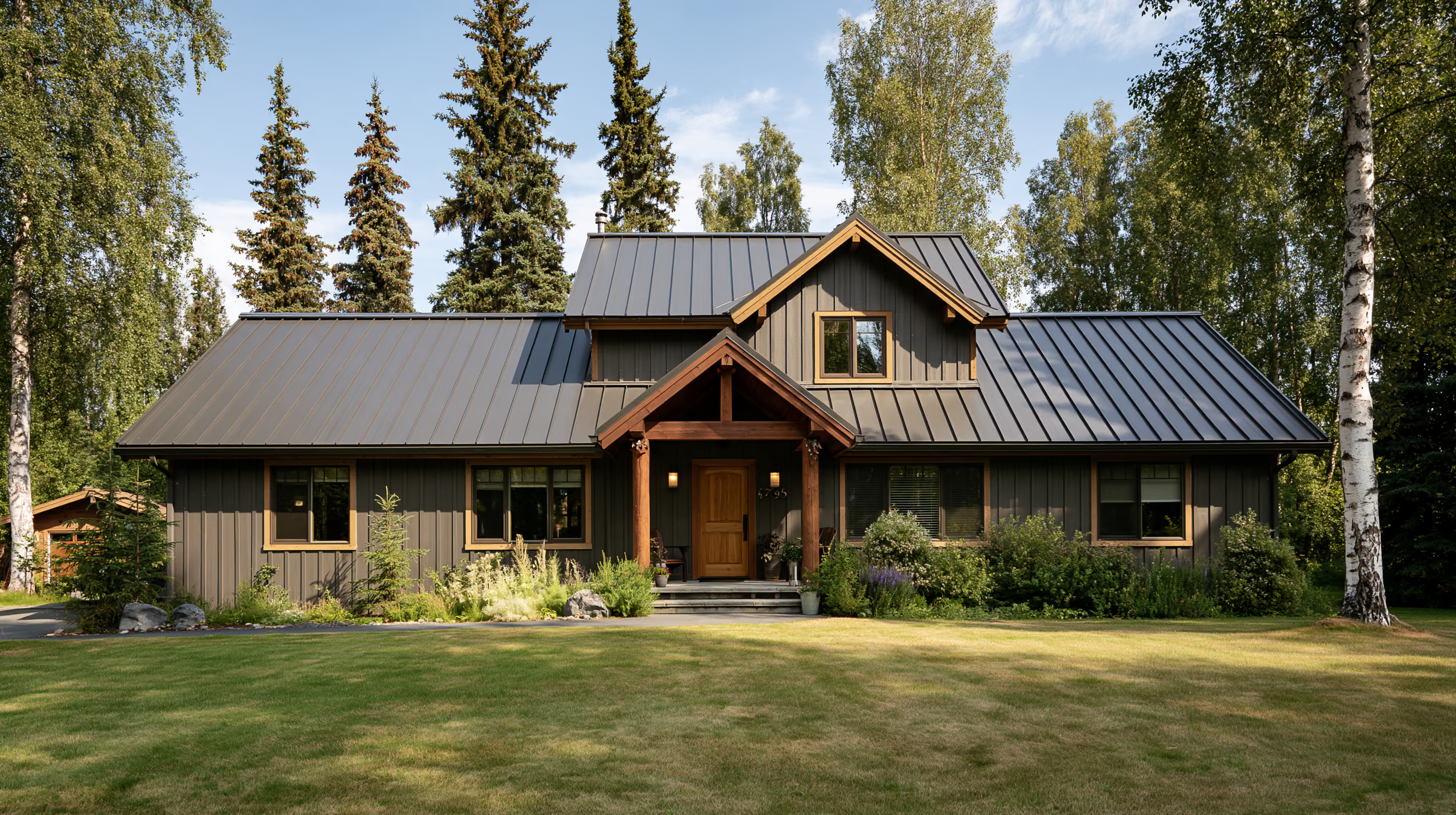
Painted steel panels from eave to ridge, with the fasteners hidden under the seams. Snow slides off it faster than anything else we install, so every roof gets a snow guard plan.
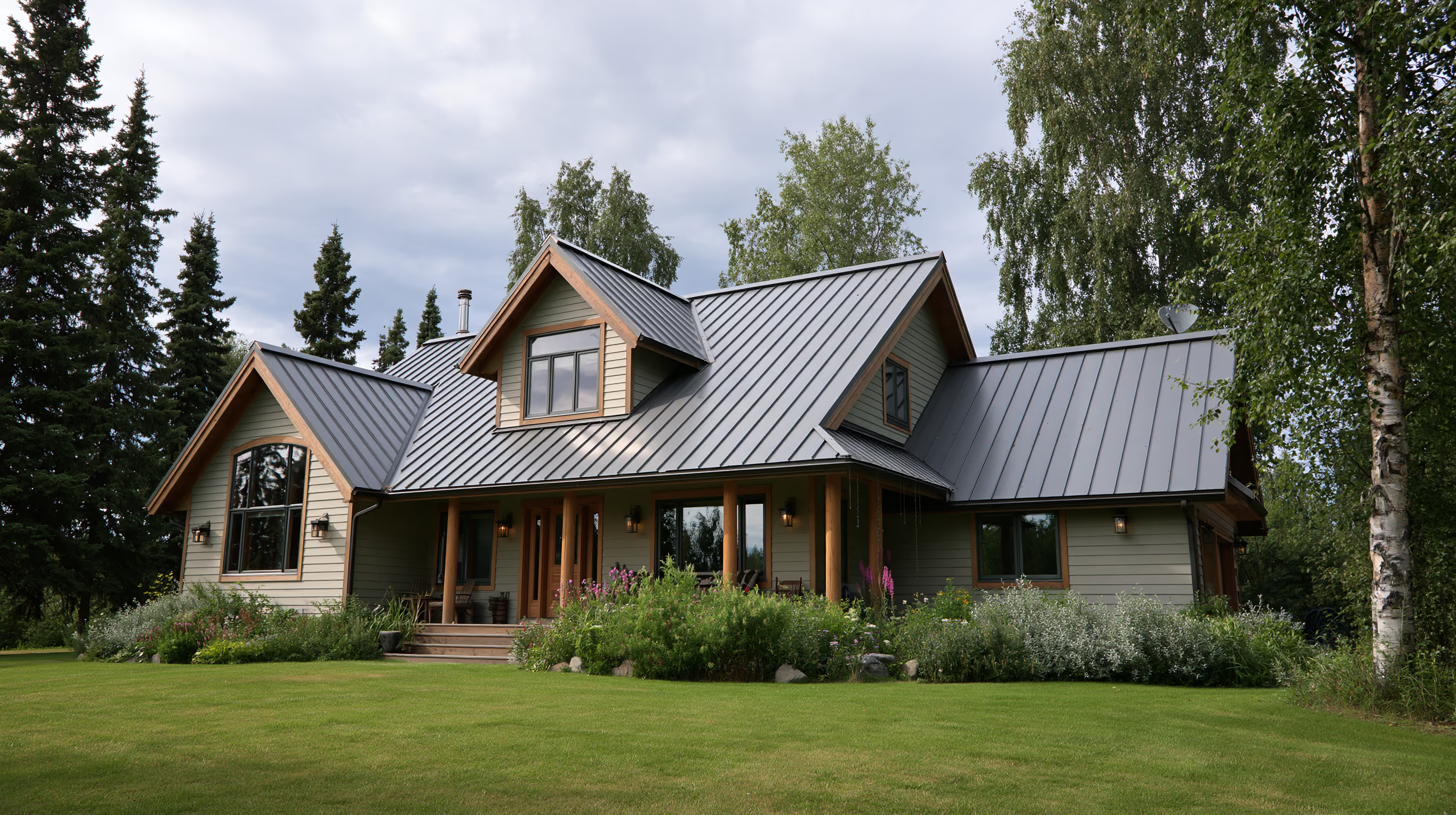
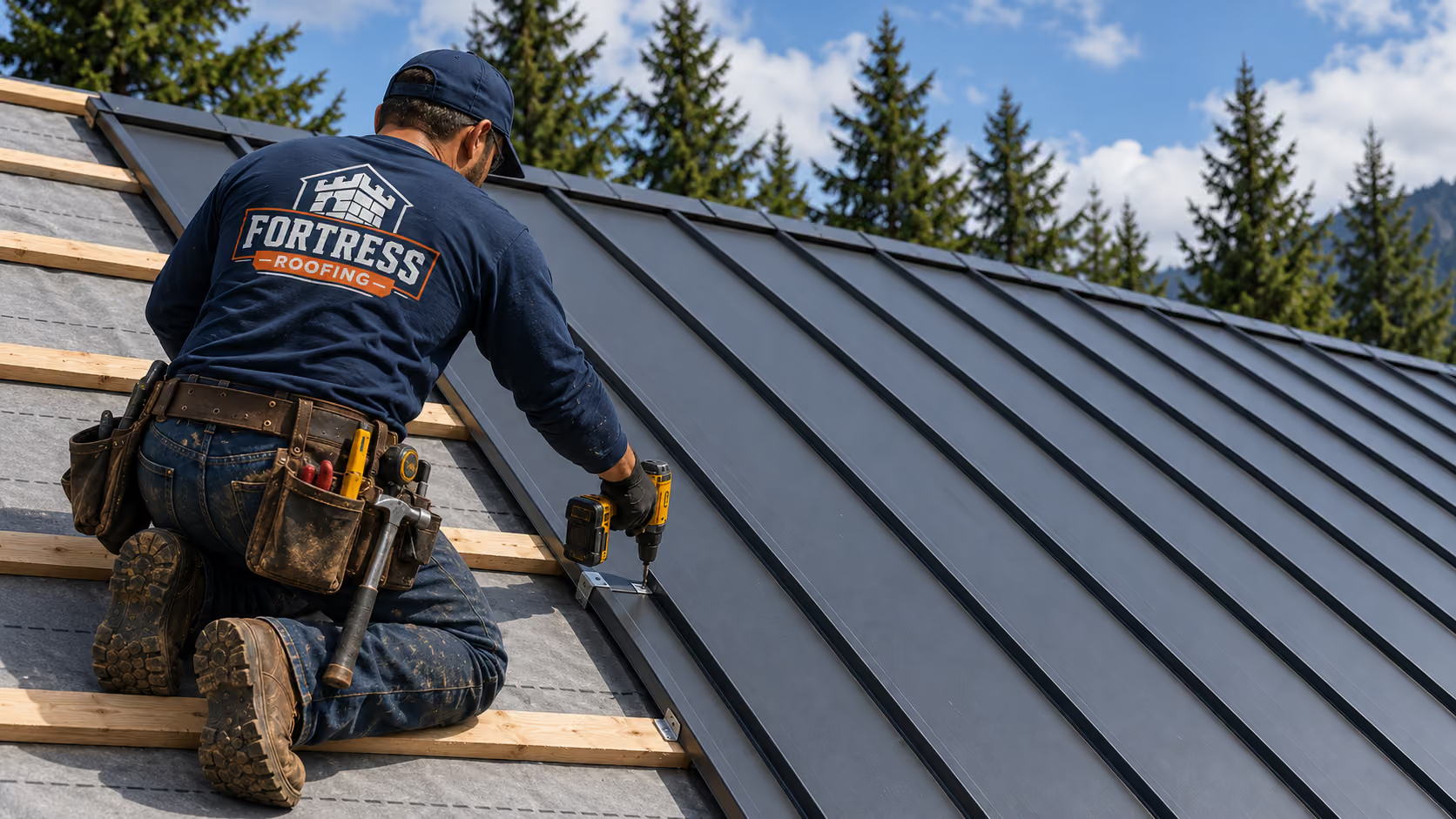
Standing seam is painted steel panels that run from eave to ridge, joined at raised seams, with the fasteners hidden underneath on clips. There are no exposed screws to back out. The tradeoffs: it costs more than asphalt, flat panel areas can show some waviness, and the smooth steel gives snow nothing to grip, so it slides off faster than any other roof we install. Every slide needs a plan for where it lands.
Standing seam pros and cons
The short version, good and bad. Metal roofing puts both of our metal systems side by side.
- Clean lines. Long, smooth panels in solid colors, eave to ridge.
- No exposed screws. Clips hold the panels and let them move with temperature, so there are no screws to back out through freeze and thaw.
- Lasts. Somewhere past forty years, usually longer than two asphalt roofs.
- Handles lower slopes. Mechanically seamed panels go where snap-lock panels can’t.
- Costs more than asphalt up front.
- Slides are real. A whole slope can let go at once, so snow guards are part of the plan, not an add-on.
- Oil canning. Flat areas of a panel can look wavy. It’s cosmetic, and it can be reduced.
Standing seam and snow in an Alaska winter
Snow slides off standing seam faster than off shingles or stone-coated steel, which holds snow in place much like a shingle roof. So on standing seam, the plan is about where the snow lands. Standing seam also won’t fix the heat loss behind an ice dam on its own. Ventilation and air sealing do that.
A slide off a standing seam roof can bury an entry, crush a deck, damage a car, or tear the gutters off. Guards over those spots are laid out from the pitch, the panel length, and the snow load. Snow guards →
Snap-lock vs mechanically seamed panels
Snap-lock
The seams snap together as the panels go down. It’s generally for roofs 3:12 and steeper, meaning three inches of rise for every foot of run.
Mechanically seamed
The seams are closed with a seaming tool after the panels are set. It handles lower slopes and heavy snow and wind, which makes it the call on a low-pitch roof or a house that takes the Matanuska wind.
Your roof’s slope and exposure decide it, and the estimate says which one we’re using and why.
Considering standing seam?
Text a photo of the house and we’ll tell you what we see.
24 vs 26 gauge, and PVDF vs SMP paint
Gauge is steel thickness, and the smaller number is thicker: 24 gauge is heavier than 26. Heavier steel shows less oil canning.
PVDF paint finishes resist fading and chalking better than SMP (silicone-modified polyester). Gauge and finish both change the price, and the estimate spells out which you’re getting. Colors and finishes →
What is oil canning on a metal roof?
Oil canning is a cosmetic waviness in the flat part of a panel. The roof doesn’t leak because of it. Some is possible on any standing seam roof, and we’d rather tell you now than have you spot it later. Several things reduce it, including stiffening ribs or striations in the panel, a heavier gauge, and a flat deck underneath. That last one is part of why we look hard at the decking before a single panel goes down.
Is standing seam loud? What about condensation?
Not much, on a house. The drumming people remember is bare panels on open framing in a shop. We install standing seam over a solid deck and underlayment, with the attic below it.
Condensation works the same way. It’s a real problem under bare steel in an open-framed building, where warm, moist air meets cold panels on a winter morning. On a house, the underlayment separates the steel from the deck and a vented attic carries moisture out. A shop that drips on cold mornings is a different fix. Commercial metal roofing →
Standing seam vs exposed-fastener metal on a house
Exposed-fastener panels are the ribbed sheets screwed through the face, the kind on a lot of shops and pole barns. They cost less up front. The catch is the screws: thermal movement backs them out, the washers dry out, and every screw is a hole that needs looking after. On a house you plan to keep, we’d choose standing seam over exposed-fastener panels. On a shop or a hangar, exposed-fastener panels can be the right call, and we install both.
We install standing seam in Anchorage from South Anchorage to Muldoon, in Eagle River, and across the Valley in Palmer, Wasilla, and out to Big Lake.
What a standing seam roof costs
More than asphalt up front. Compared with metal shingles, it depends on the roof, and we’ll tell you which we’d put on yours. The drivers: size and pitch; valleys, dormers, pipes, and chimneys, which all take trim and flashing; snap-lock or mechanically seamed; gauge and paint; tear-off or re-roof over one sound layer; snow guards; and access. Decking is included. Roof replacement explains the tear-off and re-roof choice. Metal roof cost →
Every job starts with a free inspection.
Photo report and a written price within 24 hours, and no pressure after it.
Standing seam questions
The questions we get most often about standing seam roofs in Anchorage and the Valley. Don’t see yours? Text us and a roofer answers.
Text my rooferOn a house you plan to keep, usually. It has no exposed screws to back out and lasts somewhere past forty years, usually longer than two asphalt roofs. Budget for snow guards over doors, decks, and walkways. If you’re selling in a few years or the budget is tight, architectural asphalt can be the better spend. We’ll tell you which we’d pick for your house.
Plan on them. Snow comes off standing seam fast, often a whole slope at a time, so guards belong over entries, walkways, decks, driveways, gutters, meters, and lower roofs. On standing seam they clamp to the seams without piercing the panel. The count and spacing come from the pitch, panel length, and snow load.
It depends on the roof and the look you want. 24 gauge is thicker than 26, and heavier steel shows less oil canning in the flat part of the panel. Gauge also changes the price. We recommend one in the written estimate and say why, so you can weigh the look against the cost.
Mechanically seamed panels can. Snap-lock panels are generally for roofs 3:12 and steeper, which is three inches of rise per foot of run. Mechanically seamed panels handle lower slopes, and they hold up to heavy snow and wind. We’ll tell you which one your pitch calls for, in writing, before any work starts.
Somewhere past forty years, which usually means it outlasts two asphalt roofs. The finish decides how it looks along the way: PVDF paint resists fading and chalking better than SMP. And with the fasteners hidden on clips, there’s none of the screw upkeep an exposed-fastener roof needs.
With the right panel, yes. Mechanically seamed panels are the choice for heavy snow and wind, like the Matanuska wind around Palmer or a Chugach wind event on the Hillside. Clips hold the panels while letting them move with temperature, and new flashing and trim go on at every edge, wall, and pipe.
Let’s see if standing seam fits your house
Text a photo or book an inspection. You get a photo report and a written price within 24 hours, and no pressure after it.