Emergency Roof Repair in Anchorage & the Mat-Su Valley
Water through the ceiling, roofing torn off in the wind, or a spruce through the roof: call or text (907) 701-2233. Active leaks with water inside the house go to the front of the line.
Emergencies come in on our main line, (907) 701-2233, and our hours are Monday to Saturday, 7am to 7pm. A leak with water inside the house goes to the front of the line. We look at your photos, come out, and put on a proper temporary fix to stop the water. The permanent repair follows with a written price. If the roof is past repairing, we tell you that before you pay for a patch.
What to do when water is coming through the ceiling
What you do in the first hour decides how much drywall and insulation comes out later.
- Catch it. Buckets, pots, and towels under every drip. If the ceiling bulges with water, a small hole at the low point lets it drain into a bucket instead of bringing the ceiling down.
- Move what matters. Electronics, rugs, furniture, and boxes out from under the water.
- Shut off power near the water. If water is near a light fixture or ceiling fan, switch that circuit off at the breaker and leave it off, as long as you can reach the panel without standing in water.
- Photograph it. The ceiling, the water, and the roof from the ground. Then text the photos to us.
- Stay off the roof. Wet shingles, frost, and snow make it slick, and storm damage can hide soft spots. Leave the ladder and the tarp to us.
What counts as a roof emergency
If water is getting in or the roof is open to the weather, it can’t wait. In Southcentral, that usually means one of these.
- Water inside. Dripping through a ceiling, running down a wall, or pooling around a light.
- Roofing torn off in wind. Missing shingles, a peeled ridge cap, or metal trim flapping after a Chugach wind event or a hard Matanuska wind. Storm damage repair
- A tree or limb through the roof. Beetle-killed spruce in the Mat-Su comes down in wind, and it doesn’t take a whole tree to open a roof.
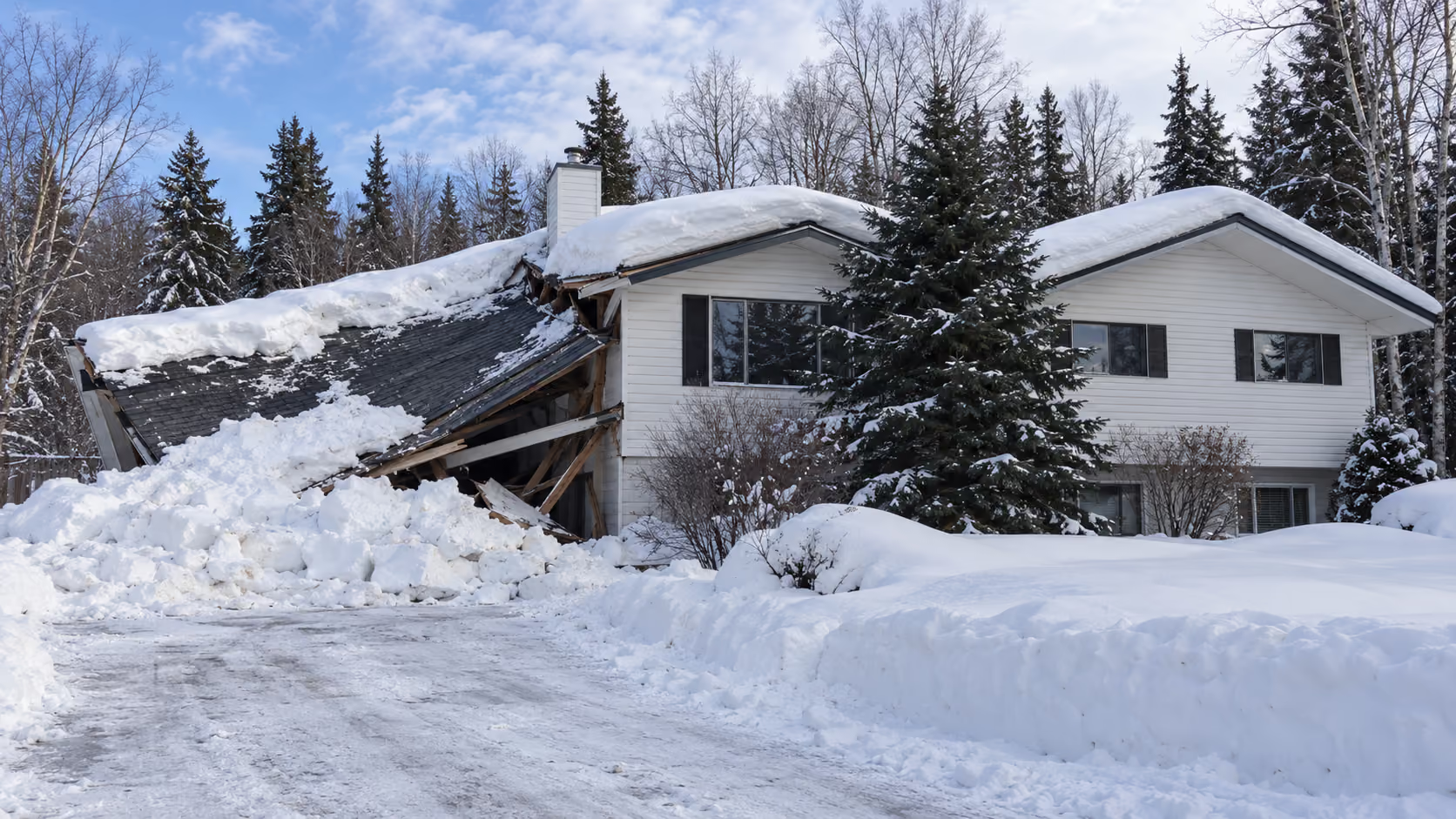
- Snow-load warning signs. Doors that suddenly stick, new cracks in the drywall, creaks and pops, or a ceiling that sags. Get everyone out of the building, then call us. Roof snow removal
- An ice dam leak into the walls. Water staining a wall or ceiling near the eaves in the middle of winter.
A slow drip that shows up only in a hard rain can usually wait for a regular repair. Text us a photo and we’ll sort out which kind you have. Roof repair →
How we handle an emergency roof repair
- Photos first. Text them to (907) 701-2233. A roofer looks and tells you what we see and what happens next.
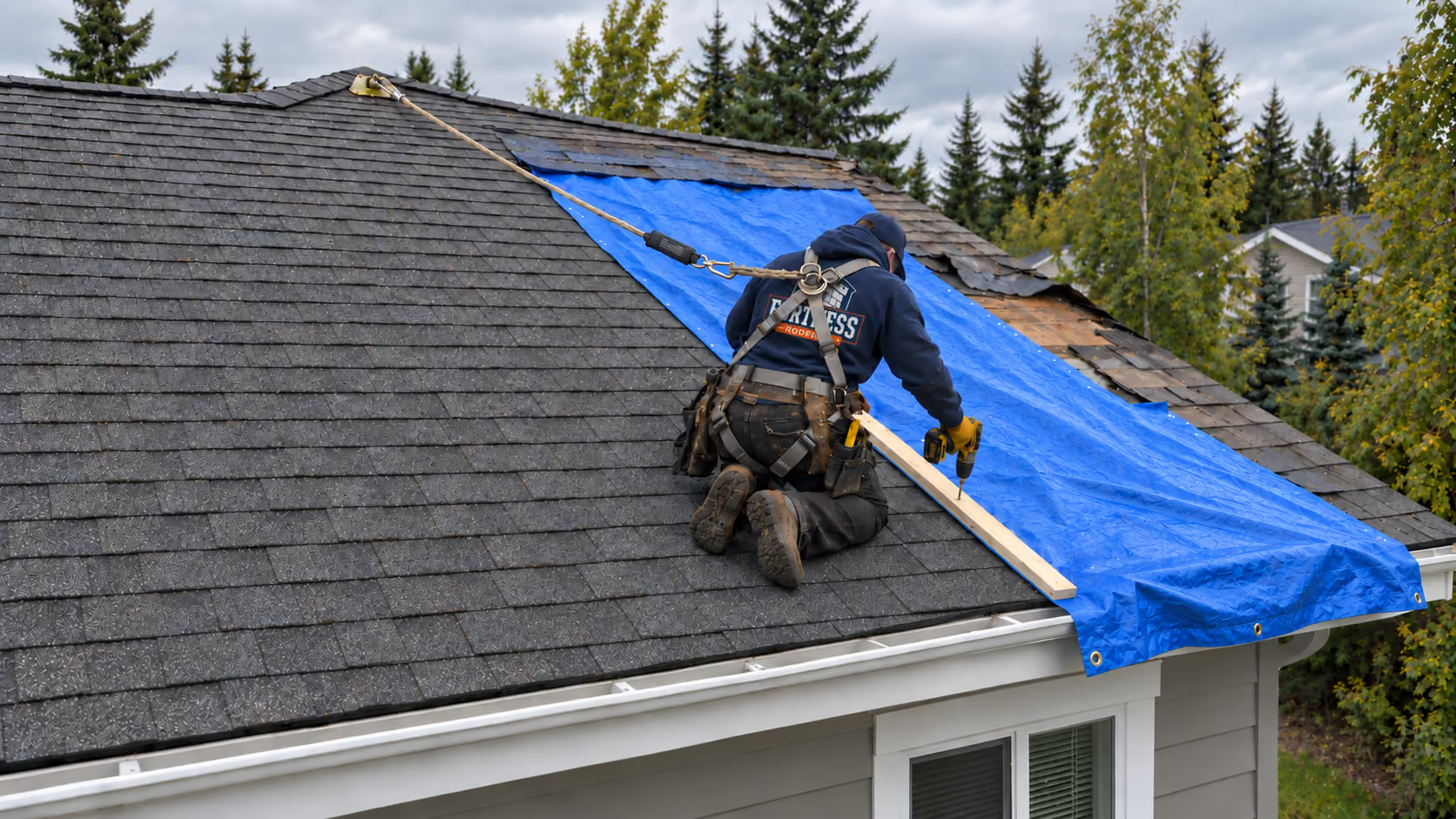
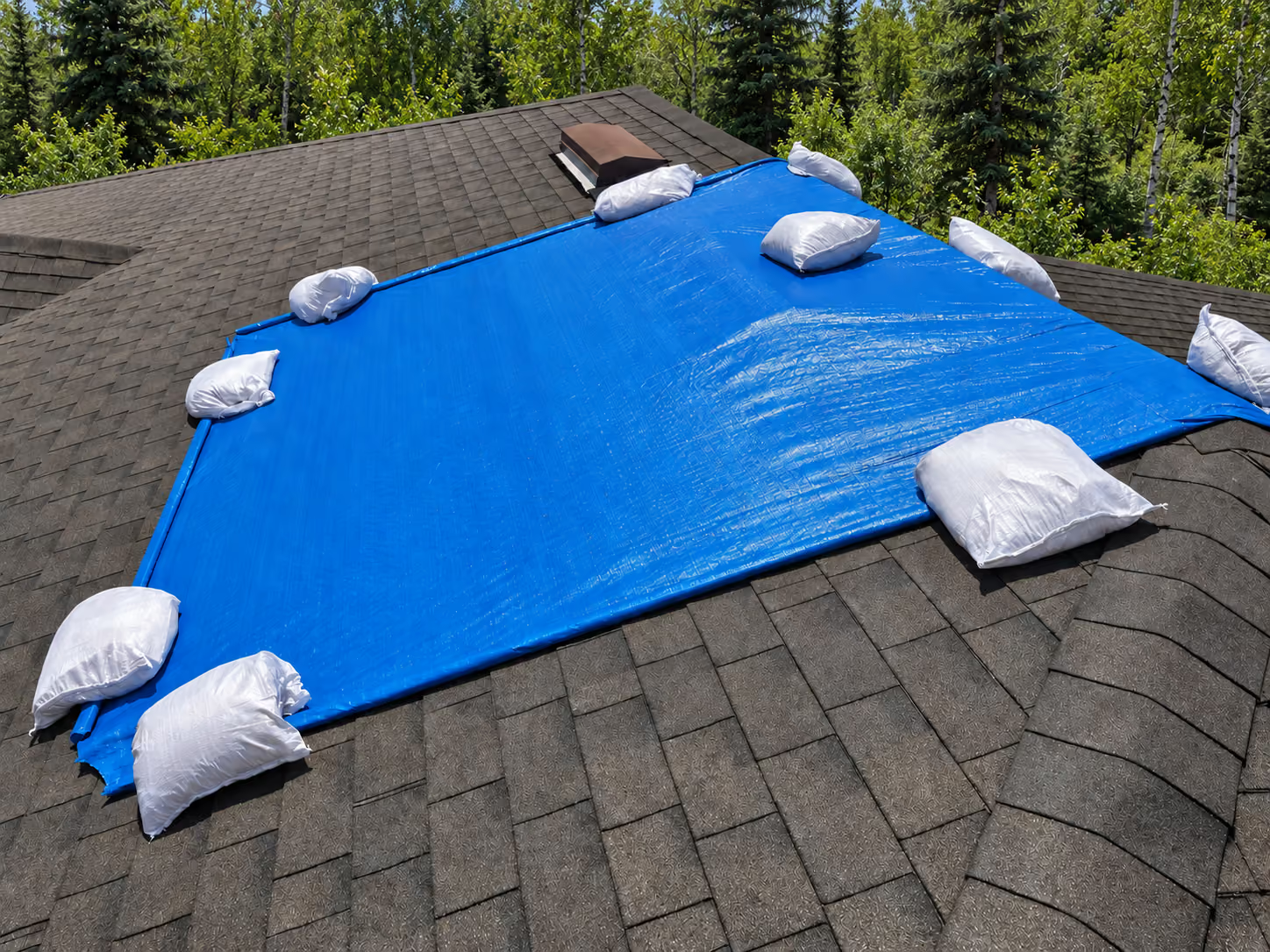
- Stop the water. We find where it’s getting in and put on a proper temporary fix: a tarp secured over torn-off roofing, or a patch at the source.
- Photograph it. The damage and the fix, before and after, for you and for your insurer.
- The permanent repair. Priced in writing, and done when the weather lets the materials seal.
- A straight answer. If the roof is past repairing, we say so and price the replacement, instead of selling you a patch that won’t last.
Water coming in?
Text a photo of the damage. Active leaks go first.
Temporary fix or permanent repair?
Many emergencies get both.
Temporary fix
What goes on when the permanent repair can’t happen yet, because the cold won’t let the materials seal or the damage is bigger than one visit. Done properly, photographed, and meant to hold until the real repair. It isn’t the end of the job, and we tell you that.
Permanent repair
The damaged roofing, flashing, or decking replaced in weather the materials can handle. When conditions allow, that happens on the first visit. On an insurance claim, check with your insurer before the permanent repair. In January, it may wait for the first warm stretch.
Emergency roof repair in an Alaska winter
Winter emergencies take longer. The damage is usually under snow and the days are short. We clear the snow around the damage so we can find the source and work on it, then stop the water.
If snow load caused the damage, the rest of the roof may need clearing too. If the leak is coming from an ice dam, we don’t steam it off. We clear the snow that feeds it and repair what the water damaged, and ice dam prevention covers why they form.
Emergency roof repair and your insurance
Most policies expect reasonable steps to prevent further damage, and the temporary fix is that step, even when the permanent repair waits for spring. Keep the receipt and the photos, before and after; we send you ours. You file the claim and it stays yours, and we document the damage and meet the adjuster on site. Insurance claims →
We take emergency calls across Anchorage and Eagle River, through Wasilla and Palmer, and as far as Big Lake and Girdwood.
What an emergency roof repair costs
Emergency work is priced by what we find: how much roofing is damaged, how steep and high the roof is, how much snow and ice we’re working around, and whether the permanent repair can happen on the first visit. The permanent repair gets a written price, line by line, and on a claim the same scope goes to your adjuster.
Every job starts with a free inspection.
Photo report and a written price within 24 hours, and no pressure after it.
Emergency roof repair questions
The questions we get most often about roof emergencies in Anchorage and the Valley. Don’t see yours? Text us and a roofer answers.
Text my rooferIt depends on the day, but water coming into the house puts you at the top of the list. Text photos to (907) 701-2233 and a roofer will tell you what happens next. After a big wind or heavy snow, a lot of calls come in at once, and active leaks come before damage that can wait.
Catch the water, move what you can, and shut off power to any fixture near it. Then text the photos to (907) 701-2233, the same number we use for emergencies. We’re open Monday to Saturday, 7am to 7pm, and active leaks with water inside go to the front of the line.
No. Stay off the roof. Frost and snow make any roof slick, a storm-damaged one can have weak spots you can’t see, and a tarp that isn’t fastened down right tears loose in the next wind anyway. Catch the water inside, take photos from the ground, and let us put the temporary fix on.
It depends on what caused the damage. Sudden damage from wind, a falling tree, snow load, or an ice dam leak into the house is often covered, while wear and age usually aren’t. Your policy and your adjuster decide. Keep the receipt for the temporary fix and the before and after photos, since your insurer may ask for them.
Yes. The snow around the damage comes off first, then we track the water to where it’s getting in. Some materials won’t seal below freezing, so a winter emergency repair is often a proper temporary fix, with the permanent repair in the first warm stretch. We say up front whether it’s temporary or permanent, and what’s left to do.
Then we tell you, in writing, with the reason. The water still gets stopped first, so the house is protected while you decide. Full replacements run roughly May through October, so a winter emergency on a worn-out roof means a temporary fix now and a new roof when the season opens.
Let’s stop the water first
Call or text (907) 701-2233, Monday to Saturday, 7am to 7pm. Active leaks go first, and you get a photo report and a written price within 24 hours.