Commercial Metal Roofing in Anchorage & the Mat-Su Valley
Standing seam and exposed-fastener roofs for shops, hangars, warehouses, pole barns, and retail buildings. Replaced, re-roofed over the old metal, or repaired, with a written scope and budget.
Re-roofing a metal building starts with one question: can the new roof go over the old one? On a sound structure, a retrofit over the old metal keeps the building closed and working while the new roof goes on. When the purlins are rusted or the old roof has been letting water in for years, it comes off. Either way, you choose between standing seam and exposed-fastener panels, and the assessment puts both in writing with a budget.
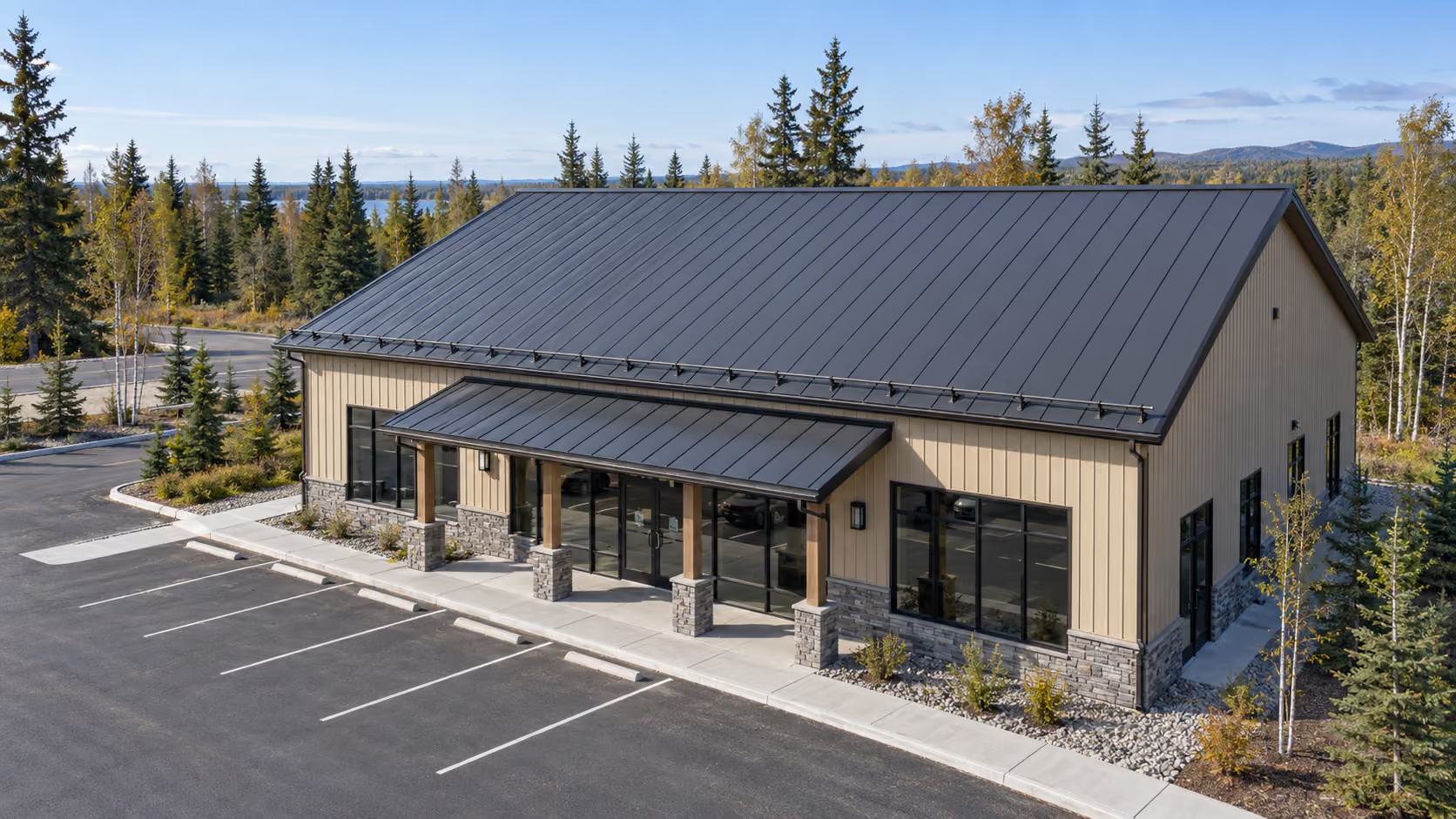
Metal roofs for Alaska shops, hangars, and warehouses
Each building type has its own weak spot up here.
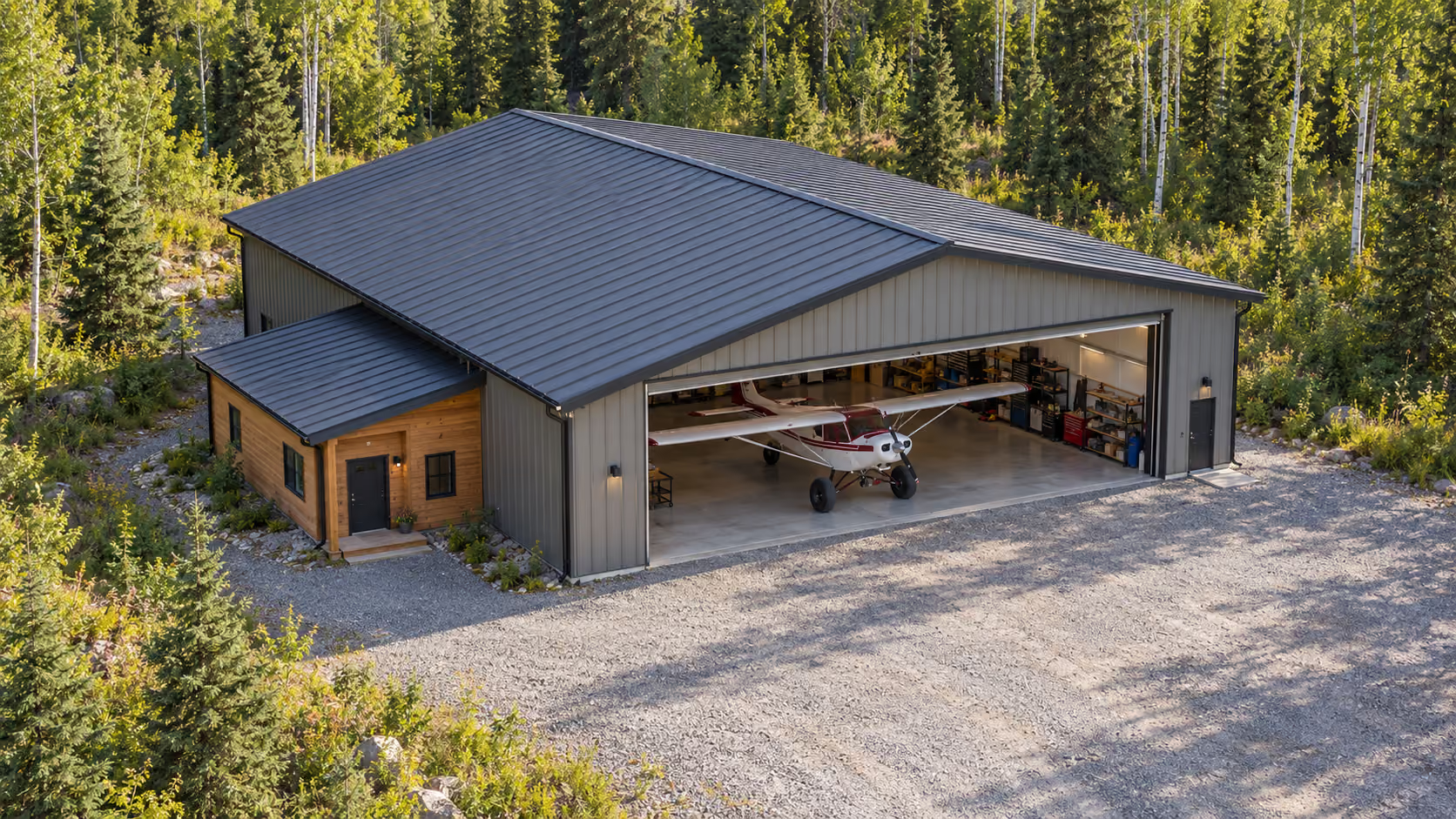
- Hangars at Anchorage, Wasilla, and Palmer airstrips: wide doors, snow sliding onto the apron, and a roof that can’t drip on an airplane.
- Shops and garages: heated all winter, so condensation under the panels and fasteners working loose with every temperature swing.
- Warehouses: long panel runs that move with temperature, skylight panels, and drifts where a high roof steps down to a low one.
- Pole barns: open framing, often with no insulation, so cold mornings can mean drips.
- Retail buildings: snow sliding off over the entrance, the walkway, and the cars out front.
Standing seam vs exposed-fastener metal roofing
Both are steel panels. The difference is where the screws are, and that decides what the roof costs up front and what it costs to keep.
Standing seam
Panels run eave to ridge with raised seams and concealed fasteners on clips, so no screws through the face can back out, and the clips let long panels move with temperature. Mechanically seamed panels handle low slopes and heavy snow and wind. Standing seam needs less upkeep, and snow guards keep slides off doors, docks, and walkways. Standing seam →
Exposed-fastener panels
Ribbed panels screwed through the face, a rubber washer under every screw. Less up front and quicker to install. The tradeoff is upkeep: temperature swings work screws loose, washers dry out, and rust starts at cut edges and fasteners. A sound roof for a shop or pole barn if someone checks the fasteners every spring and fall.
On an exposed-fastener roof, the fasteners are the maintenance. We replace failed screws with the right size and seal with products made for metal, not hardware-store silicone, on spring and fall maintenance visits or as a metal roof repair.
Can you put a new metal roof over an old metal roof?
Yes, when the structure under it is sound and can carry the added weight and snow. A retrofit sets new framing over the old panels and puts the new roof on that. A roof assessment tells you which way your building should go.
Retrofit
The purlins and framing are sound, and the old panels are tired but attached. Nothing comes off, so there’s no tear-off debris and no open roof over your inventory or aircraft in a Matanuska wind.
Tear-off
Rusted purlins, rotten framing, or years of leaks that have soaked the insulation. A retrofit over that hides the problem under a new roof. The old roof comes off, so the problem gets fixed instead of covered.
Drips in the shop on cold mornings?
Text a photo and we’ll tell you what we see.
Why is it raining inside my metal building?
If it drips on cold, clear mornings and not when it rains, it’s probably condensation, not a leak. Warm, moist air inside hits the cold underside of the panels and rains back down. Open-framed shops, pole barns, and hangars get it worst, especially when snowy trucks come inside to thaw.
The fix is a vapor retarder on the warm side, insulation between the warm air and the cold steel, and ventilation to carry moisture out. Sealant on the roof won’t help. We’ll tell you whether it’s a leak or condensation before you pay for the wrong fix.
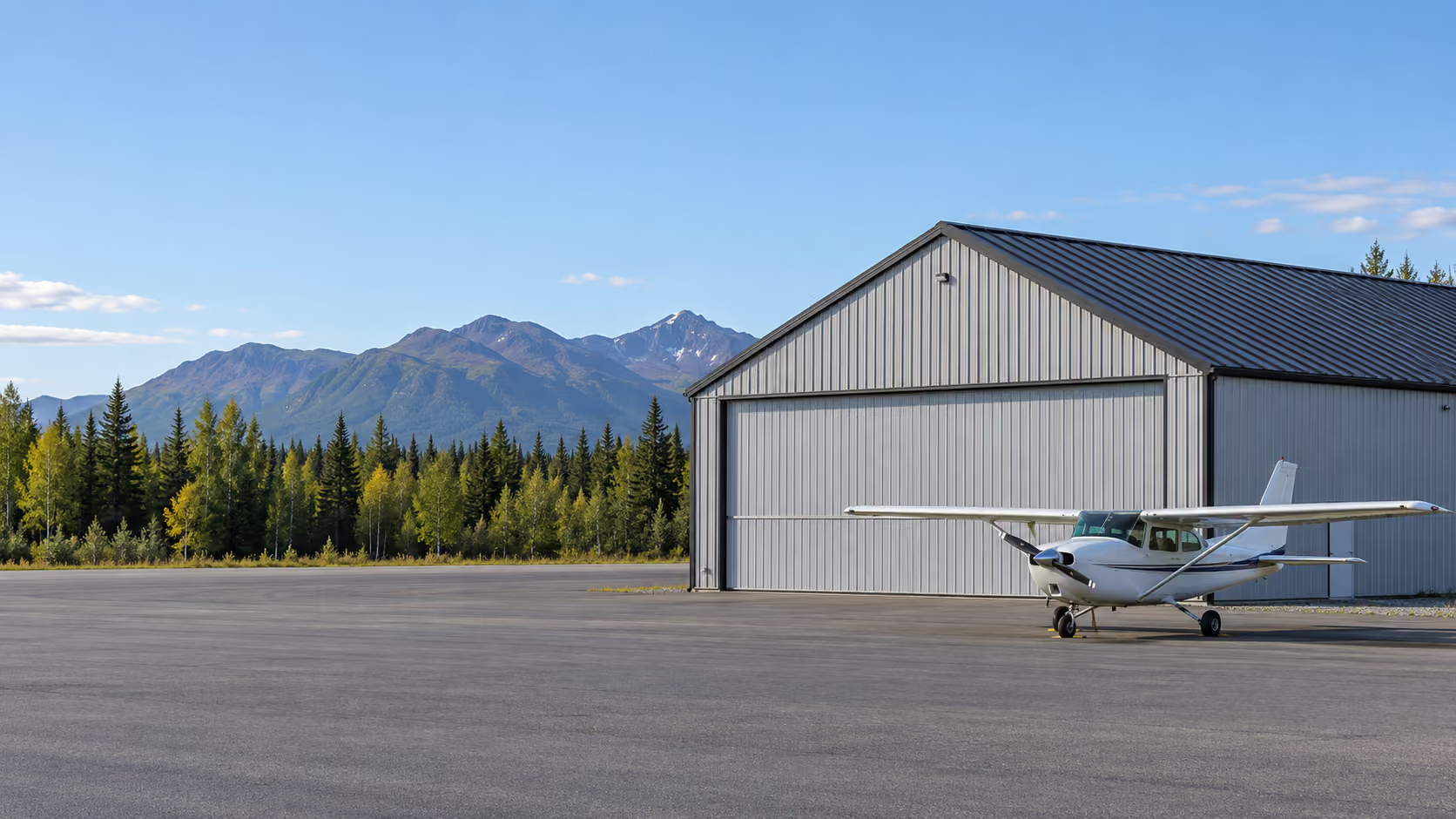
Snow guards over doors, docks, and aprons
Metal sheds snow, and standing seam sheds it fastest. Over a hangar door, a loading dock, or a store entrance, a roof letting go all at once can bury the door, crush a vehicle, or hurt someone. Snow guards hold it on the roof so it melts or comes down in small pieces.
Layouts are calculated from pitch, panel length, and snow load, not guessed, and too few guards tear off under the weight. Clamp-on guards grip standing seams without piercing the panel; exposed-fastener roofs get fastened brackets. Guards can go on an existing roof, too. Snow guards →
Working around a building that stays open
A shop, hangar, or store usually can’t close for a roof. We plan the sequence with you before we start: which section is open when, where material goes, which doors stay clear, and when aircraft or trucks need to move.
Skylight panels get brittle, cloudy, and cracked with age, and they leak at the laps. Nobody should step on one. We replace them with the roof, and a cracked one on a sound roof can often be swapped on its own.
We roof metal buildings in Palmer, Wasilla, and Big Lake, out to Butte and Meadow Lakes, and in Anchorage, Eagle River, and Girdwood.
What a metal building roof costs
It’s priced after the assessment, in writing, line by line. What drives it: roof size and height, the panel system, 24 or 26 gauge (24 is thicker), the paint finish (PVDF holds its color better than SMP), retrofit or tear-off, trim and flashing, skylight panels, snow guards, and access. We price the options side by side, so you can see what an upgrade buys. Everything we do on commercial roofs →
Every commercial job starts with a free assessment.
A written scope and budget, and no pressure after it.
Commercial metal roofing questions
The questions we get most often about metal roofs on commercial buildings in Anchorage and the Valley. Don’t see yours? Text us and a roofer answers.
Text my rooferSomewhere past forty years is realistic for standing seam that’s installed well and looked after. Exposed-fastener roofs often run shorter. What shortens it up here is neglect: fasteners nobody checks, rust left to spread from cut edges, and trim bent by sliding snow and left that way.
Eventually, yes. Thermal movement backs screws out, washers dry out and crack, and over- or under-driven screws leak from the start. A check every spring and fall catches most of it. Replacing a failed fastener is small work; the water a loose one lets in over a winter isn’t.
If you plan to keep the building, often yes. Concealed fasteners mean no screws to back out, so upkeep drops. If the budget is tight or you won’t own the building long, exposed-fastener panels are a sound choice with a fastener check twice a year.
24 gauge is thicker and stiffer than 26, so it stands up better to snow, wind, and foot traffic and shows less oil canning in flat panel areas. 26 gauge costs less and can be the right call on a simple building. When it’s a real choice, we price both.
Yes, with the right panel. Mechanically seamed standing seam handles lower slopes, heavy snow, and wind; snap-lock is generally for 3:12 and steeper. On a roof too flat for metal, a membrane is the answer, and we install those too: TPO, EPDM, and modified bitumen.
Yes. Backed-out and leaking fasteners, open seams, bent trim, failed flashing at penetrations, and cracked skylight panels. We find the source, photograph it, and give you a written price for the fix. If the roof is past repairing, we say so and budget the replacement instead.
Let’s look at your metal building
Text a photo or book an assessment. You get a written scope and budget, and no pressure after it.