
Roof Care in Southcentral Alaska, Season by Season
What to check before the snow, through the winter, at breakup, and in summer, and what to leave to a roofer. Most of it you can do from the yard or the attic hatch.
Roof care up here runs on the seasons. A cracked pipe boot or a gutter full of spruce needles in the fall spends the winter under snow, and the melt finds it at breakup. Caught before the snow, it’s a small fix.
Here’s the checklist, season by season, for homes from Girdwood to Big Lake: what to look at, when to look, and what to leave to a roofer. None of it means setting foot on the roof.
Where to look from
- The yard. Shingles, flashing, gutters and downspouts, and the snow and ice along the eaves. Take photos as you go.
- An upstairs window. A closer look at the roof surface and the valleys, with no ladder.
- The attic hatch. Frost, stains, and damp sheathing. In winter, the attic shows what the roof is hiding.
- Not the roof. Walking it takes fall protection. That’s a roofer’s job, especially with snow or ice up there.
Fall, before the snow
Fall is the big one. Get these done before the first snow sticks:
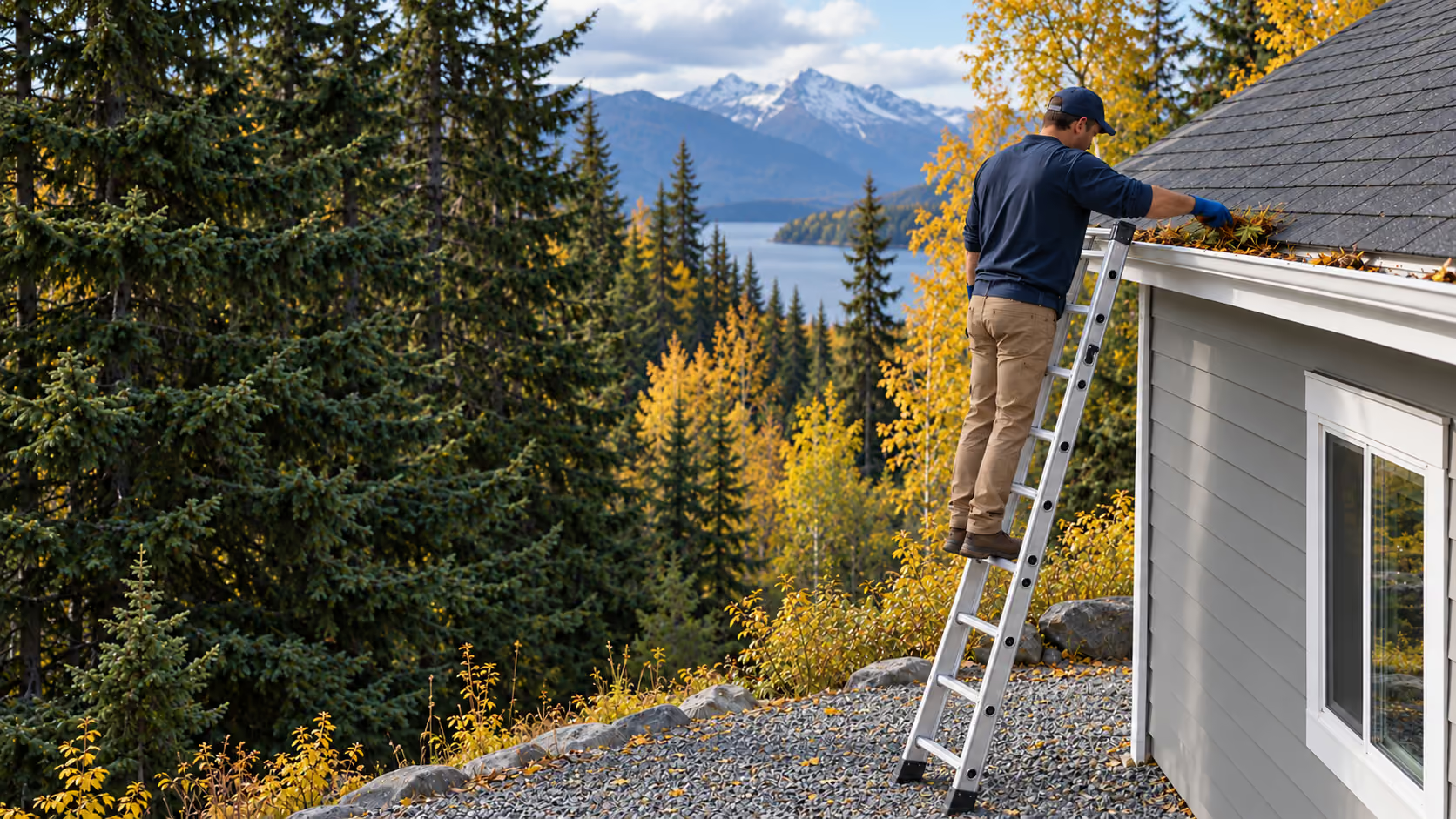
- Gutters and downspouts. Clear out the leaves and needles once most are down, and make sure every downspout drains. A clogged gutter backs water up and raises the chance of ice dams.
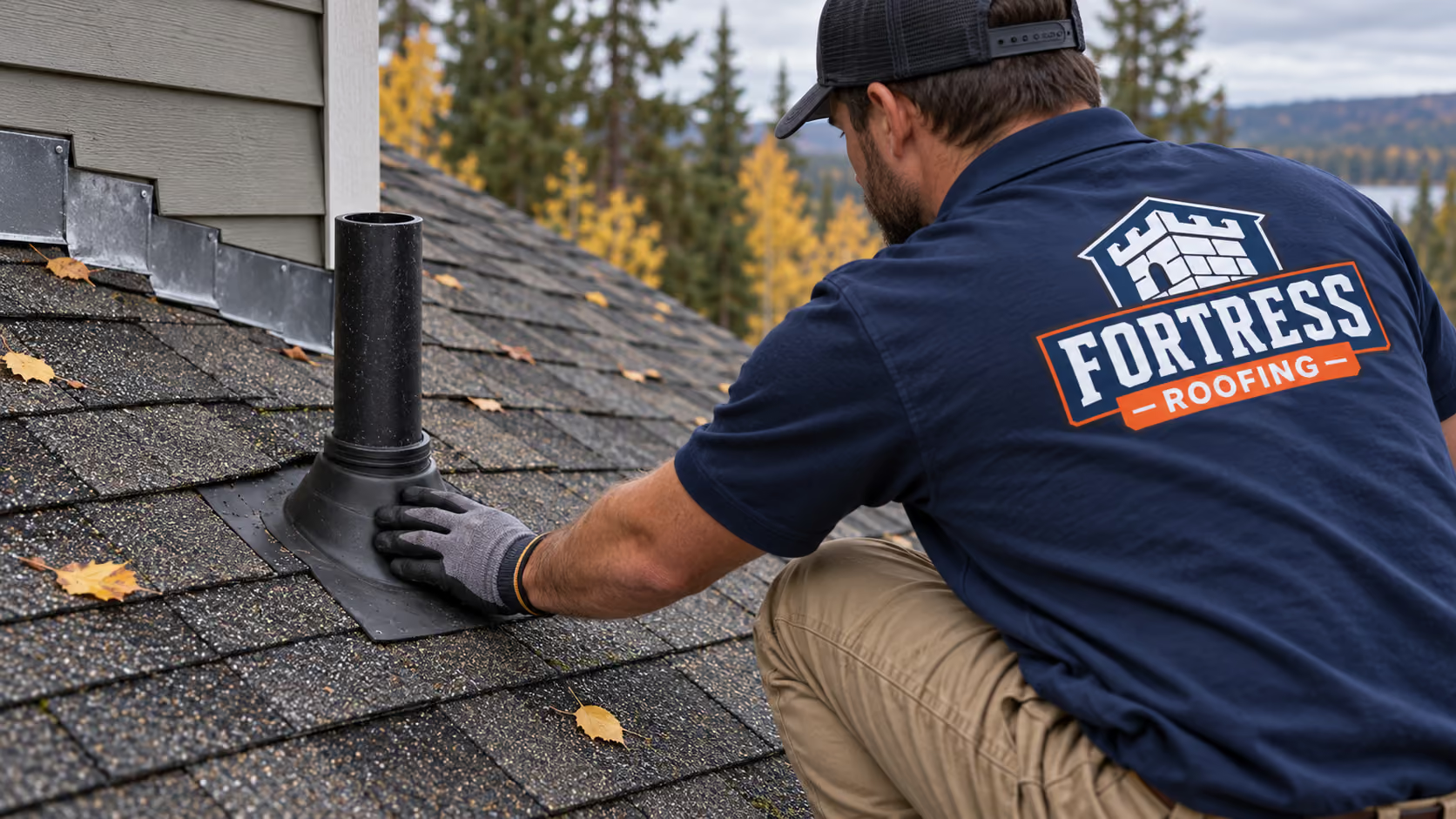
- Flashing and pipe boots. Around vents, skylights, and the chimney. A cracked boot or a gap is a small fix now.
- Branches. Trim trees back from the house, keep branches off the eaves, and take down limbs that could fall on the roof.
- The roof surface. From the yard or an upstairs window, look for lifted, creased, or missing shingles.
Winter: watch from the ground
Winter is mostly watching. From the yard, three signs say warm house air is reaching the roof:
- Big icicles. Along the eaves.
- Bare patches. Where the snow melts off while the rest of the roof stays white.
- Heavy frost at vents and gable ends. Frost building up outside the vents can mean moisture damage inside.
Then there’s the snow. Anchorage’s building department says the best cure for ice dams is getting roof snow off before it melts and refreezes, not just clearing the eaves. Our guide to snow load and ice dams has the details. When it needs to come off, hire a licensed, insured roofer. Roof snow removal →
The winter attic check
On a cold day, look around from the attic hatch with a flashlight. You don’t need to go in.
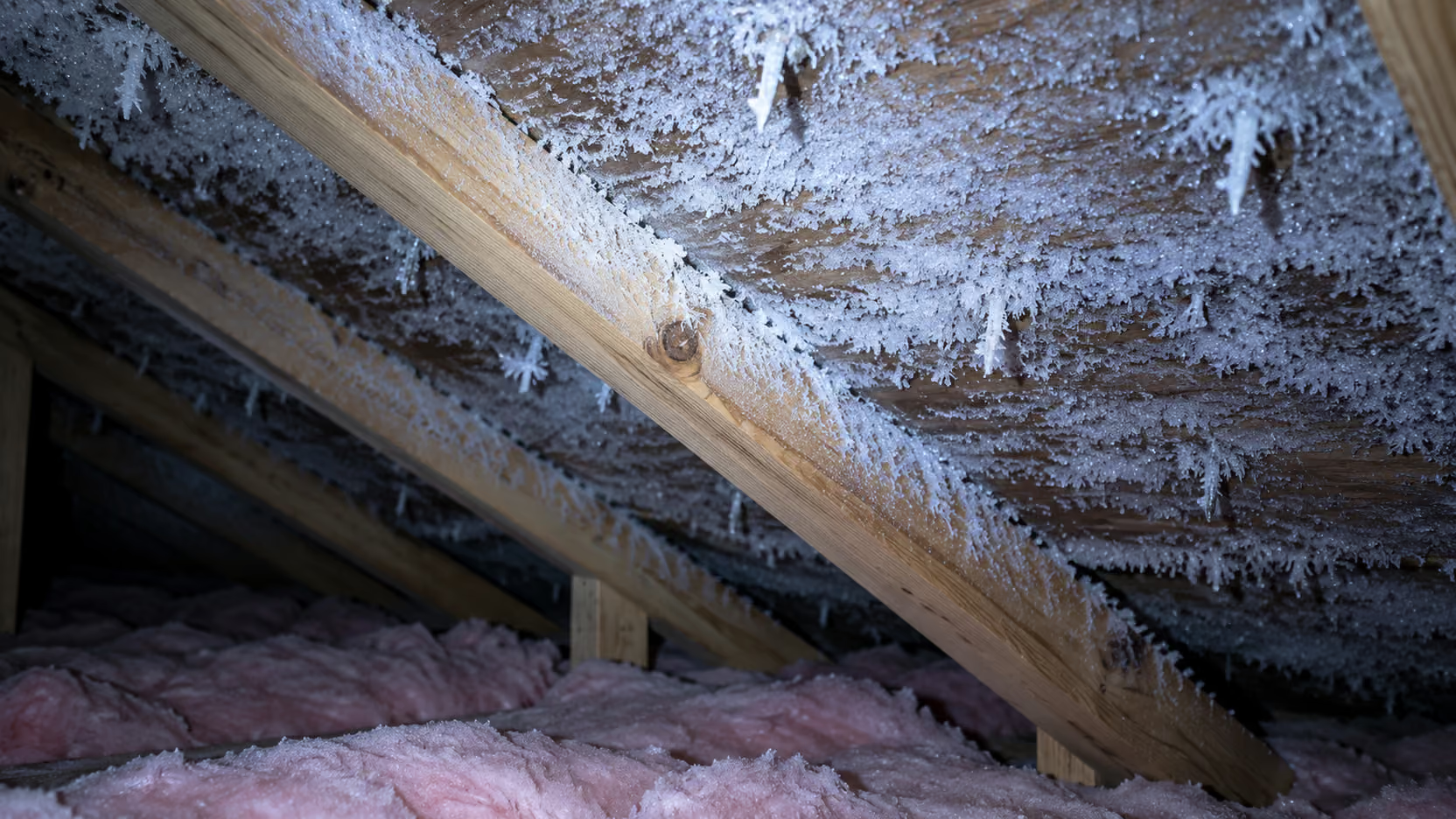
- Frost on the nail tips and plywood. That’s water vapor condensing, usually from moist house air getting up through the ceiling.
- Where the air gets in. Usually around the chimney, bath fan and dryer ducts, and ceiling lights that aren’t sealed.
- Stains and soft plywood. Water stains where frost forms can point to a long-term problem. Delaminating sheathing, or rafters filled with frost and ice, mean too much moisture.
- Snow on the insulation. Wind drove it in through the ridge or gable vents.
For frost and ice dams, the fix starts in the house. Alaska Housing Finance Corporation calls air sealing between the house and the attic the most important factor against ice dams. Ventilation cuts down on them too. Attic ventilation →
Spring breakup
Breakup shows you what the winter did. Once the roof is clear, walk around the house and look up:
- The roof surface. A hard winter can wear it down. Look for lifted or missing shingles.
- Gutters and downspouts. Damage, debris, and drip edge or gutters bent by sliding snow.
- Where the water lands. Alaska Housing Finance Corporation says to end downspouts at least 6 feet from the foundation.
- Ceilings and the attic. New stains near the eaves, wet insulation, or daylight where there shouldn’t be any.
If you find roof damage, call a roofer instead of climbing up.
Summer
Summer is the easiest season for roof work, so anything spring turned up gets its permanent fix. Shingles need the warmth: one shingle maker’s guidance says they handle most easily above 40°F and may need sealing by hand when it’s colder. Keep the gutters clear as needles fall.
Gutters and downspouts through freeze and thaw
A U.S. Forest Service guide warns that in early melt, gutters and downspouts can fill with ice and be damaged beyond repair.
- Start clean. Leaves and needles left in a gutter hold water, and that water freezes.
- Keep downspouts open. A plugged one spills the melt over the gutter and down at the foundation.
- Watch where they empty. Never onto a lower roof.
Gutters bent by sliding snow or pulling off the fascia need a repair. New seamless gutters are free with any full roof replacement. Ask for the details when you book. Gutters →
Spruce needles and debris
Spruce and birch near the house put needles and leaves on the roof, not just in the gutters, and they collect in the valleys. Alaska’s Division of Forestry suggests clearing roofs and gutters of leaves and needles several times through spring, summer, and fall. The roof part means getting on it, so leave that to us.
Moss and lichen
Moss grows on the shaded, damp parts of a roof, often the north side and under trees. It can lift shingle edges and let water under them, which raises the risk of leaks and blow-offs.
- Let the sun in. Branches add shade and debris. Trimming them is the key to keeping moss away.
- No pressure washer, no scrubbing. Pressure washing strips granules and likely shortens the roof’s life. Removal should be gentle, and since cleaning makes a roof slippery, the shingle makers’ trade group says only trained professionals should do it.
- Skip the sprays and strips. Moss killers wash off in the rain. The same trade group advises against adding zinc or copper strips to an existing roof: exposed nails can leak, and strips slid under shingles break the seal.
Lichen, the flat, crusty patches, gets the same cleaning rules: no pressure washer, no scrubbing, and removal left to a trained pro.
After a windstorm or heavy snow
Wind damage starts at the roof’s edges. After a big wind, look in daylight, with someone else home, for raised or creased shingles, pieces in the yard, loose trim, lifted flashing, and clogged downspouts. Inside, look for new stains or wet spots.
Don’t try repairs yourself. Call your insurer, and call us to assess the damage. Keep receipts for anything you spend to prevent more damage. On a claim, we photograph the damage, write a scope that matches it, and meet your adjuster on site. You file the claim and it stays yours. Storm damage repair →
After heavy snow, watch for popping or creaking, sagging, doors that suddenly stick, and severe leaks. Anchorage officials add heavy ice damming. If you see any of them, get everyone out of the building, then call an engineer about the structure and us about the snow.
Not sure what you’re looking at?
Text a photo from the yard and a roofer will tell you what we see.
What you can check, and what needs a roofer
Yours to check
Gutters and downspouts, shingles in the yard, bent drip edge, icicles and bare patches in the snow, moss, and frost or stains in the attic.
A roofer’s job
Flashing and pipe boots, lifted shingles, snow and ice, moss, and covering an opening after a storm. That takes fall protection.
What not to do
- Don’t climb onto a snowy or icy roof. Ice builds up on ladder rungs and boot soles, and snow hides the edges.
- Don’t chip ice. Breaking an ice dam can damage shingles, flashing, and gutters, and the fix starts in the attic. Ice dam prevention →
- Don’t pressure wash. It strips the granules off asphalt shingles.
- Don’t rake from a ladder. Rake from the ground with a non-metal rake, leave at least 2 inches of snow on, go easy so you don’t damage the roofing, and stay at least 10 feet from power lines.
- Don’t stand under the eaves. Falling ice and sliding snow can hurt people and pets and crush what’s below, especially under a metal roof.
When to call a roofer
Call when this checklist turns something up, or when you can’t tell what you’re seeing. The inspection is free, on the roof and in the attic, with a photo report and a written price within 24 hours of the inspection. Roof inspections →
Before the snow, a fall maintenance visit clears the gutters, checks the boots and flashing, and fixes the small stuff with your OK. Roof maintenance →
Repairs happen year-round. Most are inspected within a couple of days and done the same week, and emergency calls go to the same number, (907) 701-2233. Roof repair →
Start with a free inspection.
On the roof and in the attic. Photo report and a written price within 24 hours, and no pressure after it.
Roof care questions
The questions we get most about looking after a roof in Anchorage and the Valley. Don’t see yours? Text us and a roofer answers.
Text my rooferTwice a year: in the fall before the snow and in spring after breakup, plus after any big windstorm, heavy snow year, or leak. You can do much of it from the yard and the attic hatch. For a roofer’s look, our inspection is free, with a photo report and a written price within 24 hours.
In the fall, once most leaves and needles are down and before the snow sticks, so the first melt has somewhere to go. Check them again at breakup for damage and debris. With spruce or birch over the roof, plan on a few cleanings through spring, summer, and fall. A full gutter holds water that freezes and raises the chance of ice dams.
Frost on the nail tips and roof plywood is water vapor condensing. The moisture is usually house air escaping through the ceiling, around the chimney, bath fan and dryer ducts, or ceiling lights that aren’t sealed. Water stains where the frost forms can mean a long-term problem. The fix starts with sealing those leaks, and our free inspection includes the attic.
Gently. Don’t pressure wash it, which strips the granules off asphalt shingles, and don’t scrub. Moss killers wash off in the rain and give no lasting control, so the long-term fix is sun: trim the branches that shade the roof. Removal means working on a slippery roof, and the shingle makers’ trade group says only trained professionals should do it.
No. Breaking ice can damage shingles, flashing, and gutters, and it puts you on a ladder next to ice. Anchorage’s building department says the best cure is getting roof snow off before it melts and refreezes. Rake from the ground with a non-metal rake, stay at least 10 feet from power lines, and leave the rest to a roofer.
No. Ice builds up on ladder rungs and boot soles, snow hides the roof’s edges, and frost makes shingles and metal as slick as ice. Check from the yard, an upstairs window, and the attic hatch instead, and text us photos. Anything on the roof is a job for someone in fall protection.
Let’s find the small stuff while it’s small
Text a photo or book an inspection. You get a photo report and a written price within 24 hours, and no pressure after it.