Roof Snow Removal in Anchorage & the Mat-Su Valley
We clear snow off homes and flat commercial roofs with fall protection and plastic tools, leave a thin layer to protect the roofing, and give you the price before we start.
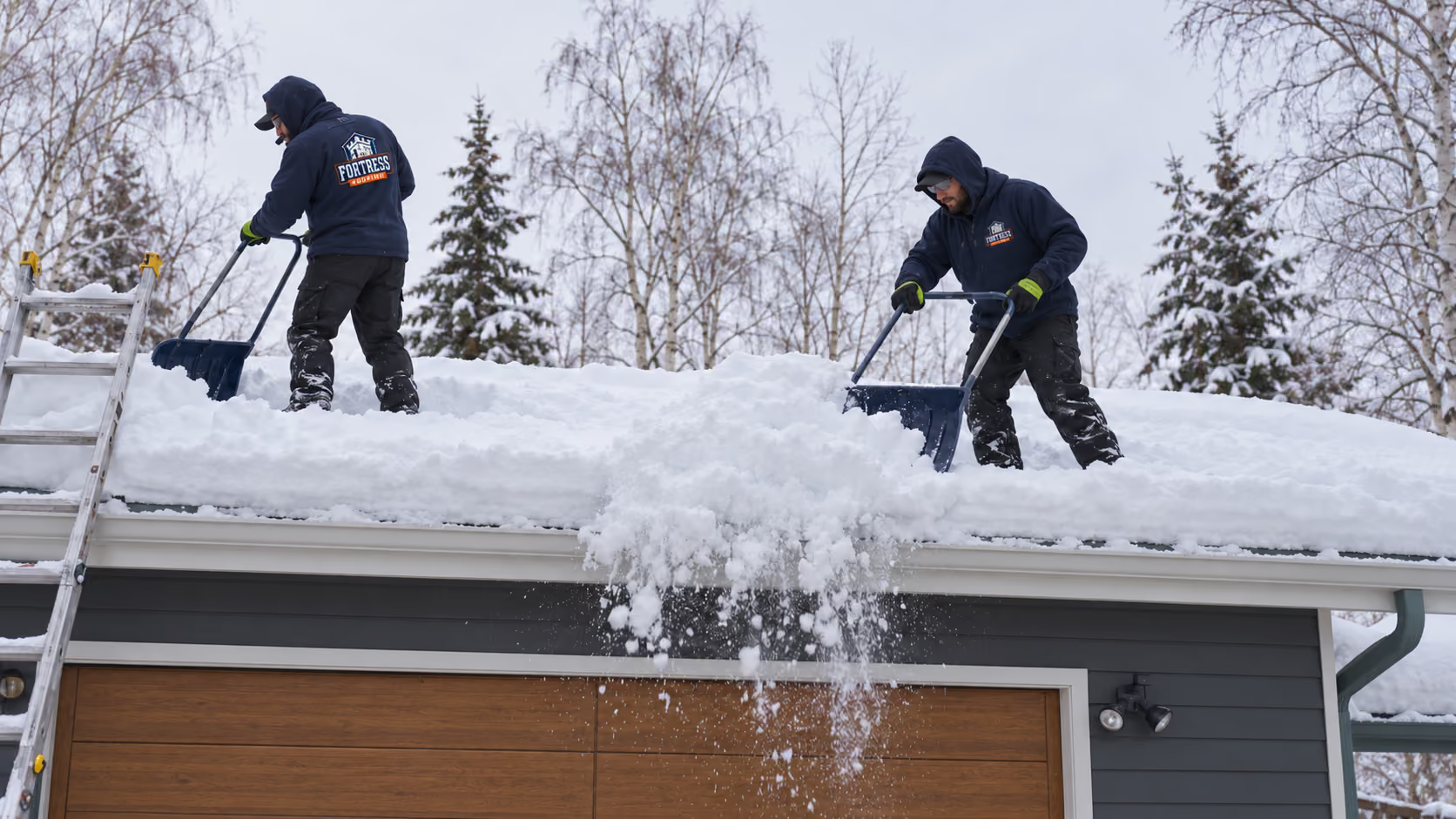
Snow needs to come off a roof when the weight gets heavy or it’s piling up in the wrong places: deep drifts on the downwind side, snow built up above the eaves, slides that land on doors and meters, and flat or low roofs that don’t shed anything. Depth alone doesn’t tell you the weight. A foot of fresh powder and a foot of old, packed snow with ice under it are very different loads. We clear it safely and look the roof over while we’re up there.
Signs your roof is carrying too much snow
Watch for these, especially after heavy snow or rain on snow:
- Doors and windows that stick when they didn’t in the fall
- New cracks in the drywall
- New creaks and pops from the roof framing
- A sagging ceiling, or a ridge line that dips
- New leaks in the middle of winter
If you see any of these, get everyone out of the building, then call (907) 701-2233. Snow-load warning signs count as an emergency. Emergency roof repair →
How much snow can a roof hold?
Roofs here are built for more snow than most of the country, but not unlimited snow. Weight is what counts, and the rule of thumb from the Insurance Institute for Business and Home Safety (IBHS) goes like this:
- Fresh snow: 10 to 12 inches is about 1 inch of water, or about 5 pounds per square foot.
- Old, packed snow: 3 to 5 inches weighs the same.
- Ice: 1 inch equals about a foot of fresh snow.
- A deep winter: 2 feet of old snow plus 2 feet of new can reach 60 pounds per square foot.
Rain on snow adds weight fast. Drifts add it unevenly: the downwind side of a roof, or a low roof below a high one, can carry far more than the snow in the yard suggests.
How a roof should be cleared
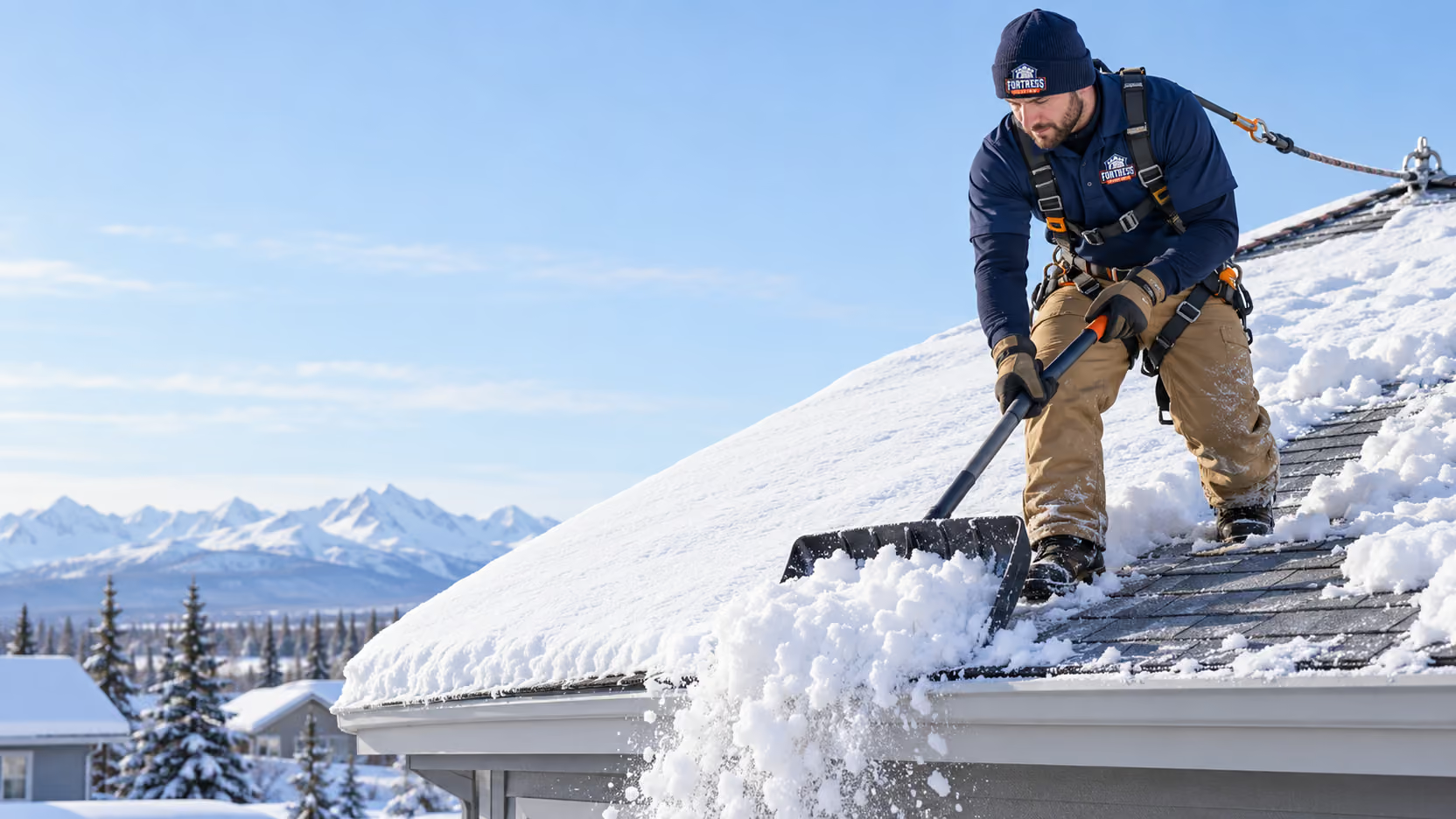
This is how we do it, and what to ask of anyone who clears yours:
- Fall protection. Snow hides the roof’s edges and the ice under it.
- Plastic tools. Metal shovels cut shingles and scratch painted metal.
- A thin layer left on, so our tools don’t touch the roofing.
- Eaves and valleys cleared, and snow dug out around vents and meters.
- Watching where it lands: not on the entry, the deck, the meter, or your car.
- A look at the roof while we’re up there, with photos. If something needs a roof repair, you get a written price.
We clear snow. We don’t steam ice dams off, but clearing the snow over the heated part of the roof takes away what feeds them. Ice dam prevention →
Worried about the load up there?
Text a photo of the roof and we’ll tell you what we see.
Homes and commercial flat roofs
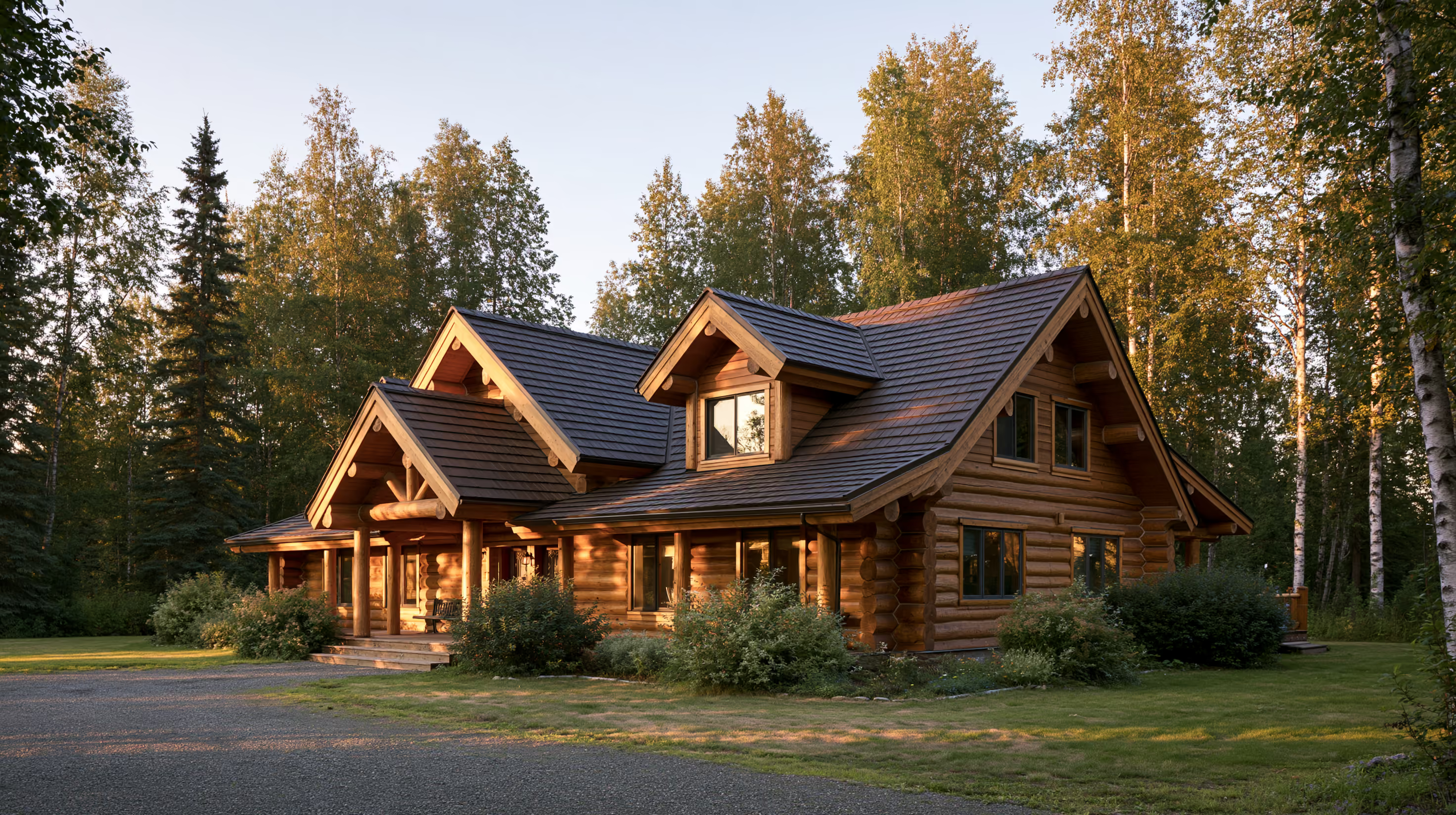
Homes
We clear the eaves and valleys, the drifts on the downwind side, and anything piled over doors, decks, and meters. A steep pitch or a second story means more rigging and more time, and that shows up in the price.
Commercial flat roofs
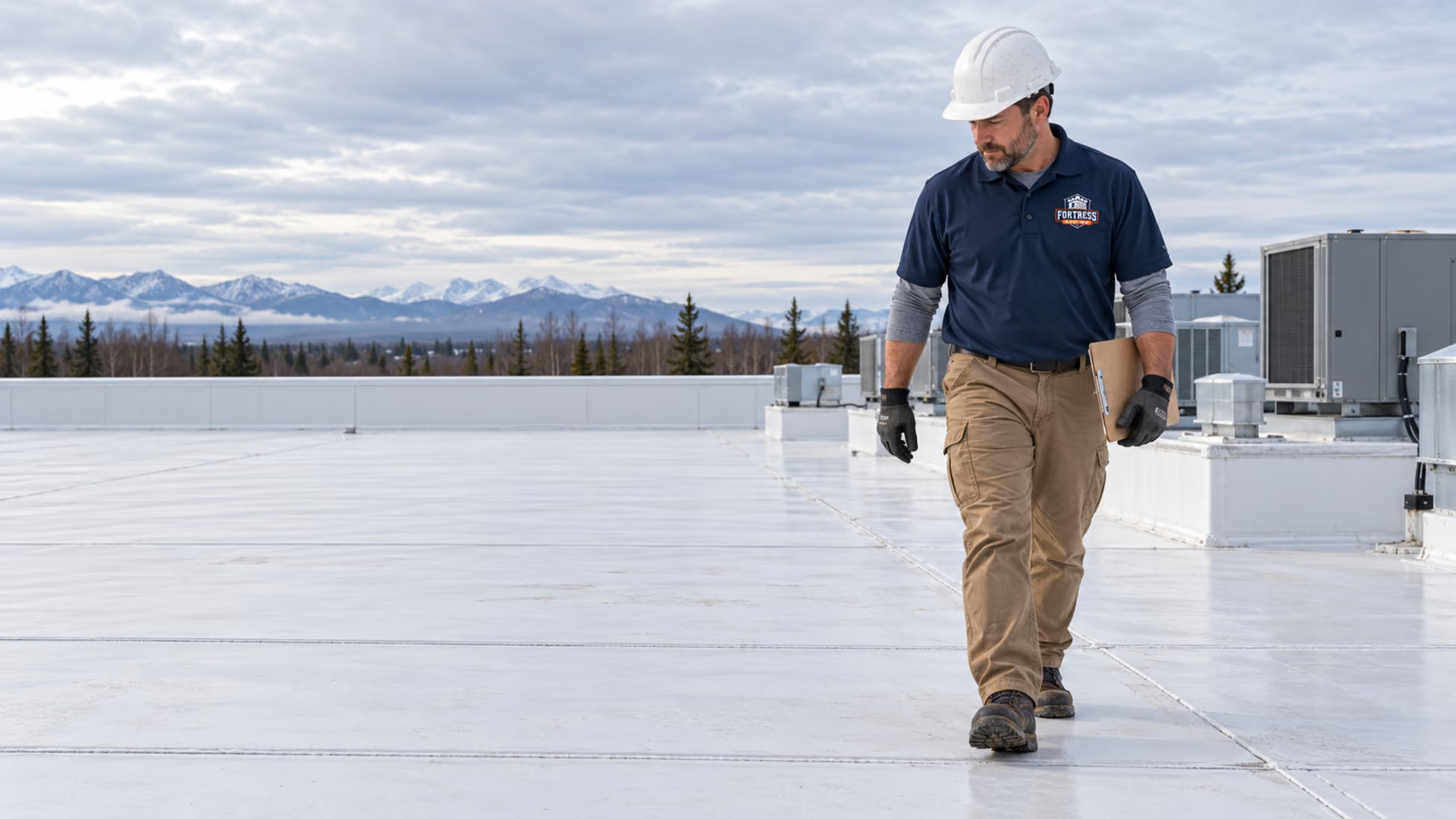
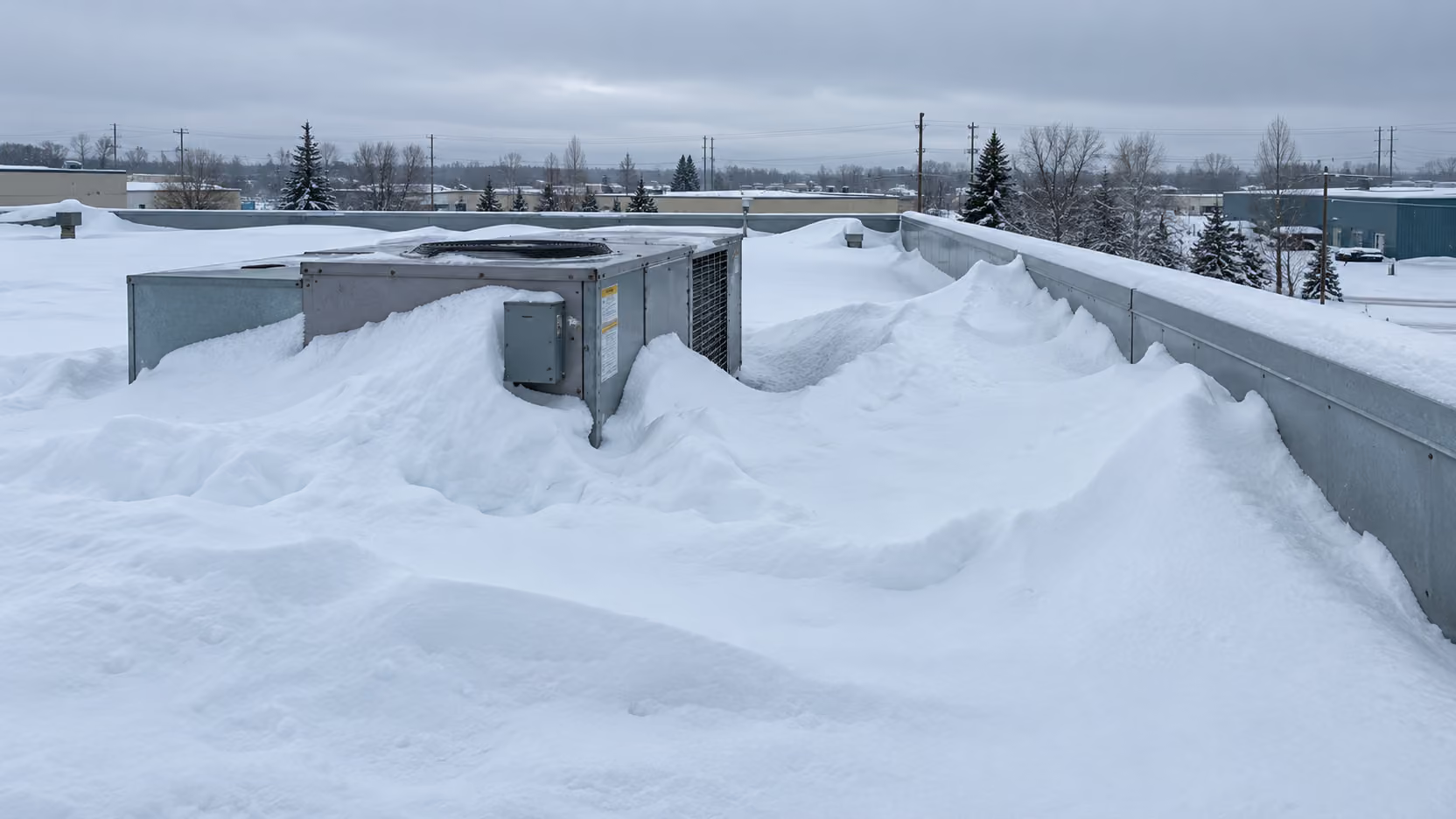
Flat roofs on shops, warehouses, hangars, and retail and office buildings don’t shed anything, so the load builds all winter. Drifts stack up against parapets and at step-downs, where a high roof drops snow onto a lower one. We clear snow away from drains and work around rooftop units. Commercial roofing →
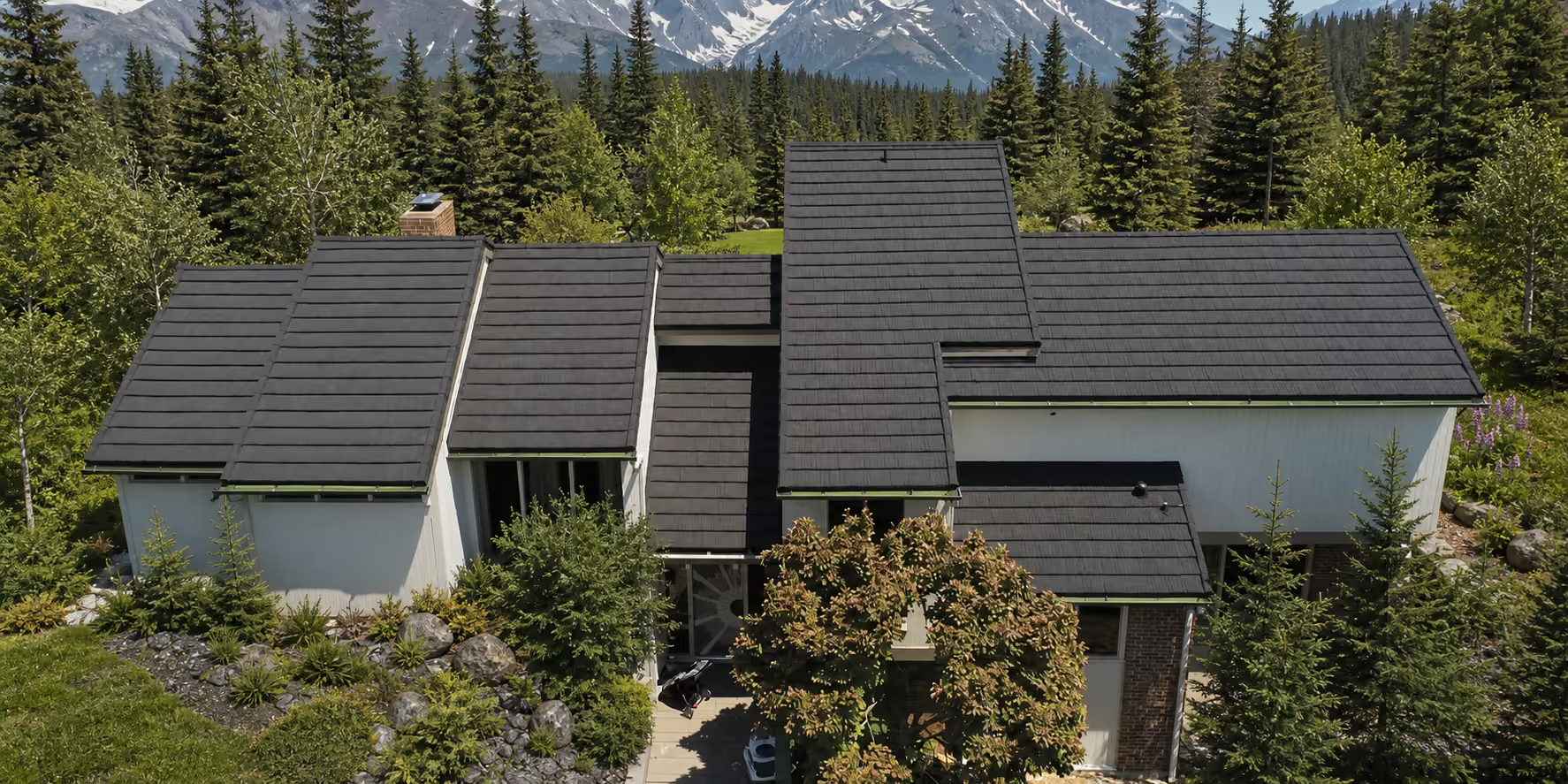
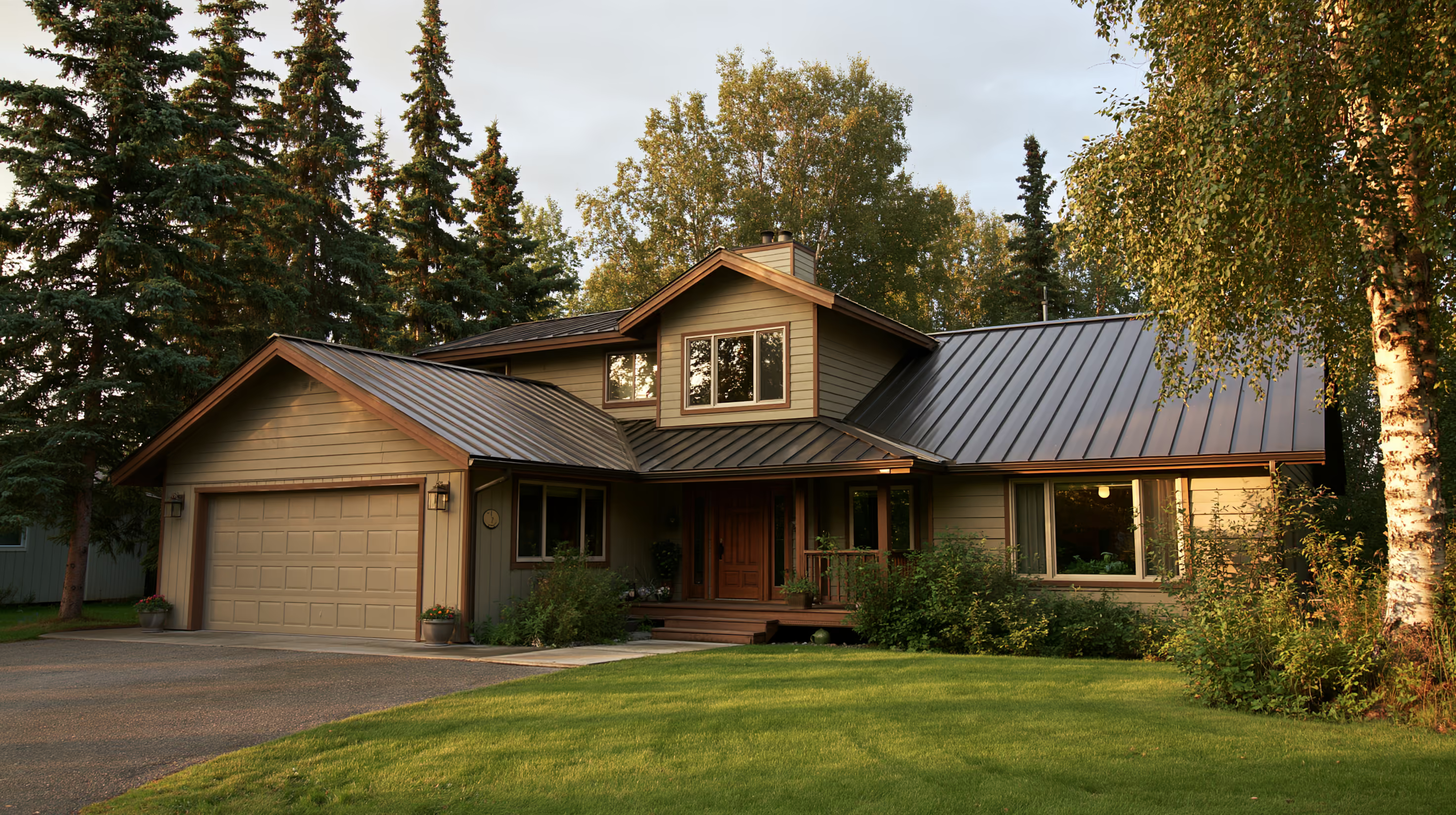
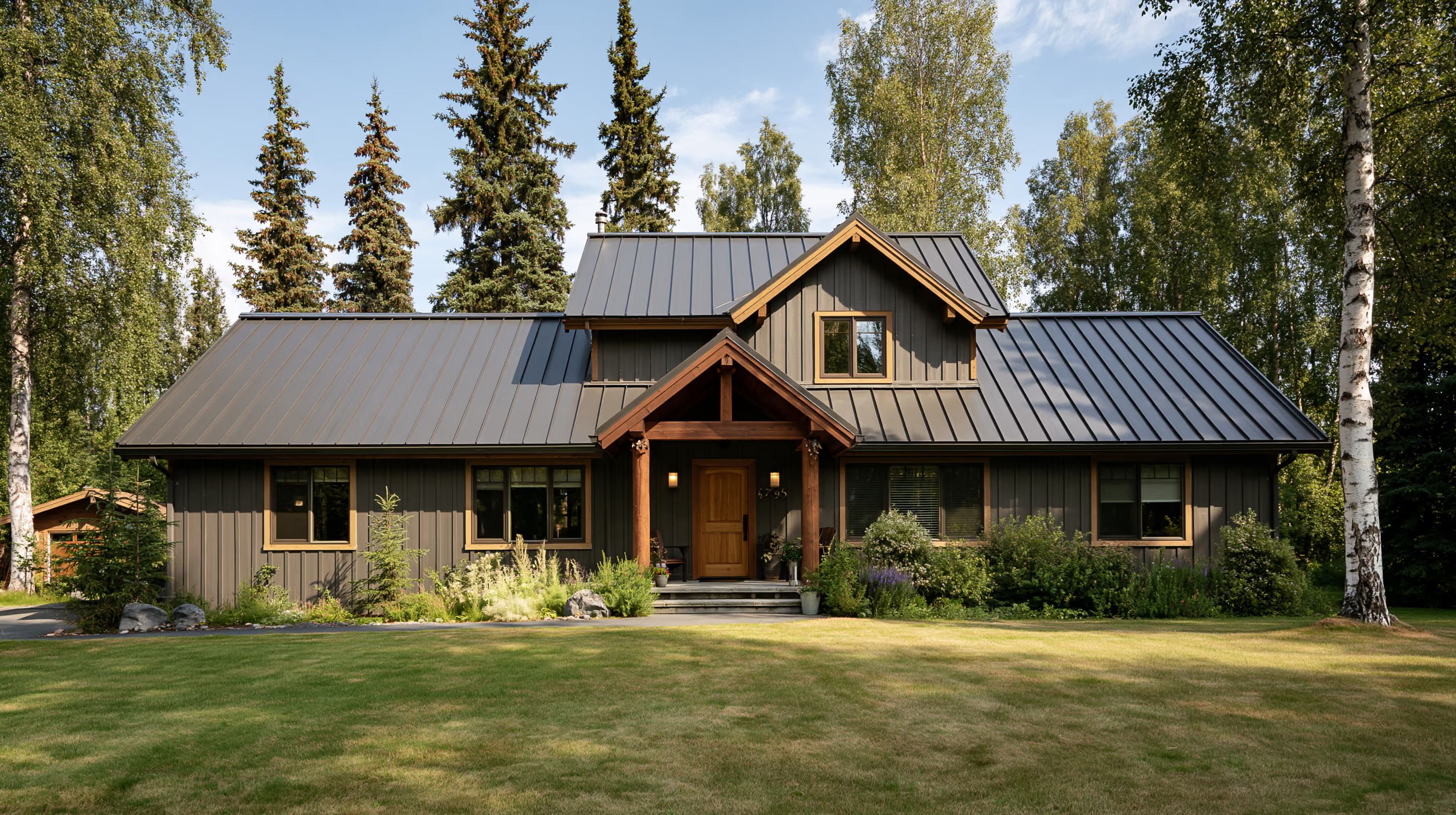
Metal roofs are their own case. Stone-coated steel holds snow in place much like a shingle roof and usually lets go in smaller slides, so in a heavy year it can need clearing like one. Standing seam lets go on its own, and when a slope comes down it can bury an entry or tear off a gutter. If slides are landing where people walk, snow guards are the fix, not more clearing.
Roof snow removal in Anchorage and the Valley
After a big storm, everyone calls at once. Call early: when the forecast turns heavy, or when you first see drifts building on the downwind side. If you’re doing some of it yourself, rake from the ground, don’t climb, and stay out from under a metal roof.
We clear roofs across Anchorage, from the Hillside to Muldoon, in Eagle River, and through the Valley in Wasilla, Palmer, and Big Lake, plus Girdwood.
What roof snow removal costs
It depends on the roof’s size and pitch, how deep and dense the snow is, how easy the roof is to get to, and whether there’s ice. A flat shop roof under a foot of fresh snow is a different job from a steep two-story house with packed drifts and ice at the eaves. Either way, you get the price before we start.
Get a price before the next storm.
Text a photo of the roof and the snow on it. We’ll tell you if it needs to come off, and what it costs, before we start.
Roof snow removal questions
The questions we get most often about roof snow removal in Anchorage and the Valley. Don’t see yours? Text us and a roofer answers.
Text my rooferThere’s no single depth, because weight is what counts. Ten to twelve inches of fresh snow is about 5 pounds per square foot, and a few inches of old, packed snow or an inch of ice weighs about the same. If you see sticking doors, new drywall cracks, or sagging, get everyone out of the building, then call.
From the ground, with a roof rake, yes. Pulling snow off the bottom few feet helps with ice dams and takes some weight off. Keep the rake away from the power line to the house, don’t climb onto a snowy roof, and don’t stand under the eaves of a metal roof while you rake. Anything the rake can’t reach is a job for us.
It can if someone scrapes down to the shingles or uses a metal shovel. We use plastic tools and leave a thin layer of snow on, so nothing touches the roofing, and we watch where each load lands. If we spot damage while we’re up there, you get photos and a written price.
Sometimes. Stone-coated steel holds snow in place much like a shingle roof and usually lets go in smaller slides, so in a heavy year it can need clearing like one. Standing seam lets go on its own, and the trouble is where it lands: a slope coming down can bury an entry, crush a deck, or tear off a gutter. For that, snow guards are the fix.
Yes. Flat and low-slope roofs on shops, warehouses, hangars, and retail and office buildings carry their snow all winter. We clear the drifts at parapets and step-downs, clear snow away from drains, and work around rooftop units. Commercial roofs are quoted before we start, like any other.
After a big storm everyone calls at once, so timing depends on the line. Text us a photo and the address and we’ll give you a straight answer. We’re at (907) 701-2233, Monday to Saturday, 7am to 7pm. Snow-load warning signs, like a sagging ceiling or doors that suddenly stick, are an emergency: get everyone out of the building, then call and say so.
Call before the next big storm
Text a photo or book a free inspection. You get the price before we start, and photos of your roof while we’re up there.