Roofing Contractor in Anchorage, Alaska
Roof replacement, repair, metal roofing, and snow removal across the Anchorage Bowl, from Sand Lake to the Hillside. A free inspection gets you photos and a written price within 24 hours.
Anchorage roofs get it from two directions. Snow builds up all winter, and on the Hillside the wind comes down off the Chugach hard enough to strip a roof. We replace and repair roofs across the Bowl, from Sand Lake and Spenard to Muldoon and up the Hillside, and every job starts with a free inspection: the roofing, the flashing, and the attic, with photos and a written price within 24 hours.
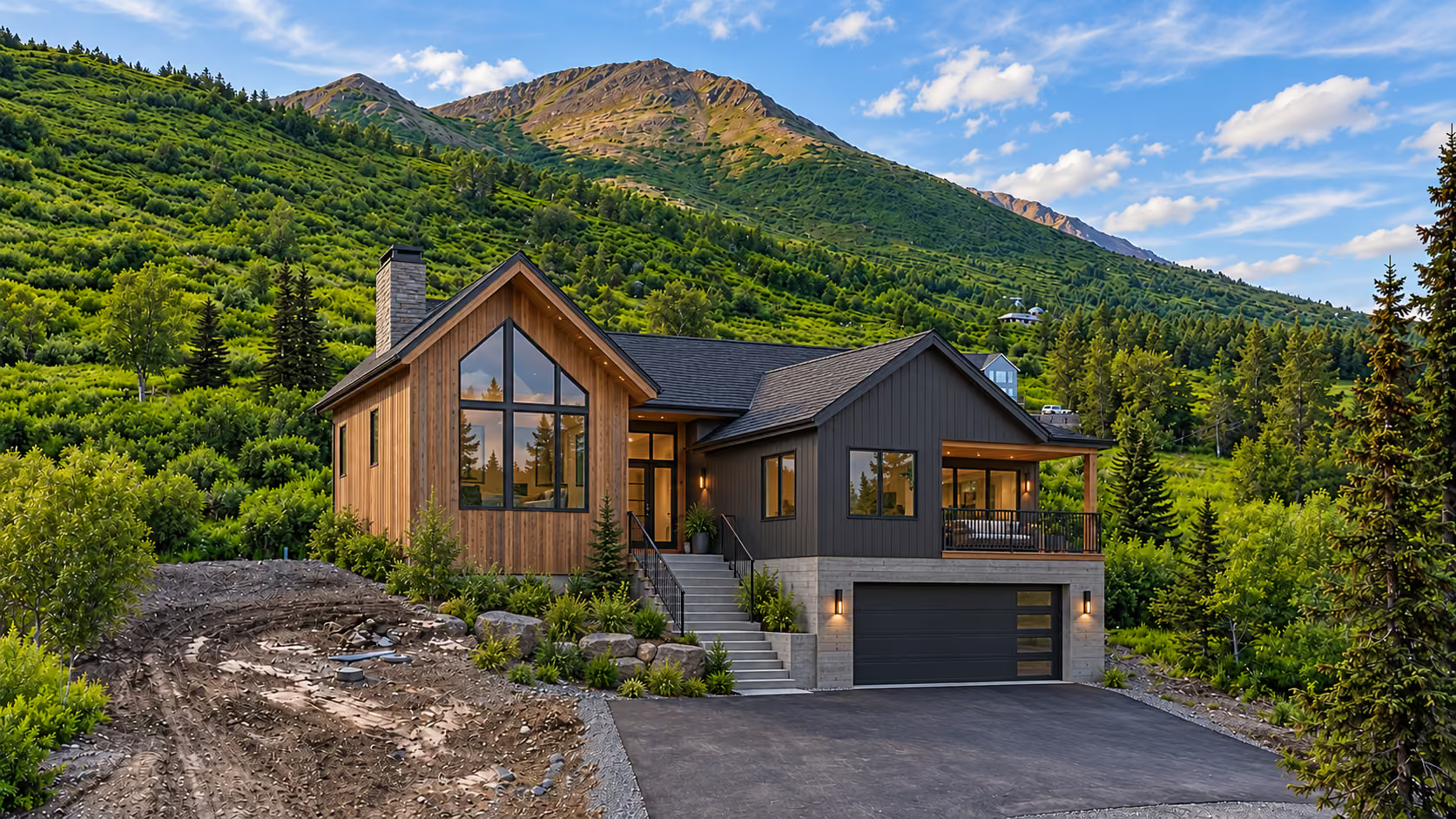
What Anchorage weather does to a roof
- Snow load. The airport averages about 78 inches of snow a year, and Glen Alps on the upper Hillside about twice that, by a provisional NOAA normal. The winter of 2023-24 brought 133.3 inches, the second-snowiest on record.
- Chugach wind. When the wind drops off the mountains, the Hillside takes the worst of it. Glen Alps clocked 118 mph in December 2011, and a January 2025 storm hit 110 mph in Bear Valley and tore roofs off.
- Ice dams. Heat leaking into the attic melts the snow on the roof, and it refreezes at the cold eaves. Anchorage’s code has its own rules for this, below.
- Breakup. Many leaks here show up in March and April, when the snow on the roof starts to melt and finds whatever winter opened up.
If the roof made it through the winter but something looks off, a free inspection after breakup is the time to find out.
Anchorage’s roof code is stricter than the national one
The Municipality amends the residential building code with rules written for snow and ice. They apply to a new roof, and they’re a good test of any estimate:
- Ice barrier at the eaves. Self-adhering membrane from the edge of the roof to at least 36 inches inside the exterior wall, and over the whole roof on slopes under 4:12.
- Valleys. Membrane at least 18 inches each side of the valley centerline.
- Penetrations. Pipes and other penetrations (attic vents aside) at least 6 feet from a valley centerline and 4 feet in from the wall line at the eave, and at least 24 inches tall.
- Attic ventilation. Half to three quarters of the vent area up high, within 3 feet of the ridge, with the rest at the eaves. The national code’s shortcut for less venting is deleted.
- Snow and the neighbors. Snow from a roof can’t shed across the property line.
We build Anchorage roofs to those rules and put the details in the written scope, so you can see what’s going on your house. Roof replacement →
Do you need a permit to replace a roof in Anchorage?
Inside the Anchorage Building Safety Service Area, which covers the Bowl and most of the Hillside, a new roof, tear-off or re-roof, needs a building permit when the job is worth more than $10,000 in materials and labor. The Municipality raised that from $5,000 when it adopted the 2024 codes in April 2026, so older advice online is out of date. Structural repairs need a permit at any price.
Eagle River, Girdwood, and parts of the upper Hillside sit outside that service area. Permits and inspections are optional there, but the code still applies. If you’re not sure which side of the line your house is on, the Municipality’s Development Services office can tell you by address.
Storm on the Hillside last night?
Text a photo of the roof from the yard and we’ll tell you what we see.
Snow loads, and which roofs are at risk
Anchorage designs houses for a ground snow load of 50 pounds per square foot (psf), and the Municipality’s snow guidance puts the minimum roof design load at 40 psf. Its published design data adds more with elevation on the Hillside: 7 psf for every 100 feet above 500 feet.
The roofs that failed in the big winters of 2022-23 and 2023-24 were almost all commercial, mostly flat or low-slope roofs on wood trusses built before 1990. More than two dozen failed over those two winters. The Municipality has said most homes should be able to safely carry the 40 psf design load, and buildings built after 1990 well over it.
Weight is what counts, not depth. If doors start sticking, new drywall cracks show up, or a ceiling sags, get everyone out of the building, then call (907) 701-2233. We clear roofs with fall protection and plastic tools and leave a thin layer to protect the roofing. Roof snow removal →
Pitched roofs
Most Anchorage homes carry a normal winter on their own. The trouble spots are drifts on the downwind side, snow over a warm attic feeding an ice dam at the eaves, and slides landing on decks and entries.
Flat and low-slope roofs
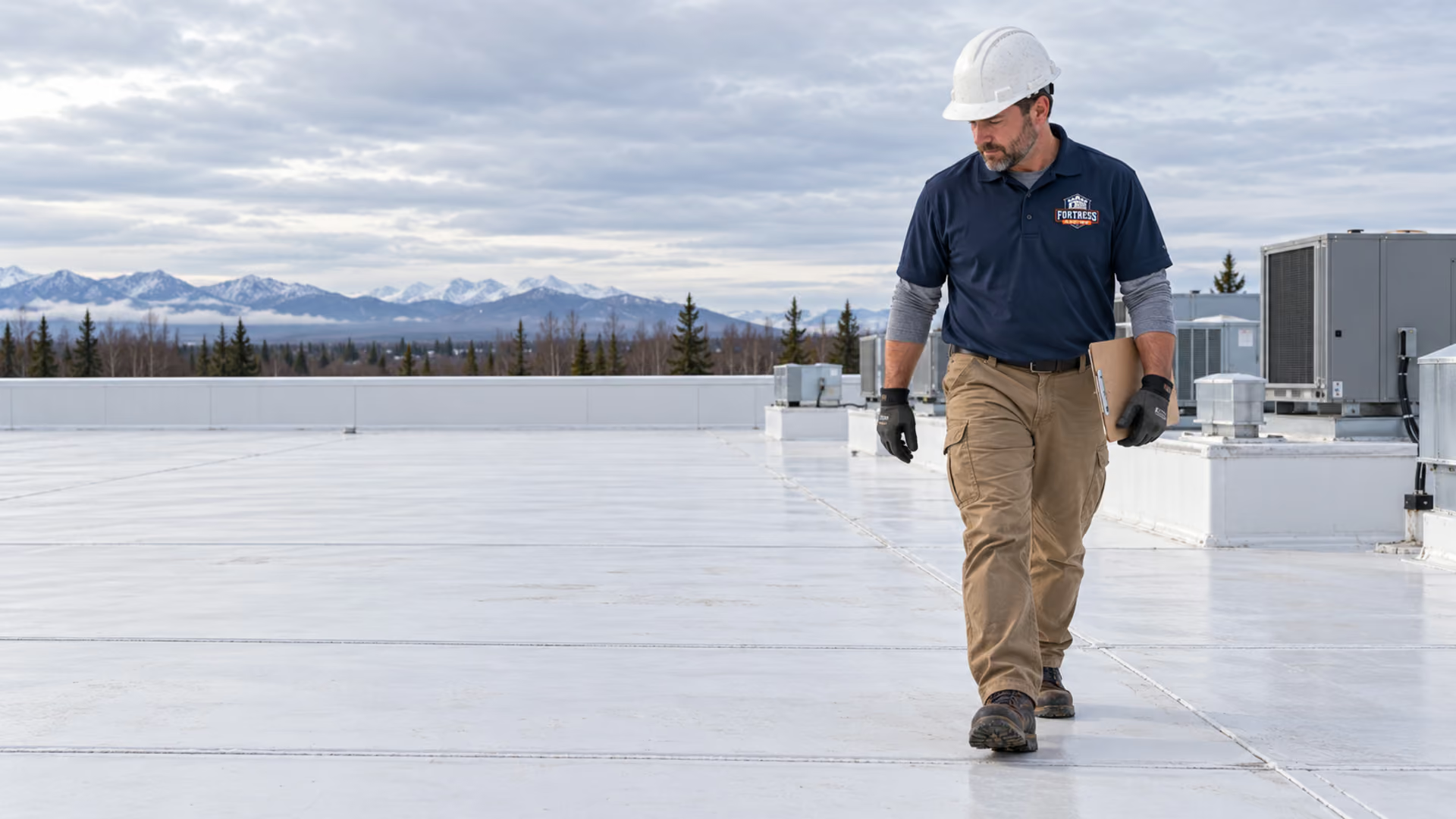
The Municipality has warned owners of older flat commercial roofs on wood trusses that some failed under 25 psf, and recommended keeping the snow under 15 psf. We clear drifts at parapets and around drains. Commercial roofing →
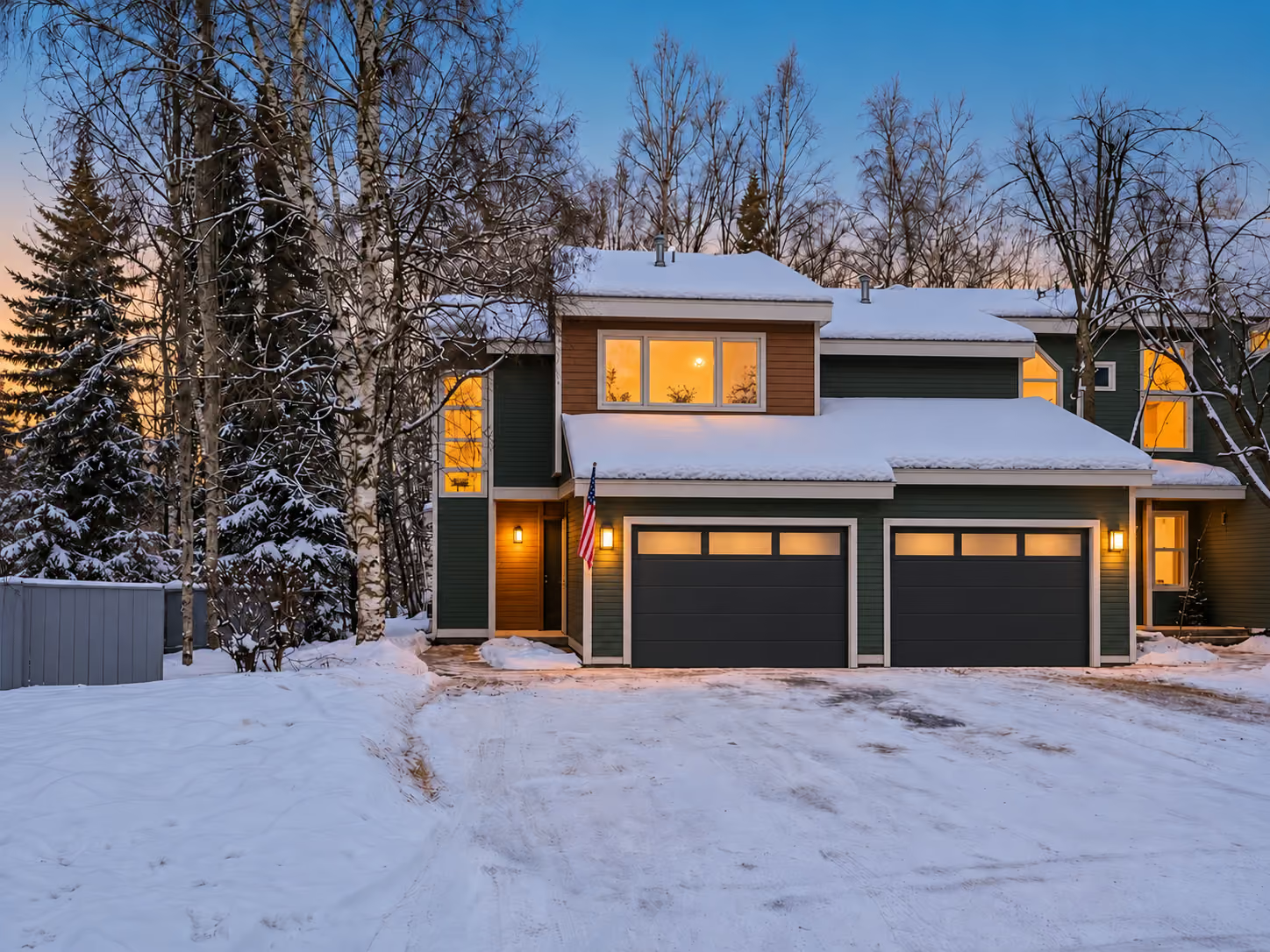
Anchorage houses and what goes on them
Anchorage grew fast in the 1970s and 1980s. The median home in the Municipality was built in 1982, and about half went up between 1970 and 1989, according to Census estimates. On a house that age, what’s under the shingles matters as much as the shingles: the decking, the ventilation, and how the eaves were detailed. We check the attic before we price a re-roof, and if the decking needs work, the job becomes a tear-off, with decking included in the price.
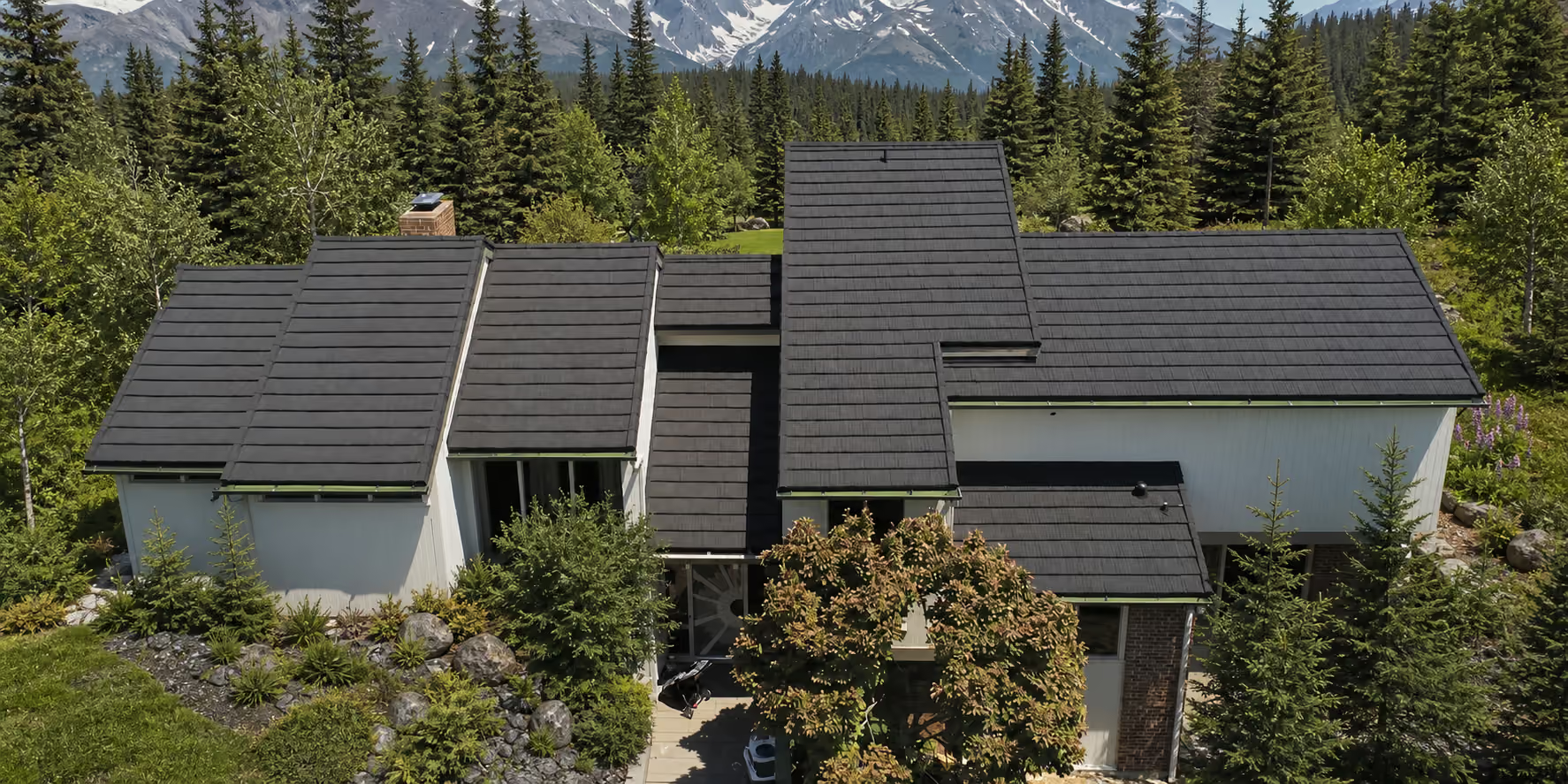
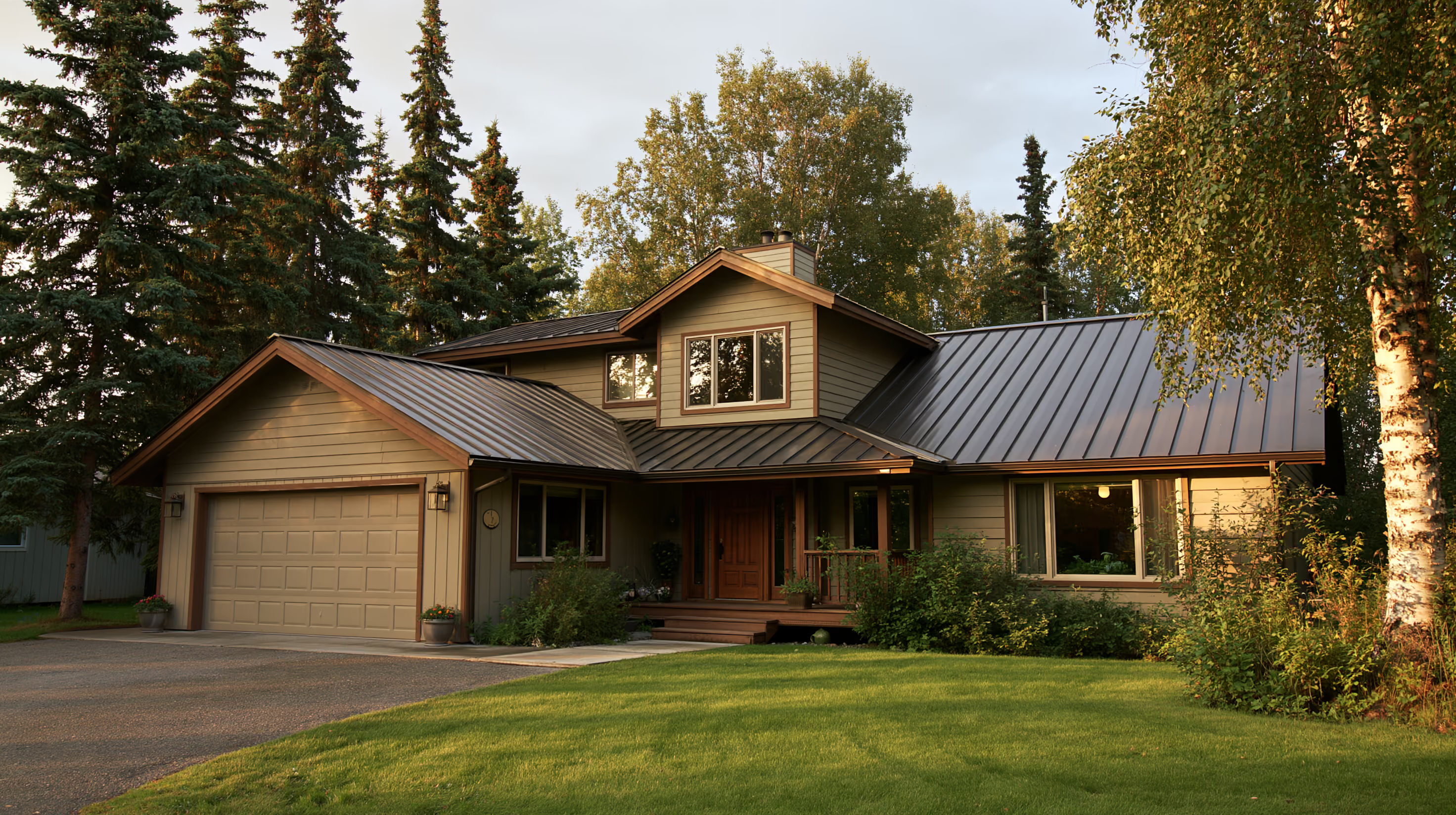
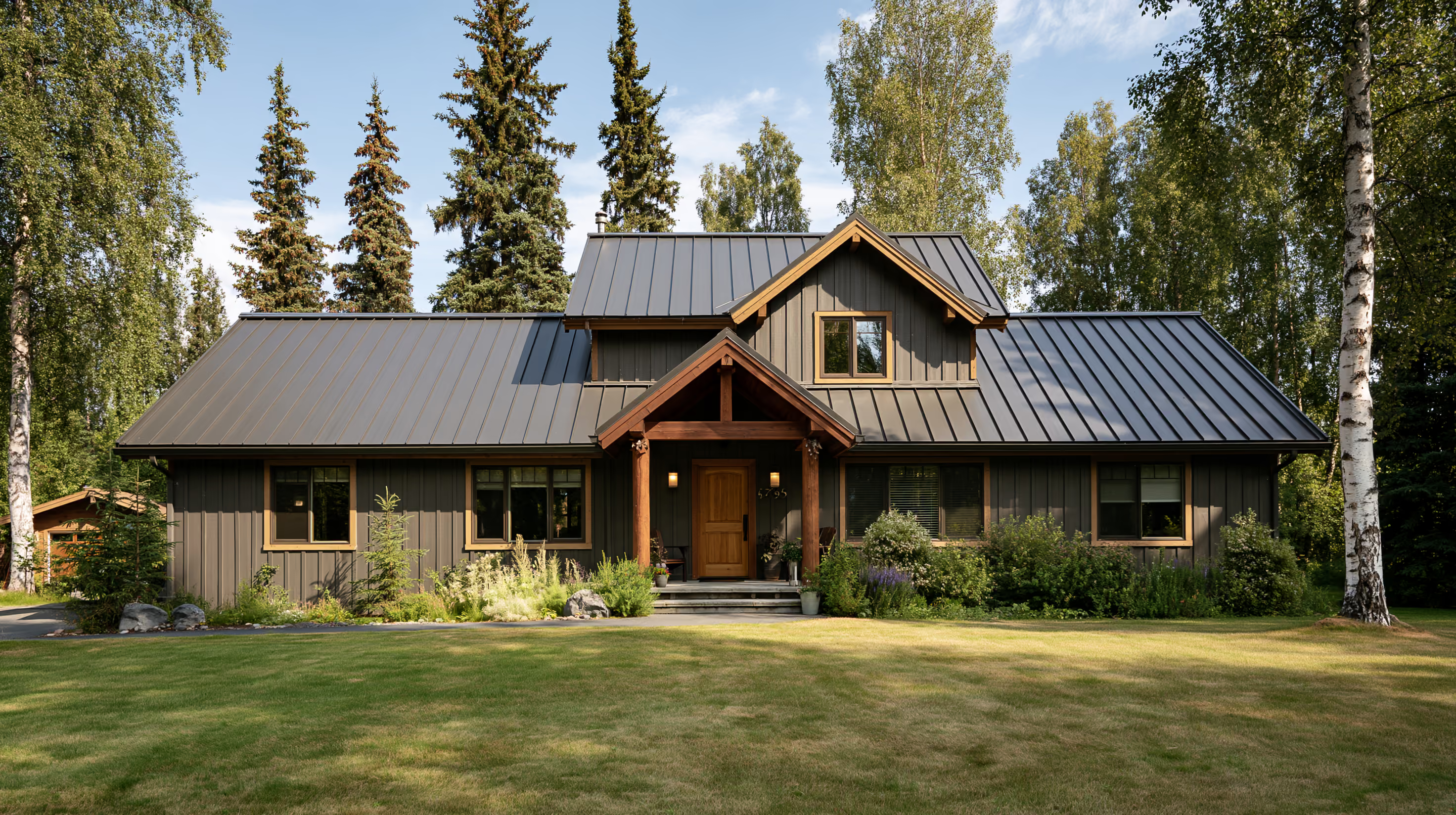
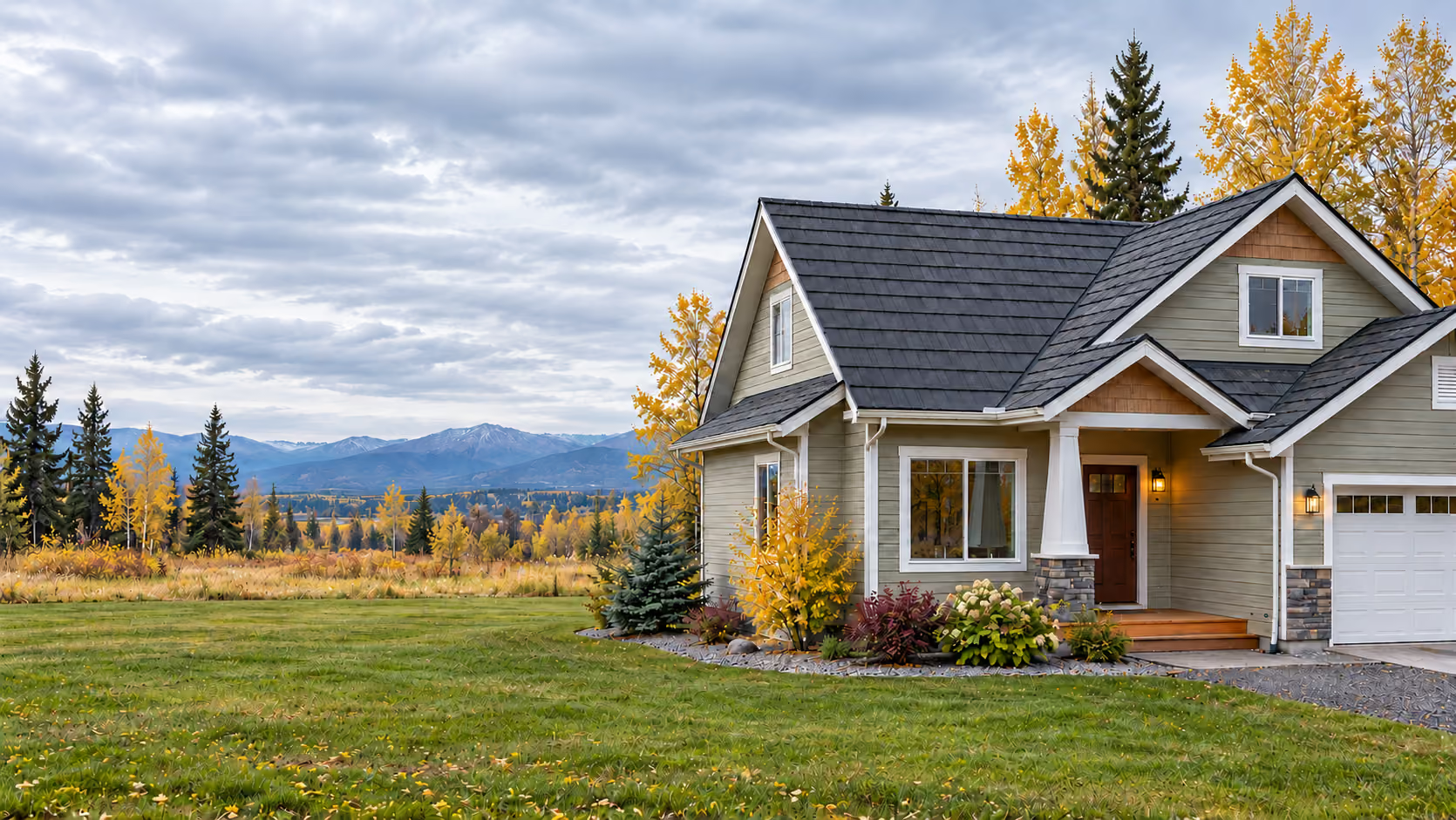
For the roofing, we install architectural asphalt shingles, stone-coated steel, and standing seam. Stone-coated steel holds snow in place much like a shingle roof and usually lets go in smaller slides, so it needs fewer guards, but still gets them over doors, decks, and walkways. Standing seam lets go of snow all at once, which is why it gets rows of snow guards, and why the property line rule matters. Metal roofing →
Where we work in Anchorage
The whole Bowl and the Hillside: Sand Lake, Turnagain, Spenard, Midtown, Rogers Park, Airport Heights, Government Hill, Mountain View, Russian Jack, Muldoon, Abbott Loop, Huffman/O’Malley, Rabbit Creek, Bear Valley, and Glen Alps. We’re based in Palmer, about 42 miles up the Glenn Highway. Farther out in the Municipality, see Eagle River and Girdwood.
Roofing services in Anchorage
- Roof replacement. Tear-off or re-roof, asphalt or metal, decking included. Roof replacement →
- Roof repair. Leaks, flashing, wind damage, and ice dam damage. Roof repair →
- Storm damage. After a Hillside windstorm, with photos for your insurer. Storm damage repair →
- Metal roofing. Stone-coated steel and standing seam, with snow guards where slides would land. Metal roofing →
- Roof snow removal. Homes and flat commercial roofs. Roof snow removal →
- Commercial roofing. TPO, EPDM, modified bitumen, and metal panels. Commercial roofing →
Start with a free inspection.
We check the roof and the attic, then send photos and a written price within 24 hours.
Anchorage roofing questions
The questions we get most from Anchorage homeowners. Don’t see yours? Text us and a roofer answers.
Text my rooferInside the Building Safety Service Area, which covers the Bowl and most of the Hillside, yes, when the job is worth more than $10,000 in materials and labor, tear-off or re-roof. Structural repairs need a permit at any price. Eagle River, Girdwood, and parts of the upper Hillside are outside the service area, where permits and inspections are optional.
More than the national code. Self-adhering ice barrier from the eave to at least 36 inches inside the exterior wall, or over the whole roof below a 4:12 pitch; membrane at least 18 inches each side of every valley; penetrations kept away from valleys and eaves; and half to three quarters of the attic venting up near the ridge. Ask any roofer how their estimate handles each one.
It’s rare. An Anchorage fire official recalled only two residential roof failures in 24 years where snow load played a part, and the roofs that failed in the big winters of 2022-23 and 2023-24 were almost all commercial, mostly flat roofs on wood trusses from before 1990. The Municipality says most homes should be able to safely carry the 40 psf design load. Watch for doors that stick, new drywall cracks, or a sagging ceiling. If you see them, get everyone out of the building, then call.
Yes, from Abbott Loop up to Glen Alps and Bear Valley. Hillside roofs see more snow and more wind than the Bowl: the Municipality’s published design data adds snow load with elevation, and its wind zones climb toward the mountains. After a Chugach windstorm, an inspection catches lifted shingles before the next storm finishes the job.
On standing seam, yes. It lets go of snow all at once, and Anchorage’s code says snow can’t shed across the property line. Guards go over entries, decks, walkways, and anything else a slide would hit. Stone-coated steel holds snow in place much like a shingle roof and usually lets go in smaller slides, so it needs fewer guards, but it still gets them over doors, decks, and walkways.
Yes. We install and repair TPO, EPDM, modified bitumen, and metal panel roofs on shops, warehouses, and offices, and clear snow off flat roofs in winter. For a building, start with a free commercial roof assessment and a written scope and budget.
Let’s take a look at your roof
Text a photo or book online. You get a photo report and a written price within 24 hours of the inspection, and no pressure after it.