Metal Shingles vs. Standing Seam for Alaska Homes
Two steel roofs, two very different ways of handling snow. Here’s how stone-coated steel and standing seam compare on an Alaska house, and how to pick.
Stone-coated steel and standing seam are the two metal roofs we put on homes across Anchorage and the Mat-Su. Both are steel. Past that, they’re built differently, shed snow differently, and fit different houses.
Snow is the big one up here, since a slide off a metal roof can hurt someone. Pitch, the roof you have now, and the look you want narrow it down from there.
How each one is built
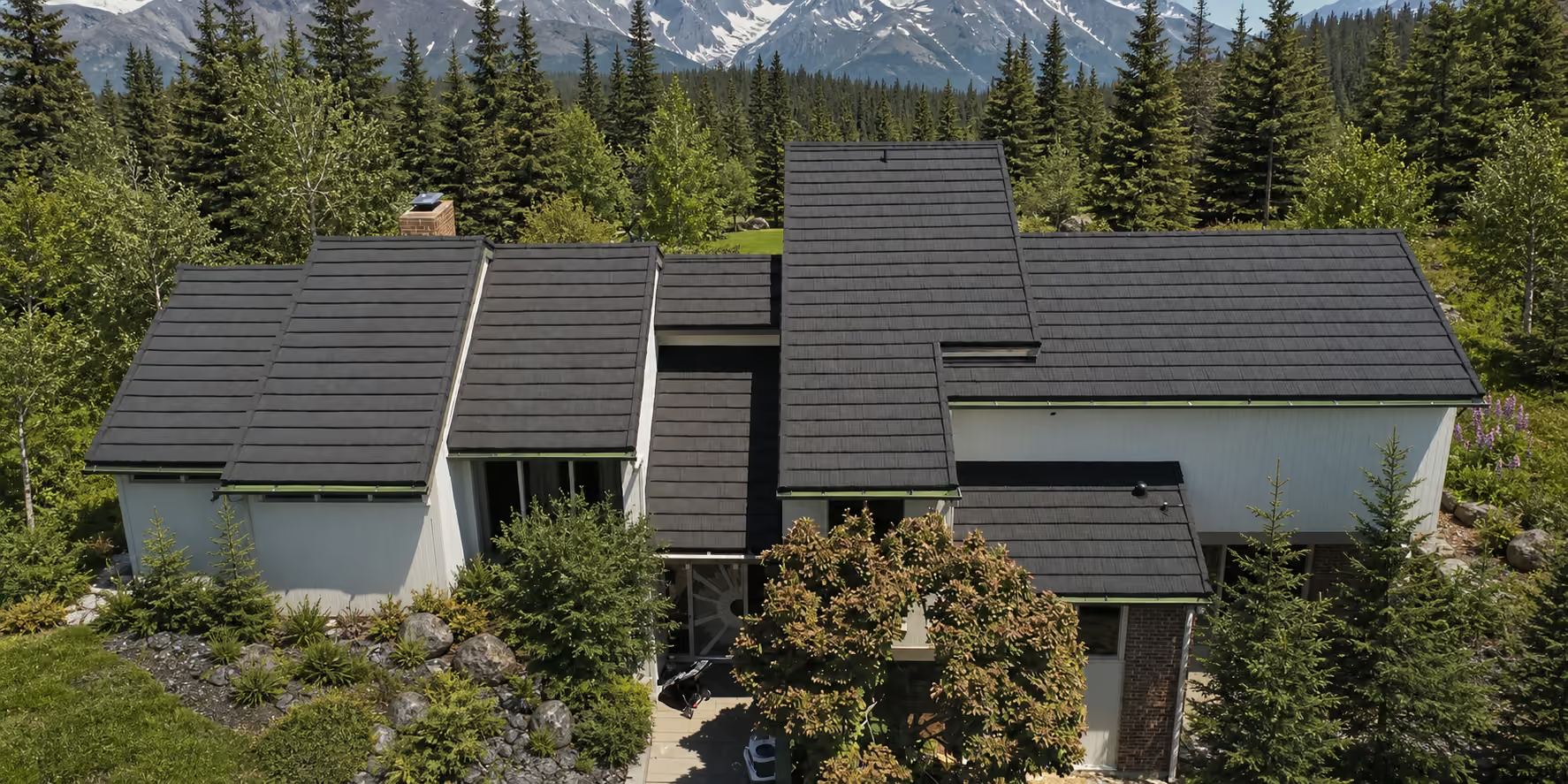
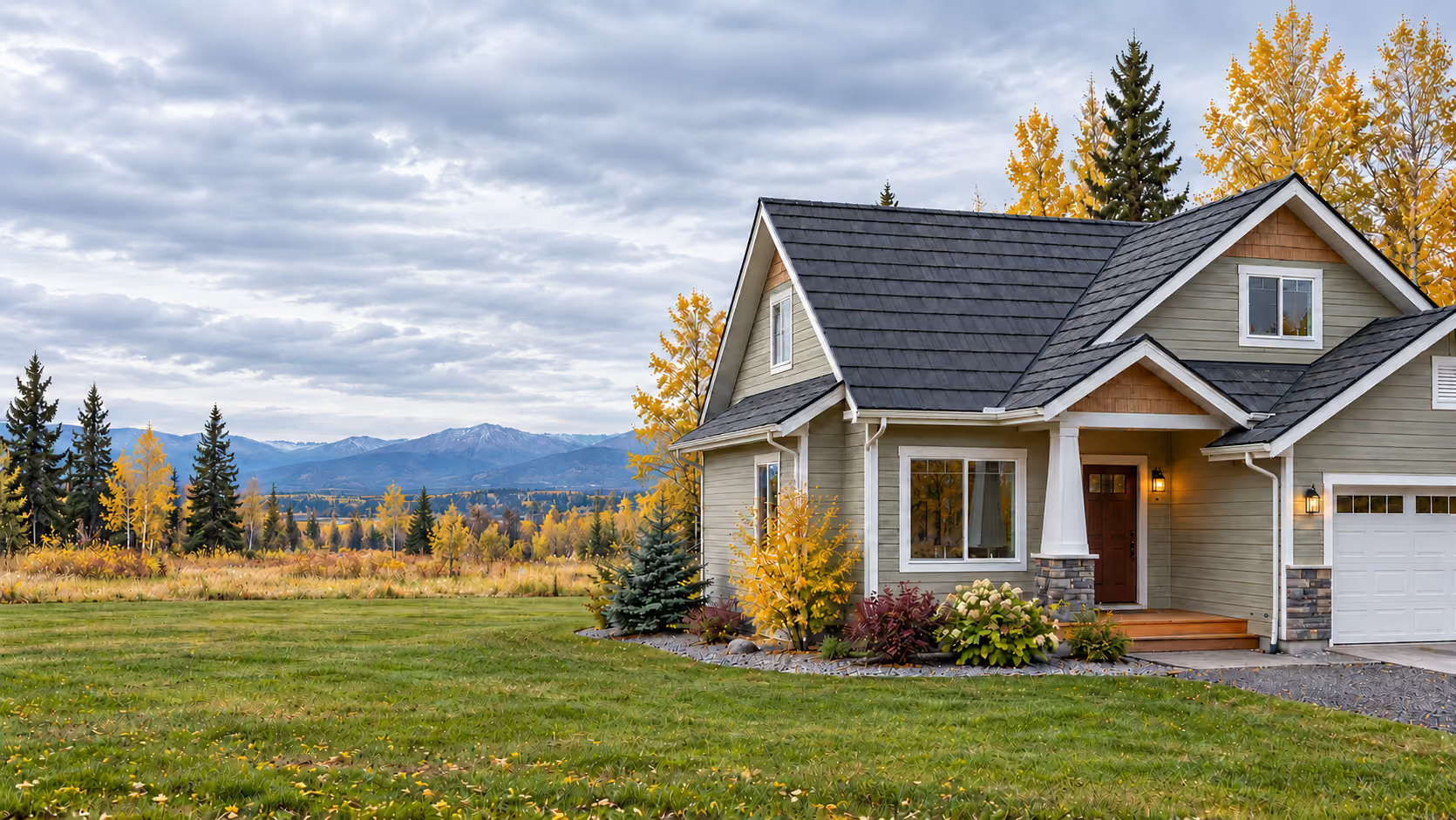
- Stone-coated steel. Steel with an aluminum-zinc coating, a base coat, stone granules, and a clear glaze, in shingle, shake, and slate profiles. The panels lock together and fasten to a solid deck or to wood battens, depending on the profile.
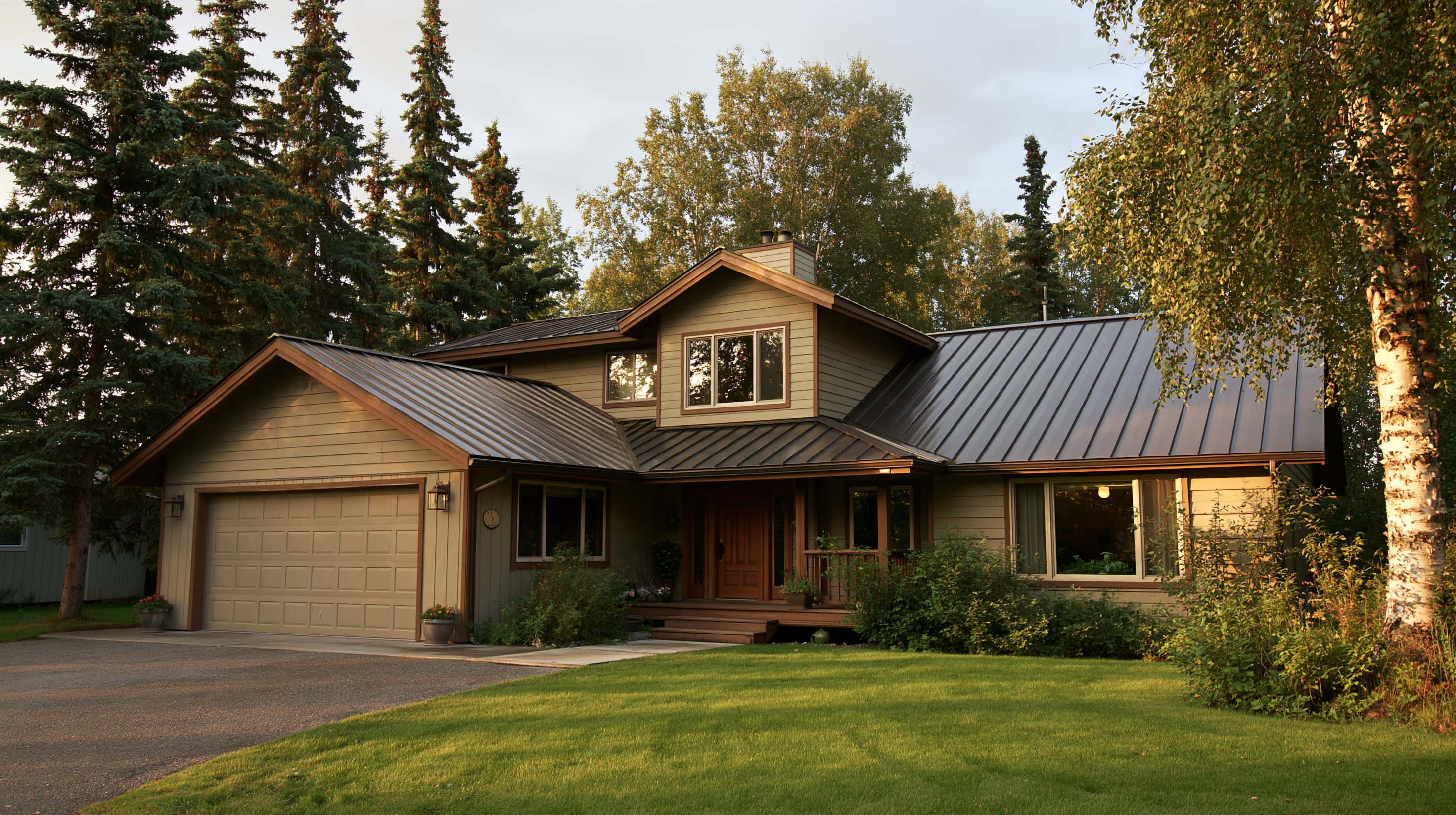
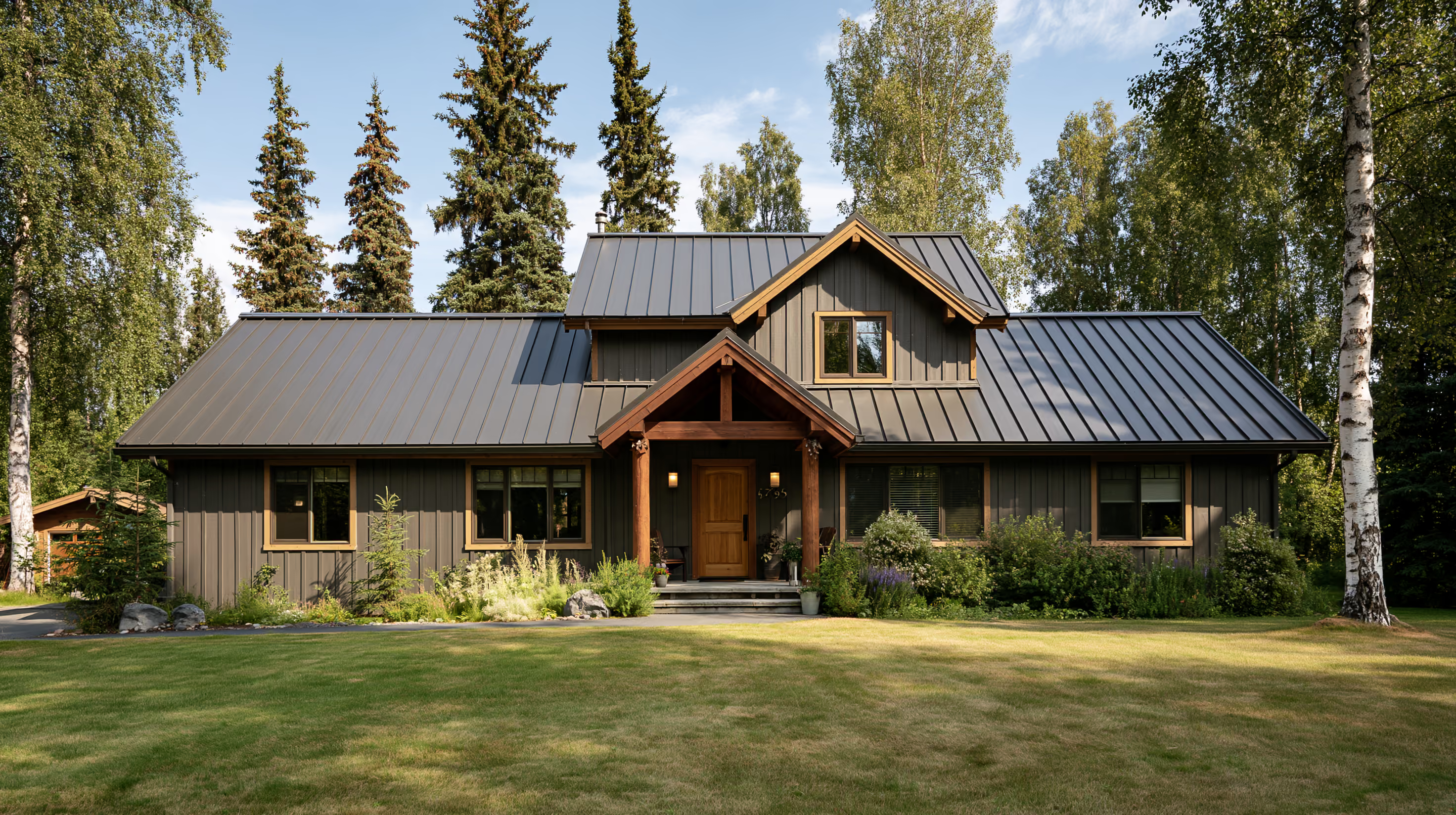
- Standing seam. Long, smooth panels joined at raised seams and held down by clips or fasteners hidden under the seams, so no screws show. The panels generally aren’t pinned tight, because steel moves with temperature. Restrict that and you get waviness, loose fasteners, and noise.
How each one handles Alaska snow
Sliding snow is a hazard, not a feature. It can hurt people and pets, crush a deck or a car, and tear gutters off. The Municipality of Anchorage warns that a metal roof can avalanche its entire snow load in an instant, without warning, and says to install snow guards or block access below. Its code also says snow may not shed across a property line.
Stone-coated steel holds snow in place much like a shingle roof and usually lets go in smaller slides, not a whole slope at once. A maker’s rep credits the granules, and another maker notes steep roofs can shed more easily. It still gets guards over doors, decks, and walkways.
Standing seam sheds snow faster than anything else we install, so it gets guards wherever a slide would land, laid out from the pitch, panel length, and snow load. The metal construction industry’s trade group goes further, advising guards along the whole eave line and calling doorway-only guards potentially dangerous. A couple of guards over the front door won’t do it. Snow guards →
Torn between the two?
Text us a photo of the house and a roofer will tell you what we see.
Roof pitch and roof shape
The model residential code puts metal shingles at 3:12 or steeper, three inches of rise per foot of run, and one maker’s shingle profile needs 4:12. Snap-lock standing seam is generally 3:12 and steeper, and one supplier warns freeze and thaw can work its seams loose, advising double-lock seams in cold areas. Mechanically seamed panels go down to half an inch per foot with sealant in the seams, so below 3:12 they’re the usual choice.
Hips, valleys, dormers, and chimneys slow any metal install and add labor. On standing seam, also note where each slope drops its snow: an entry, a deck, the driveway, a lower roof, or the neighbor’s yard.
Going over an existing roof
Either one can often go over one layer of asphalt. Code generally allows one roof-over, but not over two layers or a roof that’s water-soaked or deteriorated. The old shingles aren’t underlayment, so a new layer goes between them and the metal. Makers add two catches: an uneven old roof can show through, and a roof-over is hard to ventilate. If the decking needs work, it’s a tear-off, with decking included in the price. Roof replacement →
Weight and rain noise
Both weigh less than asphalt. Stone-coated steel runs about 1.3 to 1.5 pounds per square foot, depending on the maker, and steel standing seam about 1 pound in 24 gauge. Engineers’ design tables put asphalt shingles at 2. As for rain, the drumming people picture comes from bare metal over open framing. On a house, the deck, underlayment, and insulation absorb most of it.
Wind and impact
Ratings belong to a product, not to metal in general. One maker’s evaluation report rates its stone-coated panels for 38 to 154 pounds per square foot of uplift, depending on the fasteners and where on the roof they sit. Standing seam wind ratings come from lab tests of a specific panel and clip, and changing either one needs an engineer’s review or new testing.
For impact, Class 4 is the top rating. The test drops a 2-inch steel ball and checks for cracks, not dents, and thinner 26-gauge steel dents more easily than 24.
Repairs
- Stone-coated steel fixes in small pieces: touch-up where stone has chipped off, or one panel replaced on its own. One maker’s manual calls for a new panel once damage runs past 10 inches across.
- Standing seam panels run eave to ridge, so serious damage means a new full panel, or a short one at the eave or ridge. Even a screw through a seam means a new panel.
We repair both, including metal roofs someone else installed. Metal roof repair →
Looks
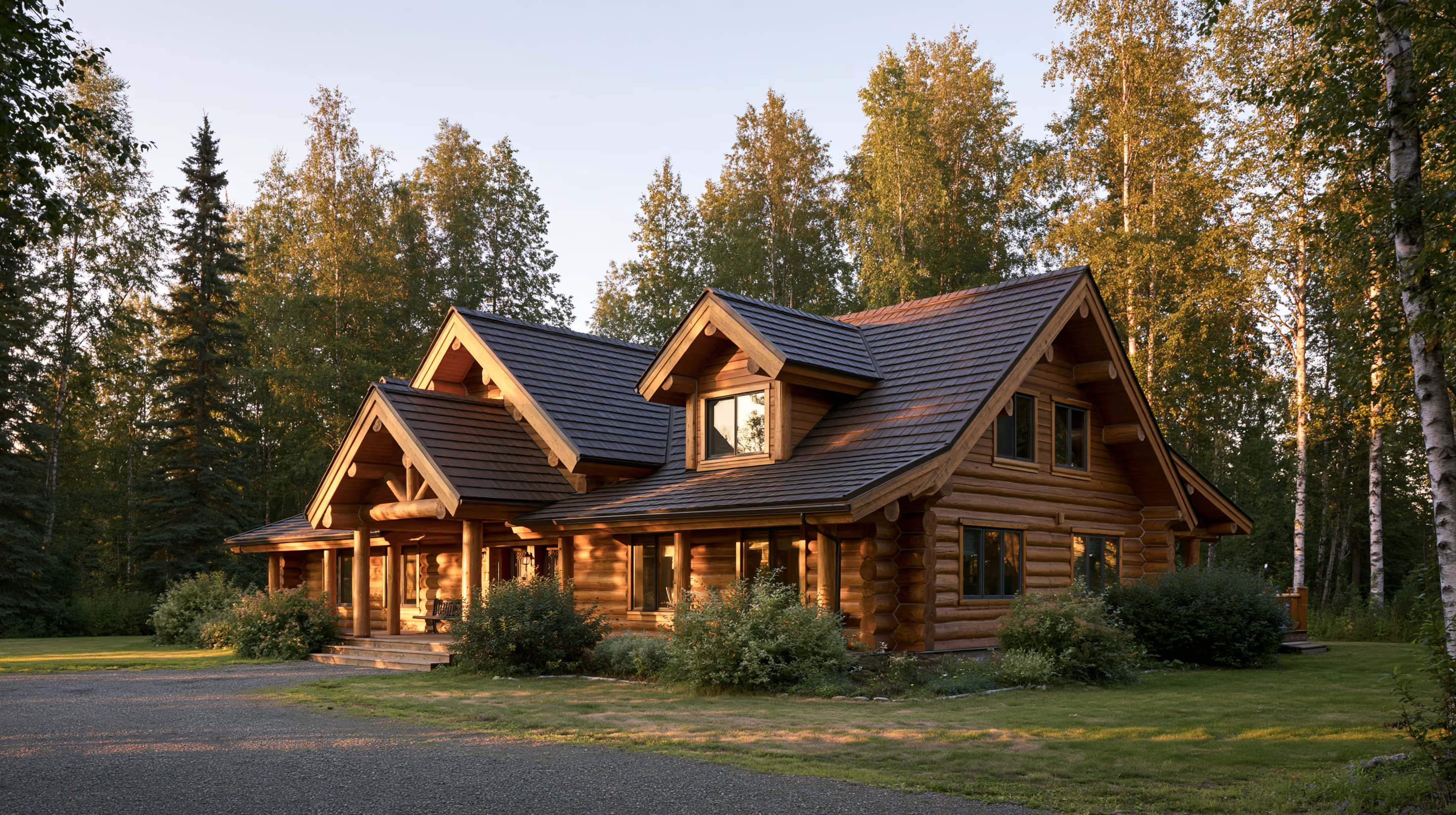
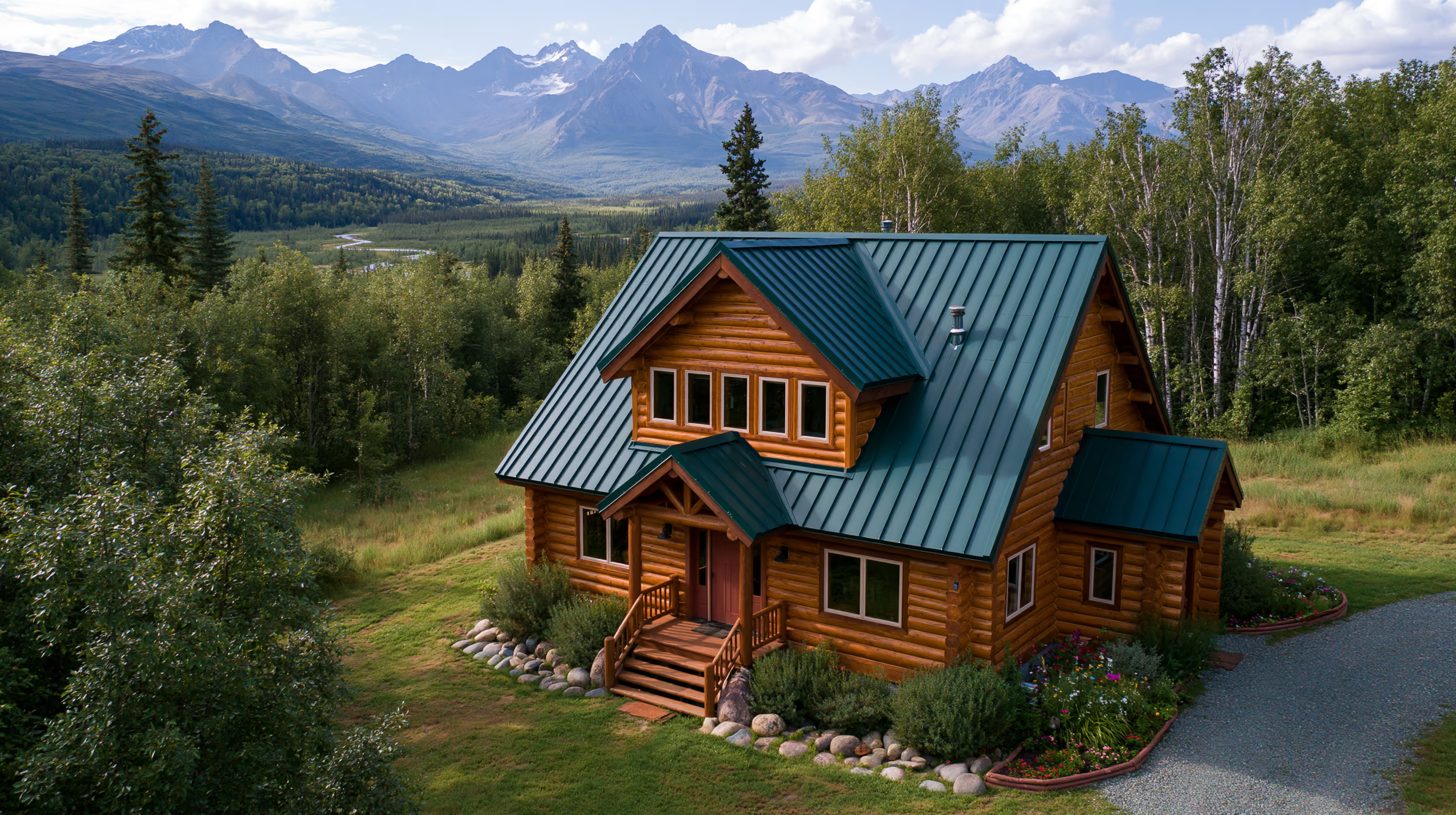
Stone-coated steel reads as shingles, shake, or slate from the street, with its color in matte granules. Standing seam is wide, flat panels with a raised rib on each side, in smooth painted colors. Makers say standing seam suits modern homes and cabins, and stone-coated steel suits a traditional look. Colors and finishes →
How to choose
Stone-coated steel
For a roof at 3:12 or steeper when you want the look of shingles or shake, or when doors, decks, and the driveway sit under the eaves. Guards still go over those spots. Metal shingles →
Standing seam
For a low-slope roof, or for long, clean panels where you can plan for the snow: guards wherever a slide would land, or open ground people stay out of. Standing seam →
Neither wins on every house. We install both, and a free inspection on the roof and in the attic tells you which one fits yours. You get a photo report and a written price within 24 hours. Metal roofing → Roof inspections →
Every metal roof starts with a free inspection.
Photo report and a written price within 24 hours, and no pressure after it.
Metal shingle and standing seam questions
The questions we get most from homeowners weighing the two. Don’t see yours? Text us and a roofer answers.
Text my rooferNot better, different. Snow comes off standing seam fast, often a whole slope at a time, so it needs guards wherever a slide would land, and a metal industry trade group advises guarding the whole eave line. Stone-coated steel holds snow in place much like a shingle roof and usually lets go in smaller slides, but still gets guards over doors, decks, and walkways.
Often, yes, over one sound layer of asphalt with decking that checks out from the attic. Code generally allows one roof-over, but not over two layers or a water-soaked or deteriorated roof, so those come off first. New underlayment goes over the old shingles, since they don’t count as underlayment themselves. If the decking needs work, it’s a tear-off, decking included.
Not the way people picture. One industry article puts rain on metal at about 52 decibels against 46 on shingles. The deck, underlayment, and insulation under a house roof absorb most of the sound, and stone-coated steel, with its granules, is about as quiet as shingles.
It depends on the roof, and published sources don’t agree on which runs higher. Both cost more than asphalt up front. Within standing seam, snap-lock usually costs less than mechanically seamed. Size, pitch, valleys, dormers, tear-off or re-roof, and snow guards set your number, and you get it in writing within 24 hours of a free inspection.
At least 3:12 under the model residential code, meaning three inches of rise for every foot of run, and one maker’s shingle profile needs 4:12. Below 3:12, mechanically seamed standing seam is the usual choice. It goes down to half an inch per foot with sealant in the seams.
A standing seam maker puts standing seam at 40 to 70 years or more. For stone-coated steel, a maker’s rep puts it at 36 to 50 years and up. Whichever you pick, a replacement gets new flashing, ice and water membrane at the eaves and valleys, and ventilation sized to the attic.
Let’s see which metal roof fits your house
Text a photo or book an inspection. You get a photo report and a written price within 24 hours, and no pressure after it.