Commercial Roofing in Anchorage & the Mat-Su Valley
TPO, EPDM, modified bitumen, and metal roofs for shops, hangars, warehouses, and retail and office buildings. Every job starts with a free assessment and a written budget.
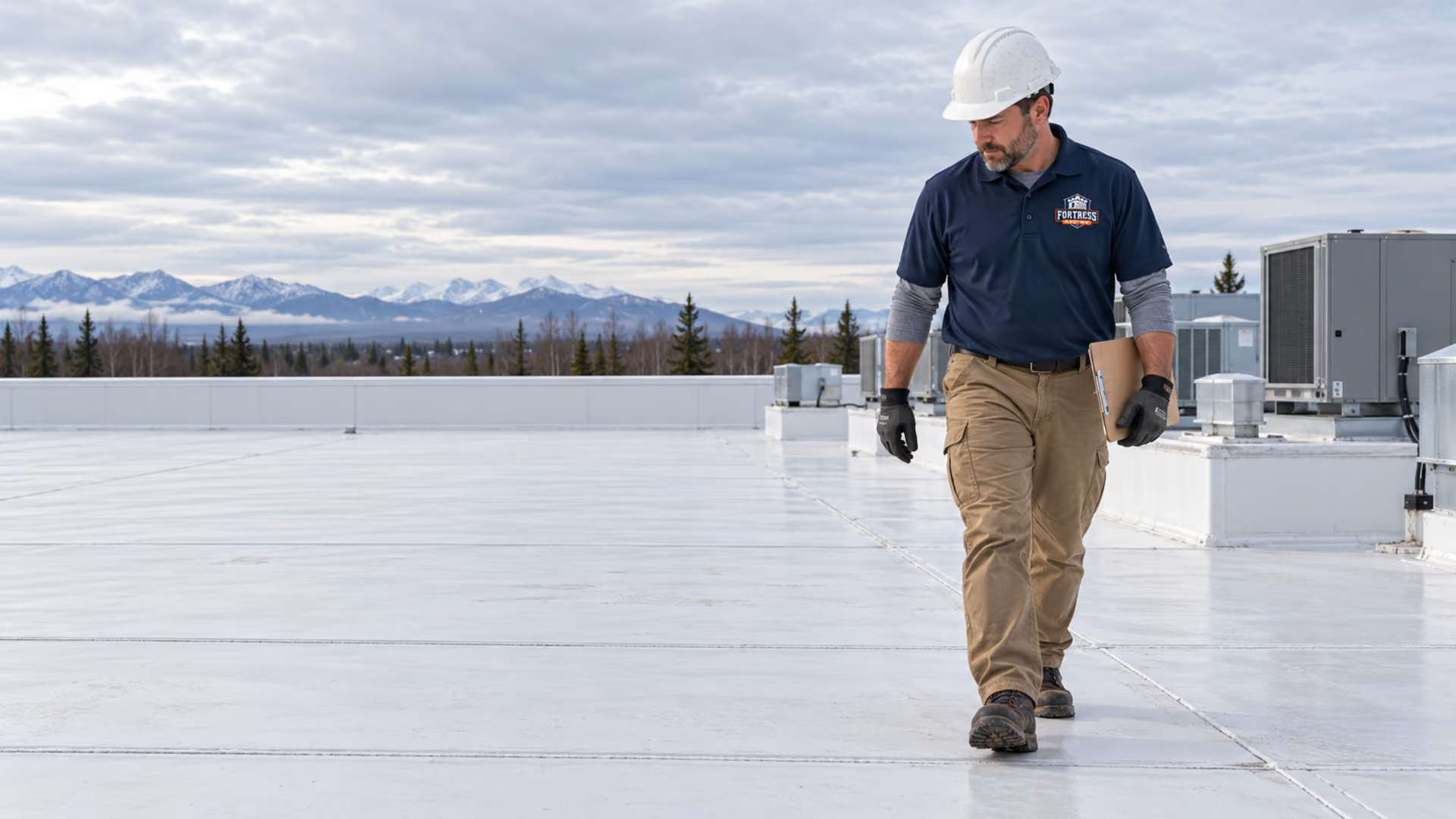
We install, repair, and maintain commercial roofs across Anchorage and the Mat-Su, from a shop in Wasilla to a hangar in Palmer. Low-slope roofs get TPO, EPDM, or modified bitumen. Metal buildings get standing seam or exposed-fastener panels. The free assessment comes first: we walk the roof, photograph what we find, and give you a written scope and budget with options, so you can plan the spend before anyone opens the roof.
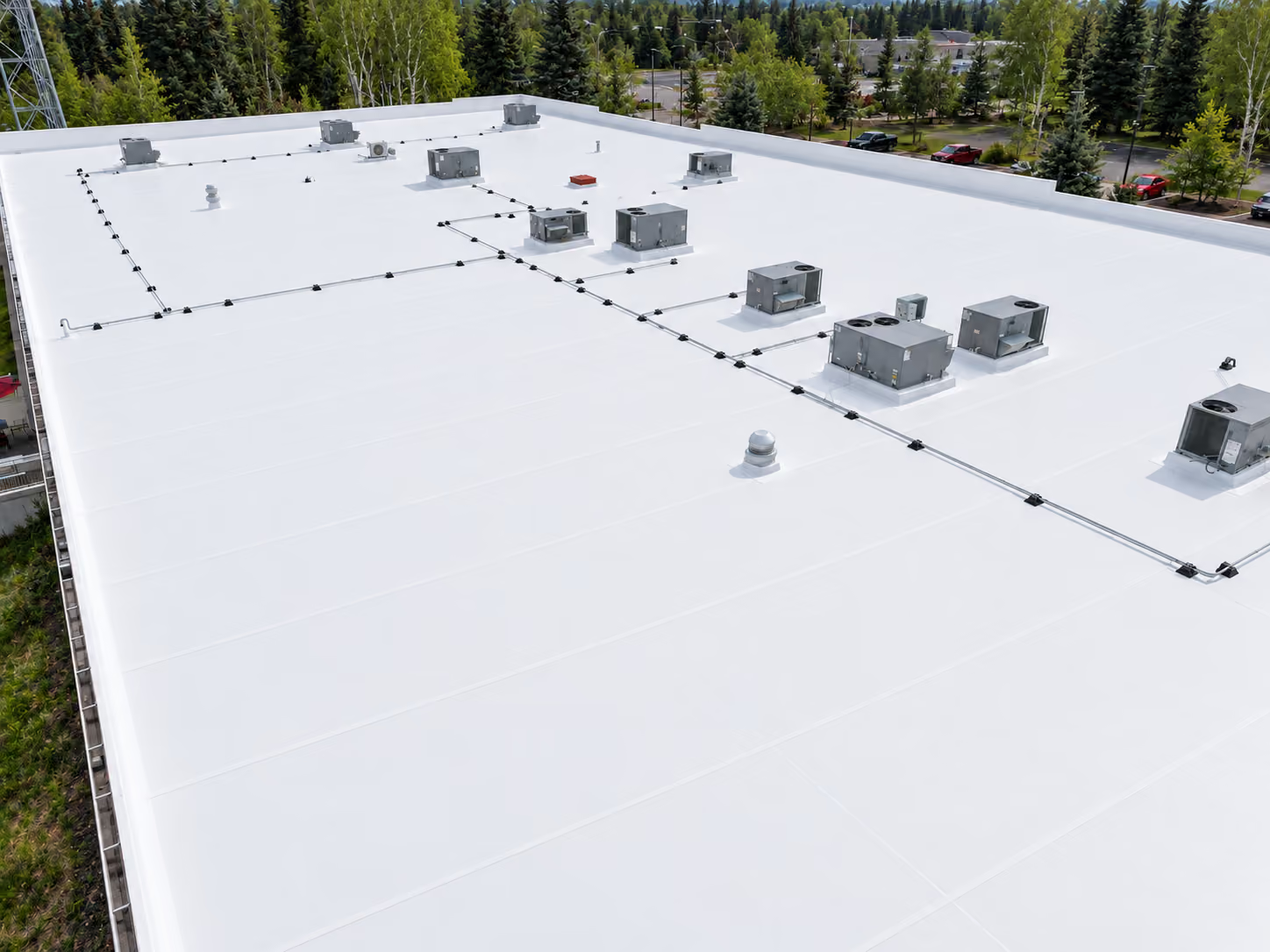
Commercial roofing services we offer
For building owners, property managers, and the businesses inside:
- Replacement. A tear-off, or a new roof over the old one when it qualifies.
- Repair. Leaks at seams, drains, curbs, and flashing on low-slope roofs. Fasteners, panels, and trim on metal buildings.
- Assessments. A free, written look at what the roof needs and what it has left. Commercial roof assessments →
- Maintenance. Spring and fall visits: drains cleared, seams checked, a photo report each time. Commercial roof maintenance →
- Snow removal. Drifts and deep snow cleared, with care around drains and rooftop units. Roof snow removal →
- Storm damage. Wind and snow-load damage photographed for your adjuster, then repaired. Storm damage repair →
Commercial roofing systems we install
Four systems, matched to the slope, the building, and how the roof gets used.
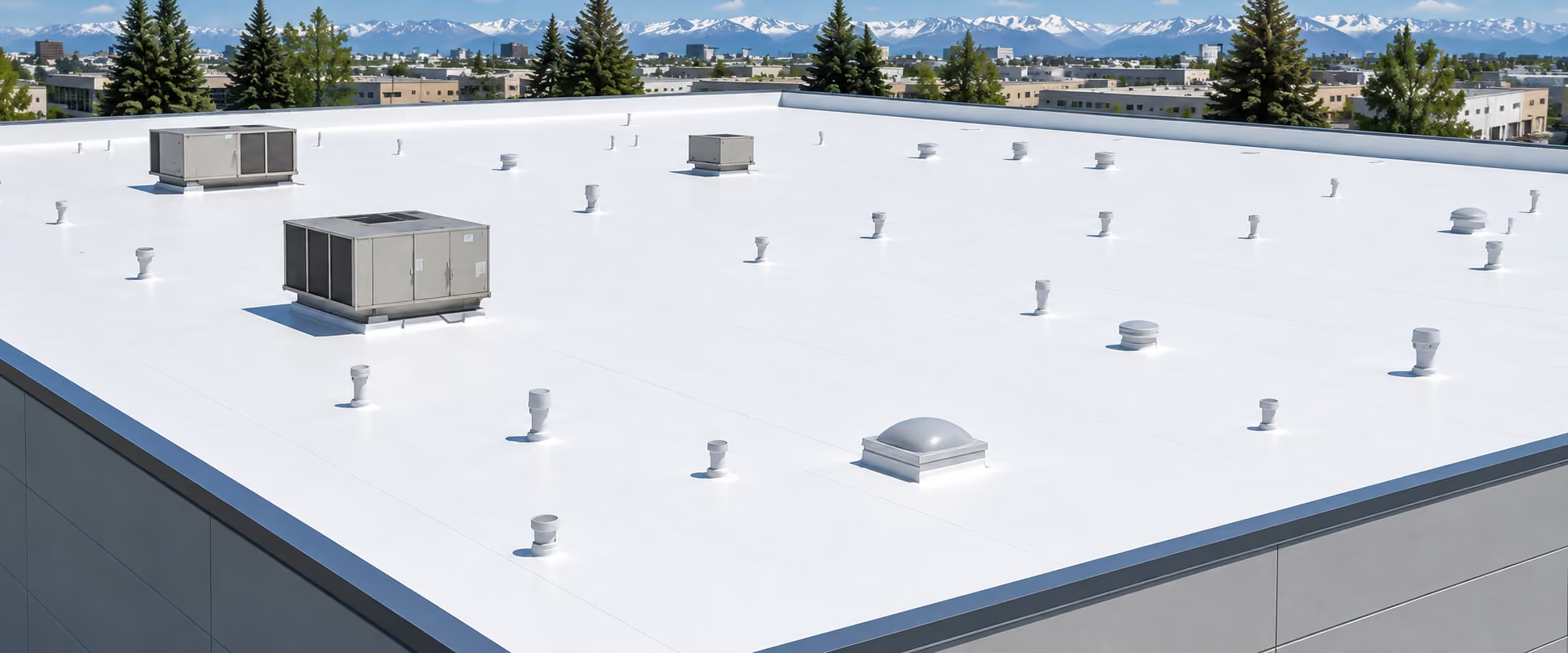
- TPO: a single-ply membrane with hot-air welded seams, so the seams are its strong point.
- EPDM: a rubber membrane with adhered or taped seams. It stays flexible in deep cold and patches easily.
- Modified bitumen: asphalt-based sheets, torch-applied or self-adhered. Thick and tough under foot traffic. TPO vs EPDM vs modified bitumen →
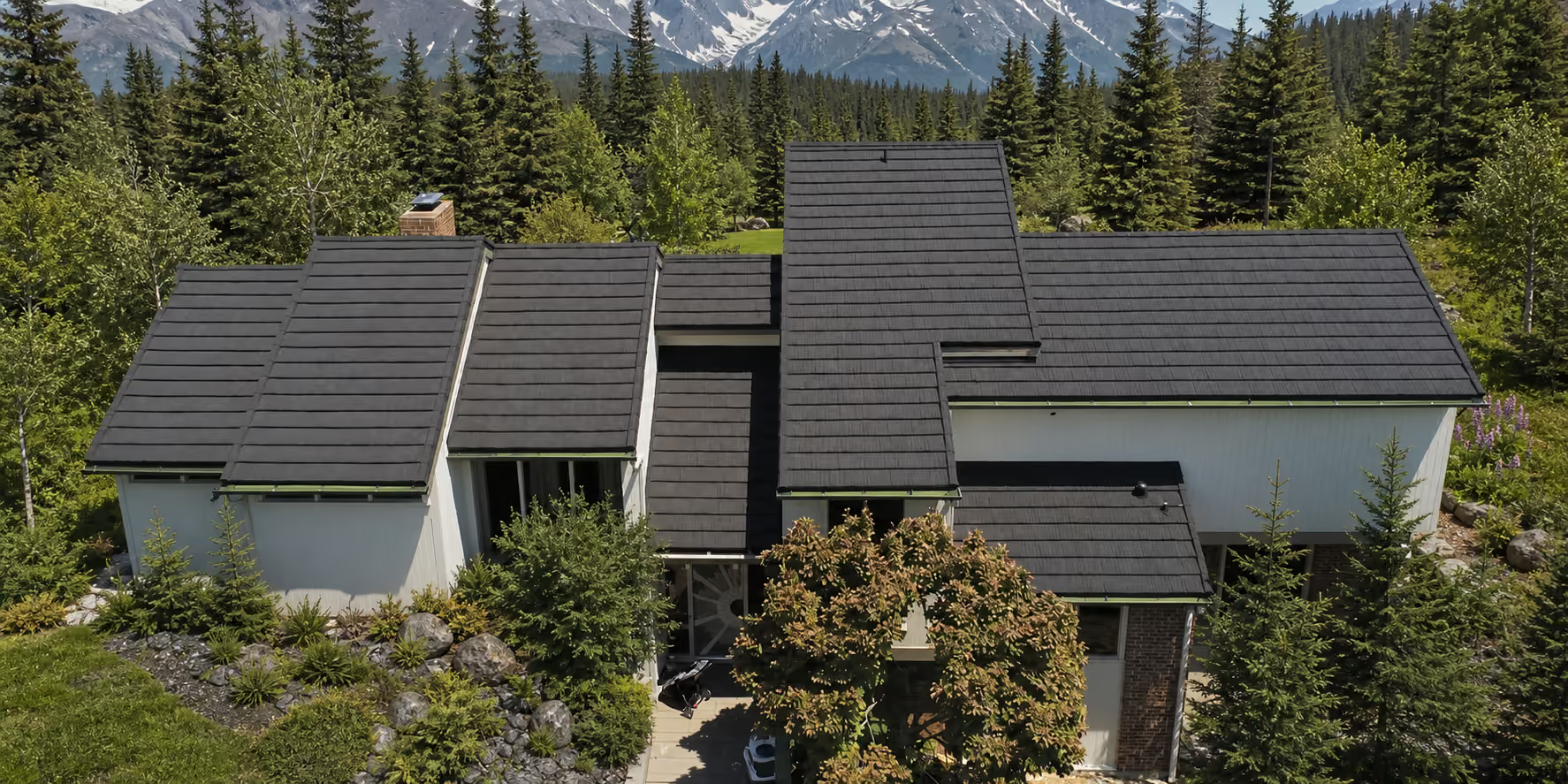
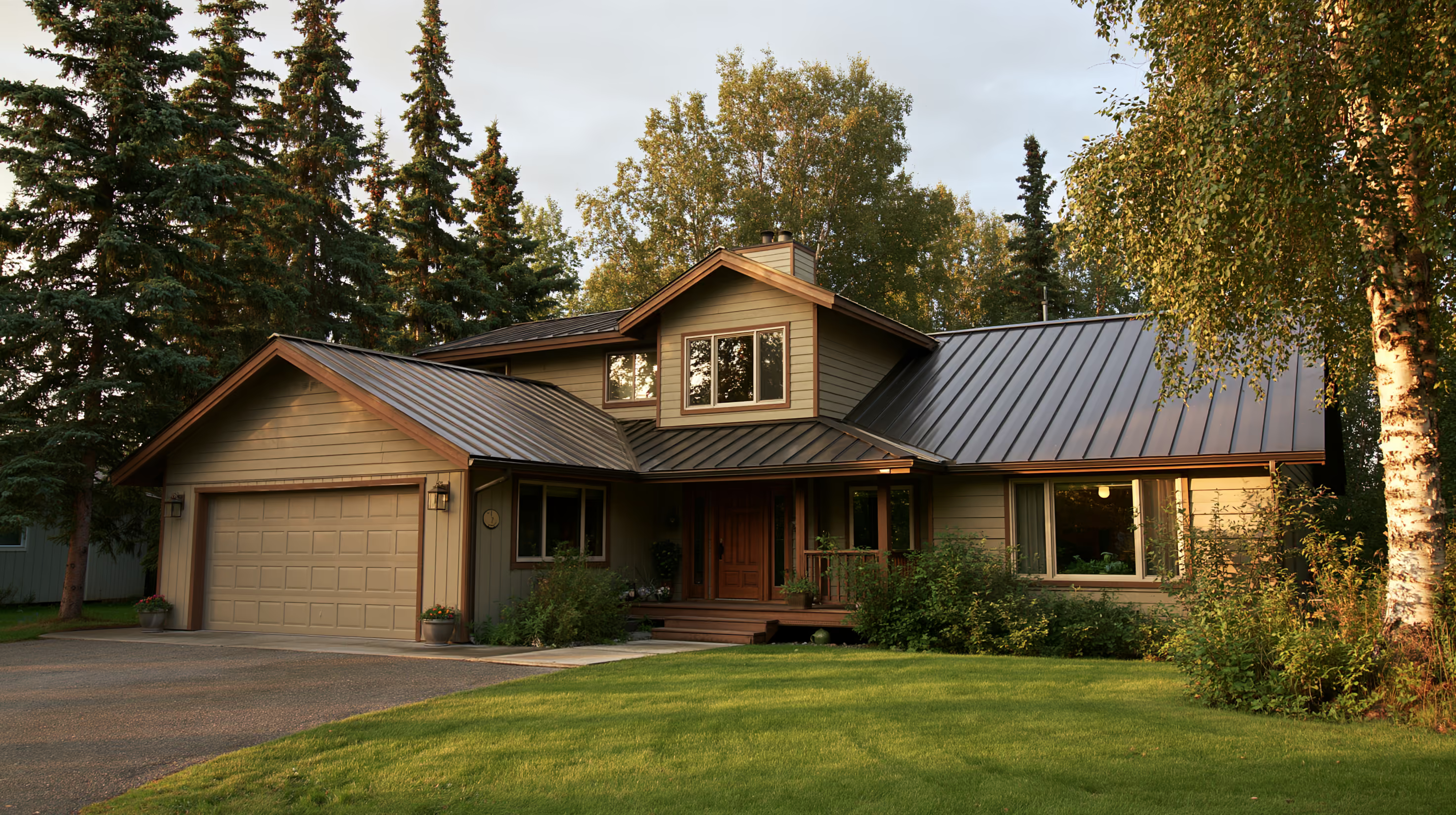
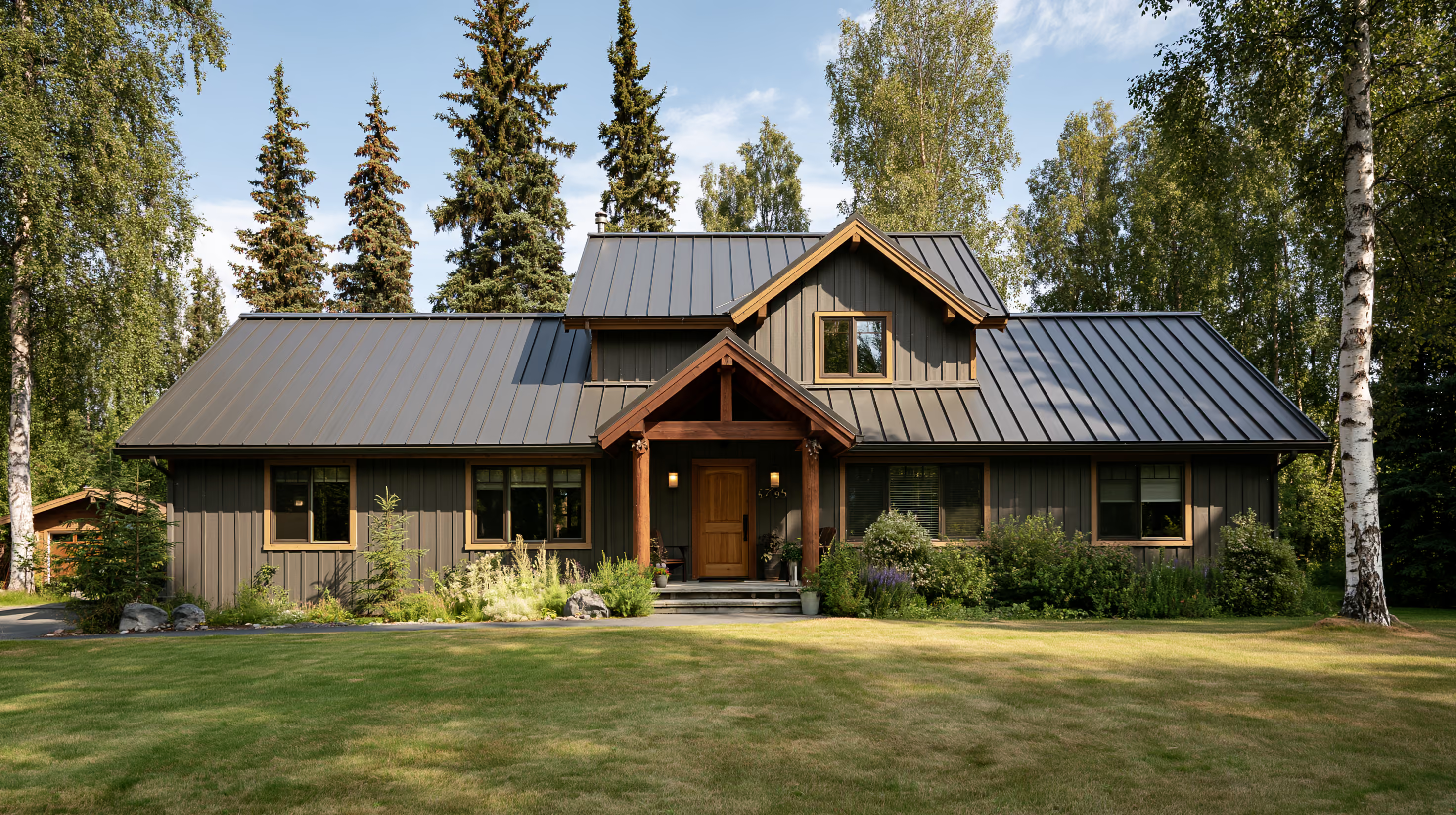
- Metal panels: standing seam or exposed-fastener, for shops, hangars, warehouses, and pole barns. Metal is our specialty. Commercial metal roofing →
What’s different about commercial roofs in Alaska
A low-slope roof here holds snow for months, then has to drain it all at breakup. What decides whether it does:
- Drifts at parapets and step roofs. Wind piles snow against walls and onto lower roofs, far deeper than in the middle.
- Ponding and frozen drains. Water still standing 48 hours after rain is ponding. Up here it freezes, and a buried drain can’t take the melt.
- Rooftop units and penetrations. Every curb, pipe, and unit is a hole in the roof, and service techs wear paths to them.
- Insulation and tapered systems. Many flat roofs get their slope from tapered insulation. Once it’s wet, it insulates far less and dries slowly, if at all.
- A short install season. Every membrane and adhesive has a temperature window, so full replacements are planned for the warm months.
- A building that stays open. Tenants, customers, forklifts, and aircraft keep moving, so the schedule works around them.
Water through a ceiling tile?
Text a photo and we’ll tell you what we see.
Repair or replace a commercial roof?
A roof leaking at two curbs and a drain is a repair. A roof with wet insulation across half the field is a different conversation. The assessment says which one you have, in writing.
Repair and maintain
Leaks at a few details with clear causes: a curb, a drain, a seam. Dry insulation. A membrane or panels with years left. Fix those, keep the drains clear, and have it looked at every spring and fall. On a sound roof, that’s the cheapest way to own it.
Replace
Leaks in many places. Wet insulation over large areas. Seams opening across the field, or rust through a metal building’s panels. Patching these buys a winter, not a decade. The assessment gives you a replacement budget and says whether the new roof can go over the old one.
How a commercial roofing job goes
- Free assessment. We walk the roof, check inside, and photograph what we find.
- Options with budgets. Repair now, repair and maintain, or replace.
- Written scope and budget for the option you pick, line by line.
- A schedule that fits the building, planned around tenants, deliveries, and hangar doors, and inside the temperature window for the materials.
- Install. Tear-off or a new roof over the old one, then membrane or panels, flashing, and edge metal.
- Closeout. Photos and paperwork, so whoever manages the building next knows what’s up there.
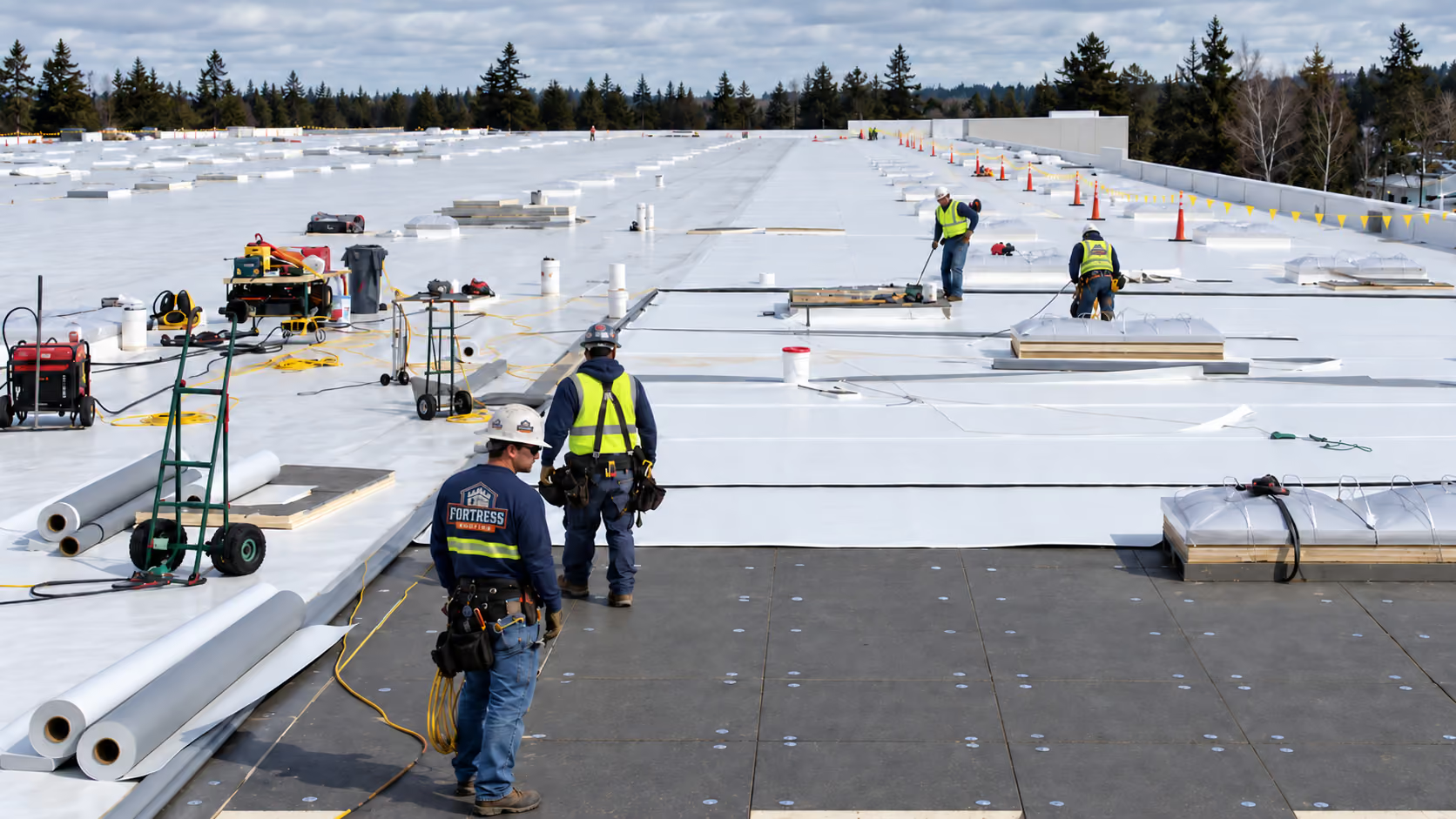
We work on commercial roofs in Anchorage, Eagle River, Wasilla, Palmer, and Big Lake, and down to Girdwood.
What a commercial roof costs
It depends on roof size, the system, tear-off or a new roof over the old one, how much wet insulation comes out, the number of drains, curbs, and units, edge metal, and access. The assessment shows what’s up there, and the written budget breaks it out line by line. If the roof is due, an assessment now helps you get a spot early in a short season.
Every commercial job starts with a free assessment.
A written scope and budget, and no pressure after it.
Commercial roofing questions
The questions we get most often about commercial roofs in Anchorage and the Valley. Don’t see yours? Text us and a roofer answers.
Text my rooferFour systems: TPO, EPDM, and modified bitumen on low-slope roofs, and standing seam or exposed-fastener metal panels. They go on shops, hangars, warehouses, retail and office buildings, and flat sections on homes like garages and additions. We’ll tell you which one we’d use and why.
There’s no real number until someone has walked the roof. A small shop and a warehouse with wet insulation are different jobs. The free assessment gives you options with written budgets, line by line, so you can compare repair, maintenance, and replacement before you commit.
Yes. We assess, repair, and maintain roofs we didn’t put on. The free assessment is where we learn the roof: the system, how it drains, and what’s been patched. You get photos of all of it, which are useful whatever you decide next.
Repairs, yes. Full replacements go on in the warm months, roughly May through October, when membranes and adhesives can bond. Some materials won’t seal below freezing, so a winter repair is sometimes a proper temporary fix, with the permanent one in the first warm stretch.
Yes. We plan the schedule around how the building is used: tenants, customer entrances, deliveries, hangar doors, and where material can sit. We agree on the sequence before we start, so your people know which areas are affected and when.
Yes. We’re licensed and insured in Alaska, license AK #260001. You can check it on the State of Alaska Professional License Search, and it’s worth checking any contractor there before they work on your building. Our crew has twenty-five years of roofing in Alaska and the Pacific Northwest.
Let’s look at your building’s roof
Text a photo or book an assessment. You get a written scope and budget, and no pressure after it.