Commercial Roof Maintenance in Anchorage & the Mat-Su Valley
Spring and fall visits, plus a look after big storms. Drains cleared, seams and flashing checked, small repairs made with your OK, and a photo report after each visit.
Commercial roof maintenance is two scheduled visits a year, in spring after the melt and in fall before snow, plus a look after big storms. We clear drains and scuppers, check seams, flashing, and penetrations, fix small problems with your OK while we’re up there, and send a photo report after every visit. On a low-slope roof in Southcentral Alaska, that’s the difference between a sealant repair in September and a ceiling coming down in April.
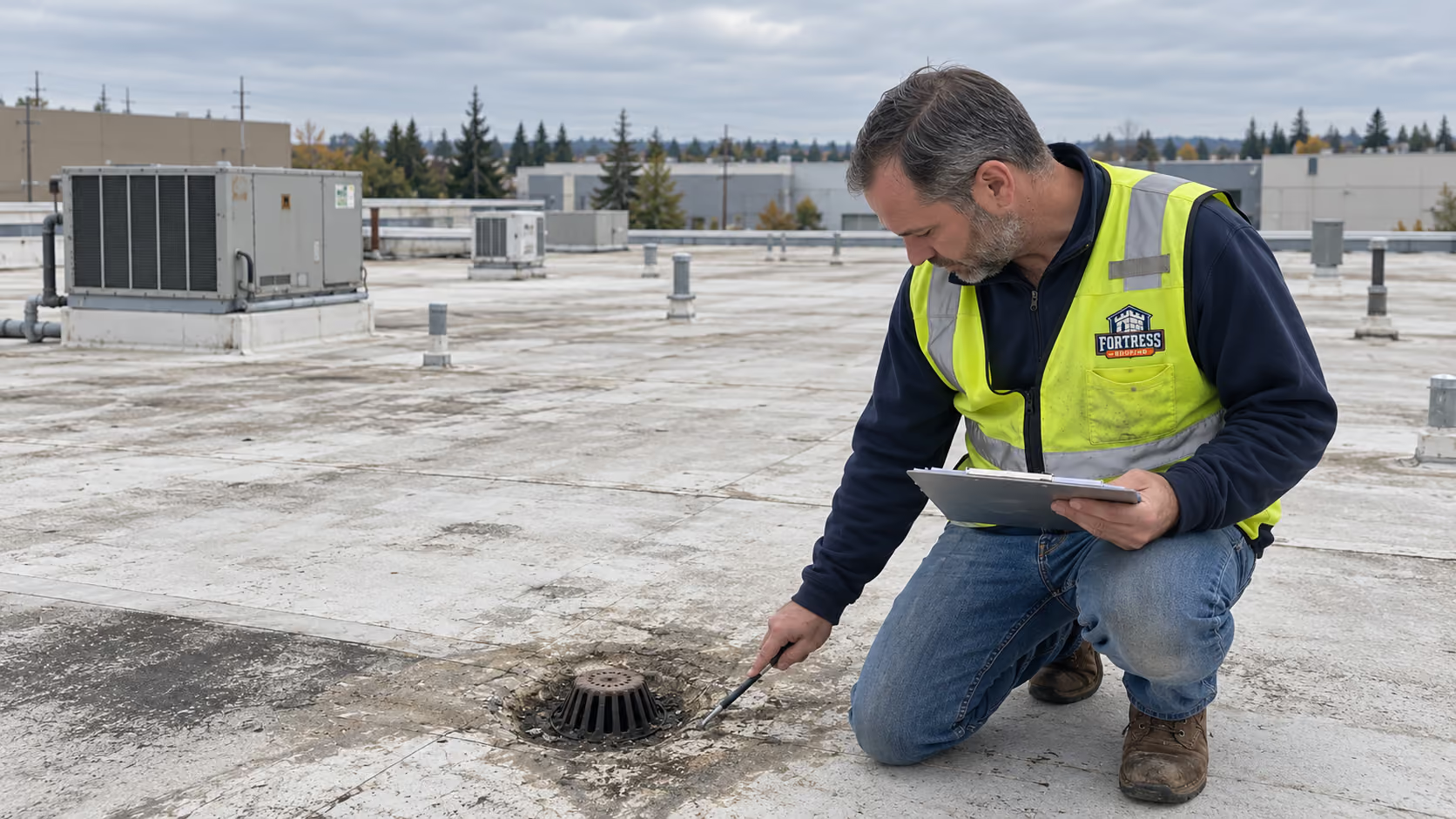
What a commercial roof maintenance visit covers
The same list every visit, adjusted for the roof:
- Drains and scuppers cleared of leaves, spruce needles, and grit, and checked for ponding around them.
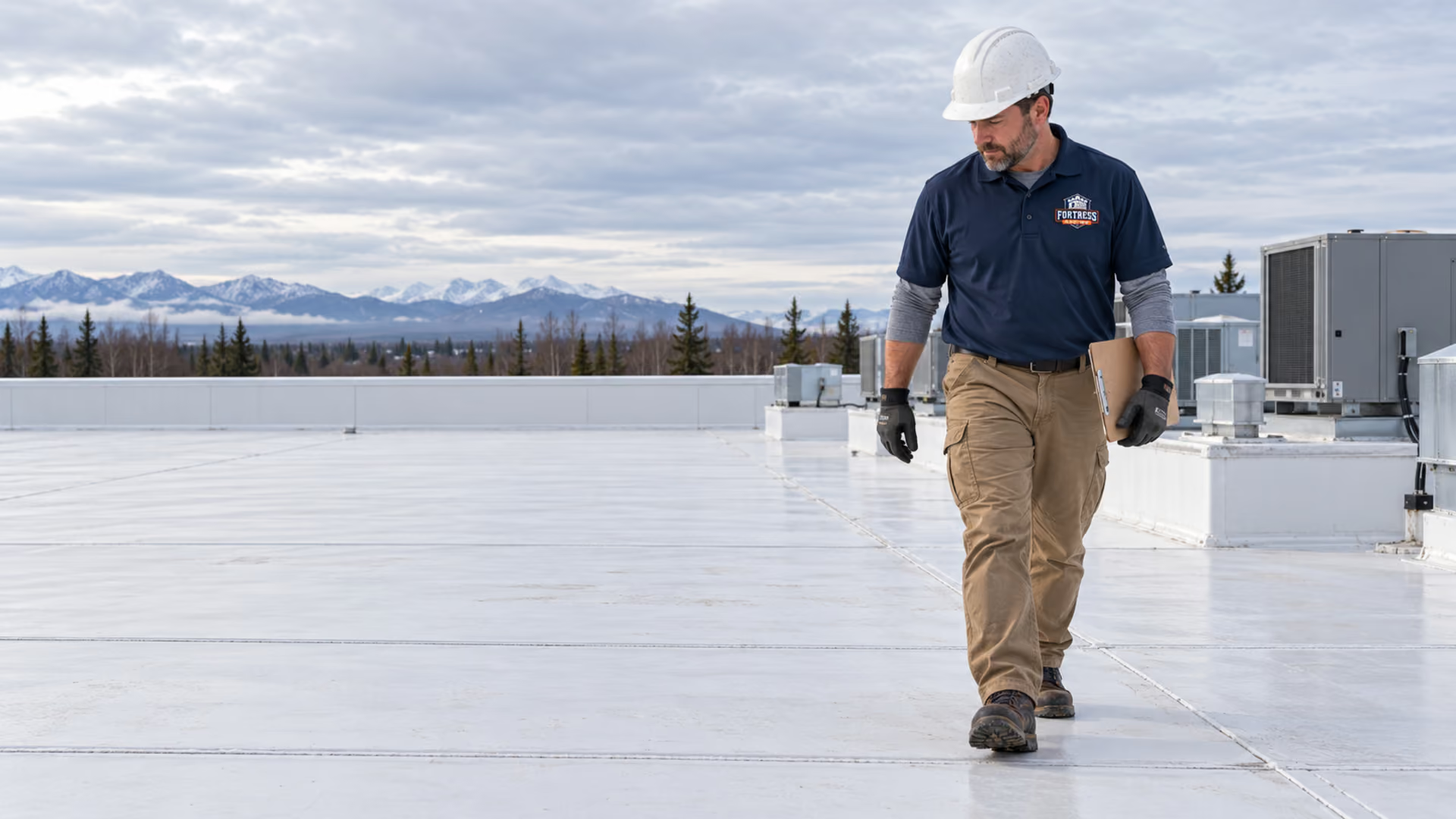
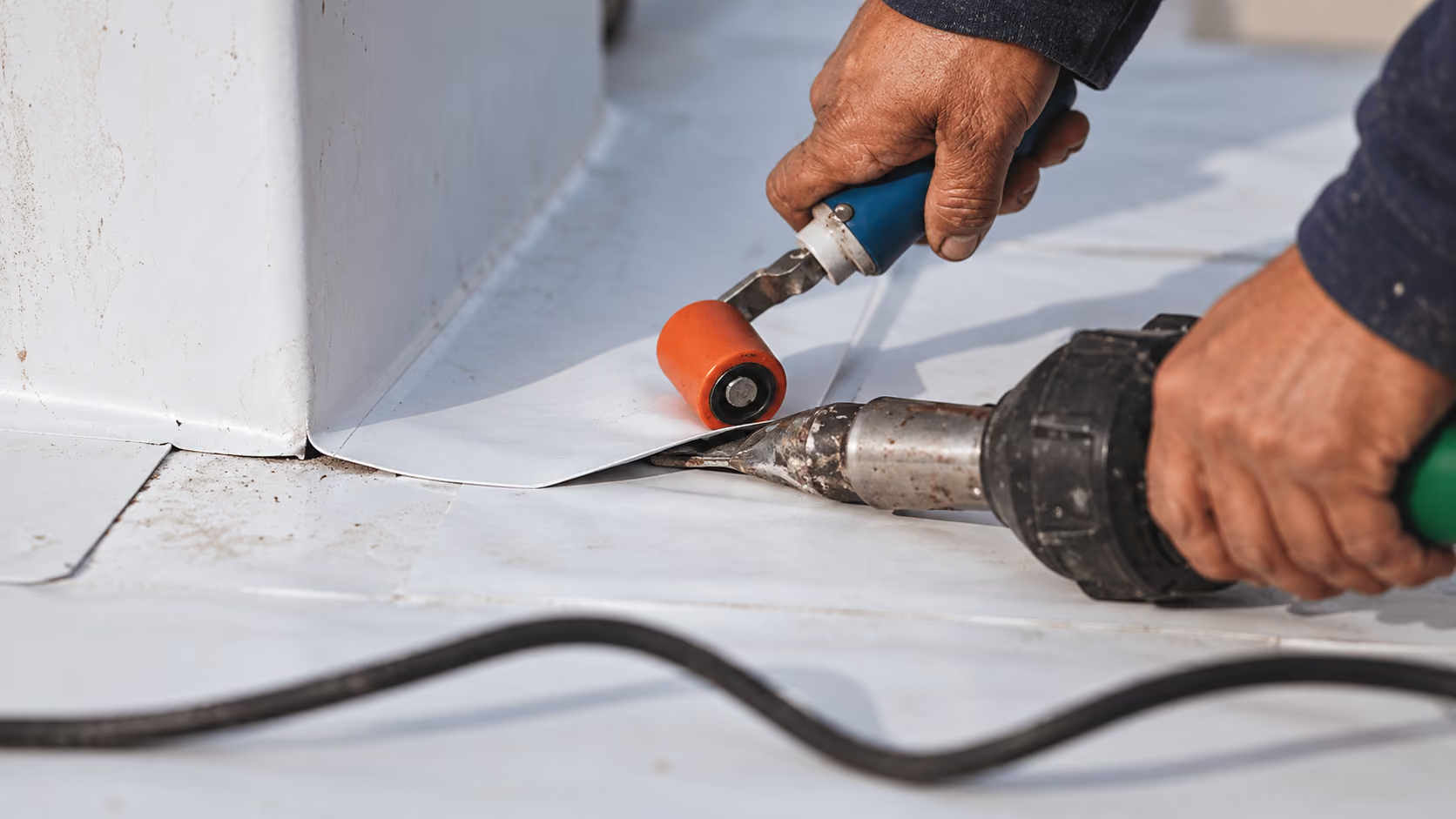
- Seams and flashing checked at walls, parapets, curbs, and edges on TPO, EPDM, and mod bit roofs.
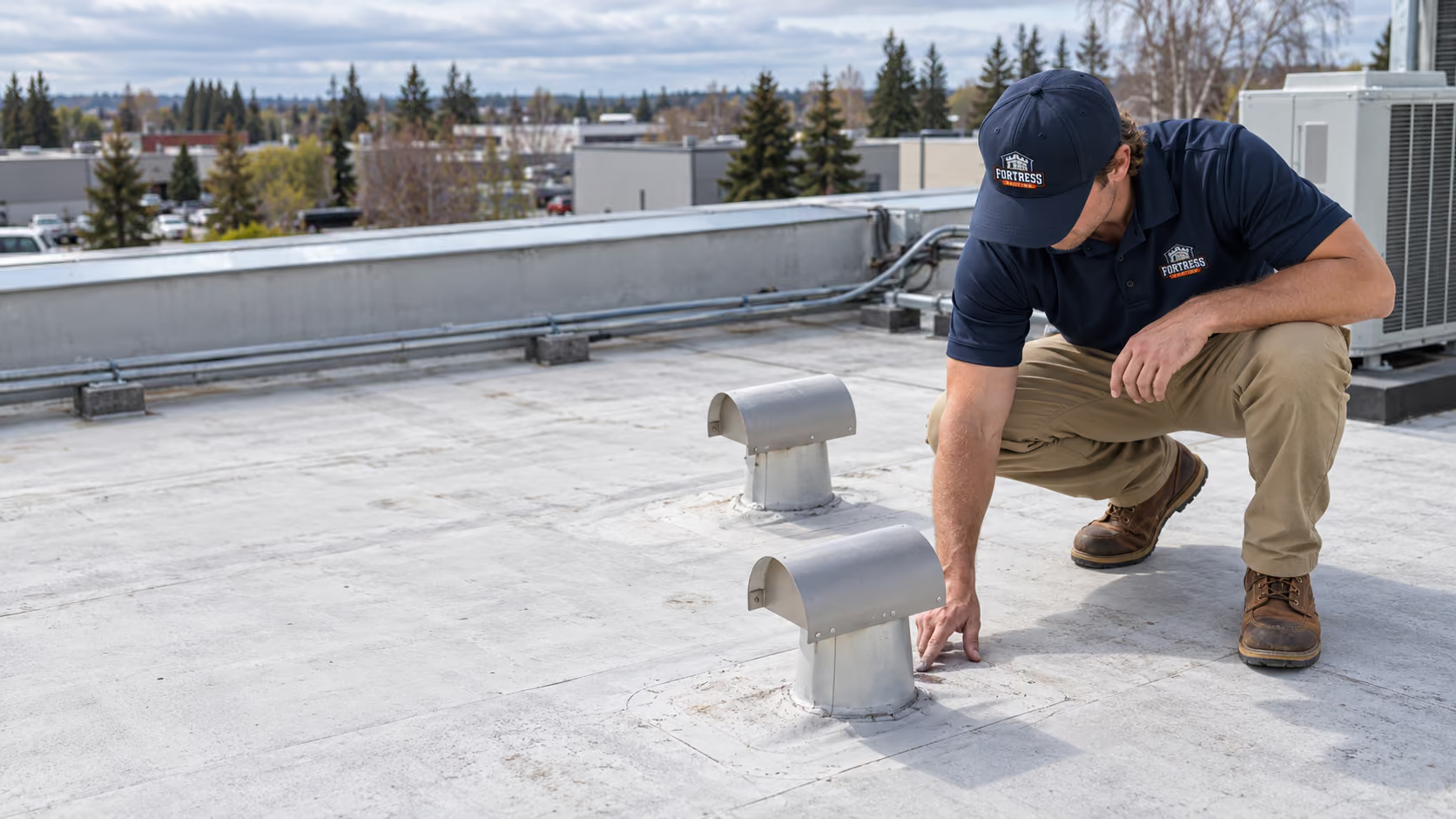
- Penetrations and curbs: pipes, vents, and rooftop units, and the paths service techs wear getting to them.
- Sealant and small repairs, made on the spot with your OK. Bigger items get a written price.
- Metal roofs: fasteners, washers, seams, and trim. Commercial metal roofing →
- Edge metal and snow guards, checked for wind damage and anything bent or torn loose by sliding snow.
- A photo report after every visit: what we found, what we fixed, and what’s coming.
When to schedule roof maintenance in Alaska
A schedule that fits the building, built around the two seasons that do the damage.
Spring visit
Breakup is when a low-slope roof shows what the winter did: seams and flashing worked loose by freeze-thaw, edge metal and snow guards damaged by ice and sliding snow, and drains full of whatever blew onto the roof since fall.
Fall visit
The roof goes into winter with clear drains, tight seams, and sealed penetrations, done while the weather still lets materials bond. Leaves and spruce needles come out of the drains and scuppers, and anything loose gets fastened before the first big wind.
After a Chugach wind event, heavy snow, or rain on snow, call for a look. We check for lifted edge metal, open seams, and debris in the drains, and if the damage looks like a claim, we photograph it for your adjuster.
Winter on a commercial roof: snow, drifts, and frozen drains
In winter, the job is weight and water. Drifts pile up against parapets, at step-downs, and behind rooftop units, far deeper than in the middle of the roof. A drain that freezes or gets buried can’t take the next thaw, and the water goes looking for a seam.
When the snow gets heavy, it needs to come off. Drifts building against walls mean it’s time. If doors and windows inside start to stick, new drywall cracks show up, or the roof creaks and pops, get everyone out of the building, then call (907) 701-2233. We clear it and leave a thin layer, so no shovel touches the membrane. Roof snow removal →
Drains buried or drifts building?
Text a photo and we’ll tell you what we see.
Is commercial roof maintenance worth it?
A clogged drain takes minutes to clear in the fall. The same drain, frozen and buried in April, can put water through a ceiling, soak the insulation, and close a tenant’s space. Small problems caught early stay small, and they stay cheap.
Records matter too. Membrane manufacturers usually expect maintenance records, which matter for membrane warranties. A file of dated photo reports also shows an owner, a manager, a buyer, or an insurer what the roof has had done and when.
We maintain roofs we didn’t install. It starts with a free roof assessment, which becomes the baseline: the system, how it drains, what’s been patched, and photos of all of it.
We maintain commercial roofs in Anchorage, Eagle River, and Girdwood, and across the Valley from Palmer and Wasilla out to Big Lake.
What commercial roof maintenance costs
Each visit is priced up front, before we go up, by the roof’s size, its type, and how we get onto it. Small repairs happen with your OK, at a price you’ve seen. Anything bigger gets a written scope and budget, so you can plan it instead of reacting to it. Commercial roofing services →
Every commercial job starts with a free assessment.
A written scope and budget, and no pressure after it.
Commercial roof maintenance questions
The questions we get most often about maintaining commercial roofs in Anchorage and the Valley. Don’t see yours? Text us and a roofer answers.
Text my rooferTwice a year, in spring after the melt and in fall before snow, plus a look after any big storm. Spring finds what the winter did, and fall gets the drains, seams, and flashing ready for the next one. A roof with a lot of rooftop equipment or foot traffic can need more, and we’ll say so if yours does.
Yes. We start with a free assessment so we know the system, the drains, and the history of patches, then set a schedule that fits the building. Every visit after that gets a photo report, so you build a running record of the roof no matter who put it on.
You get photos and a written scope and budget, and you decide. If it can’t wait, like an open seam over a tenant’s space with snow in the forecast, we’ll tell you plainly and give you a temporary option too. Bigger repairs don’t happen without your approval.
Ceiling tiles and stains after heavy rain or a fast melt, water still standing on the roof 48 hours after rain, ice building up at drains and scuppers, and drifts piling against walls. Keep people off the roof in winter, and don’t chip ice off a membrane or panel. If something looks wrong, text us a photo.
Yes. Roof snow removal is our winter-only service, on homes and on commercial flat roofs. We clear drifts at parapets and step-downs and work carefully around drains and rooftop units. After a big storm everyone calls at once, so call early.
It depends on the roof’s size, the system, and access, and each visit is priced before we go up. A one-story shop with a roof hatch is a smaller number than a three-story building covered in rooftop equipment. Small repairs are done at a price you’ve approved; anything bigger is quoted in writing first.
Let’s set a schedule for your roof
Text a photo or book an assessment. You get a written scope and budget, and no pressure after it.