

Roof Insurance Claims in Anchorage & the Mat-Su Valley
Photos of the damage, a line-item scope that matches it, and a roofer on site when the adjuster comes. You own the claim; we bring the evidence.
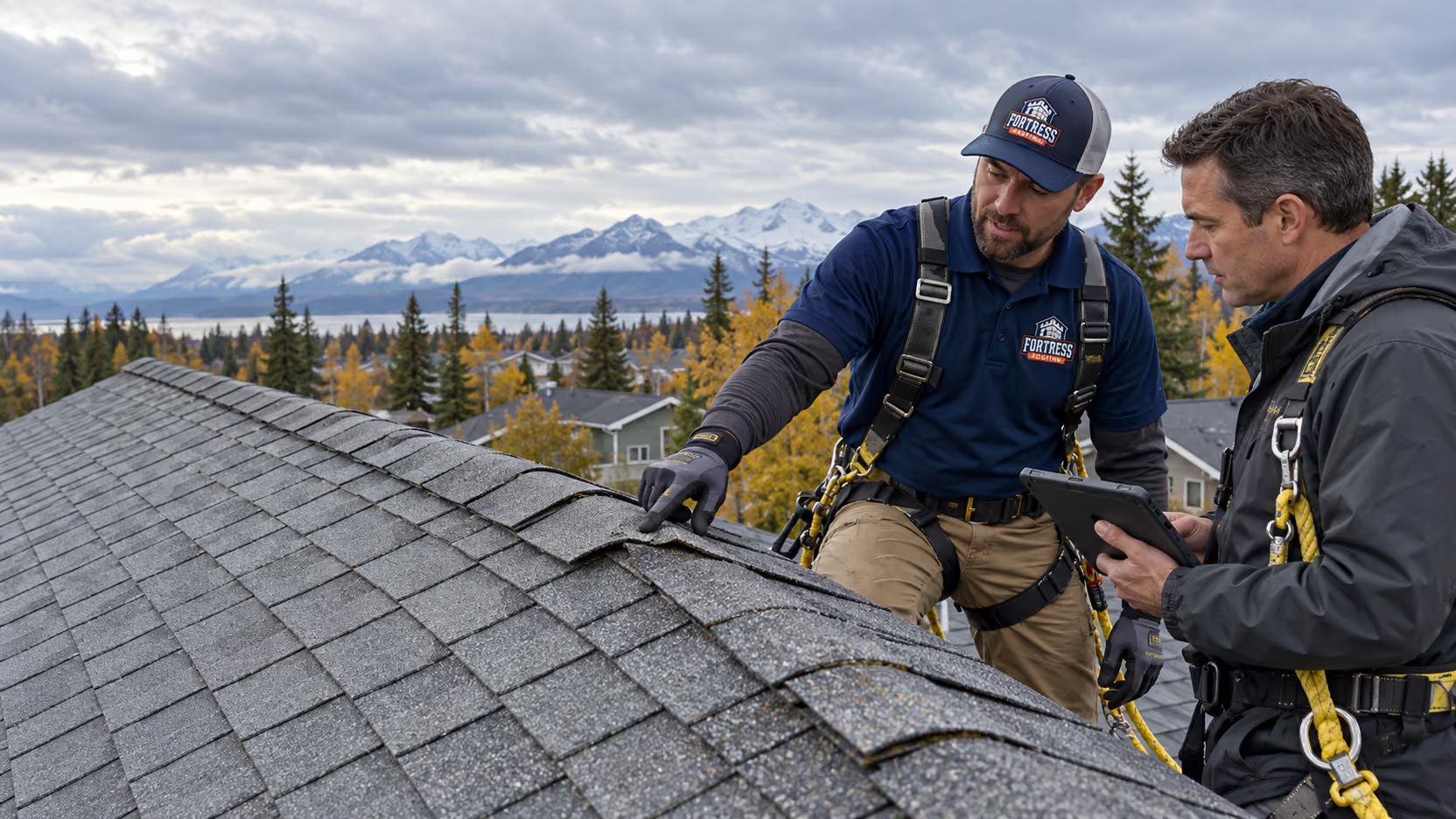
Insurance often covers sudden damage: wind, hail, a falling tree, snow load, or the water damage inside from an ice dam leak. It usually doesn’t cover wear and age. Our part of a claim is the evidence. We inspect the roof and the attic, photograph the damage, meet your adjuster on site, and write a line-item scope that matches it. You file the claim and it stays yours, and we don’t negotiate coverage.
What a roofer does on an insurance claim
Where our job ends and yours starts:
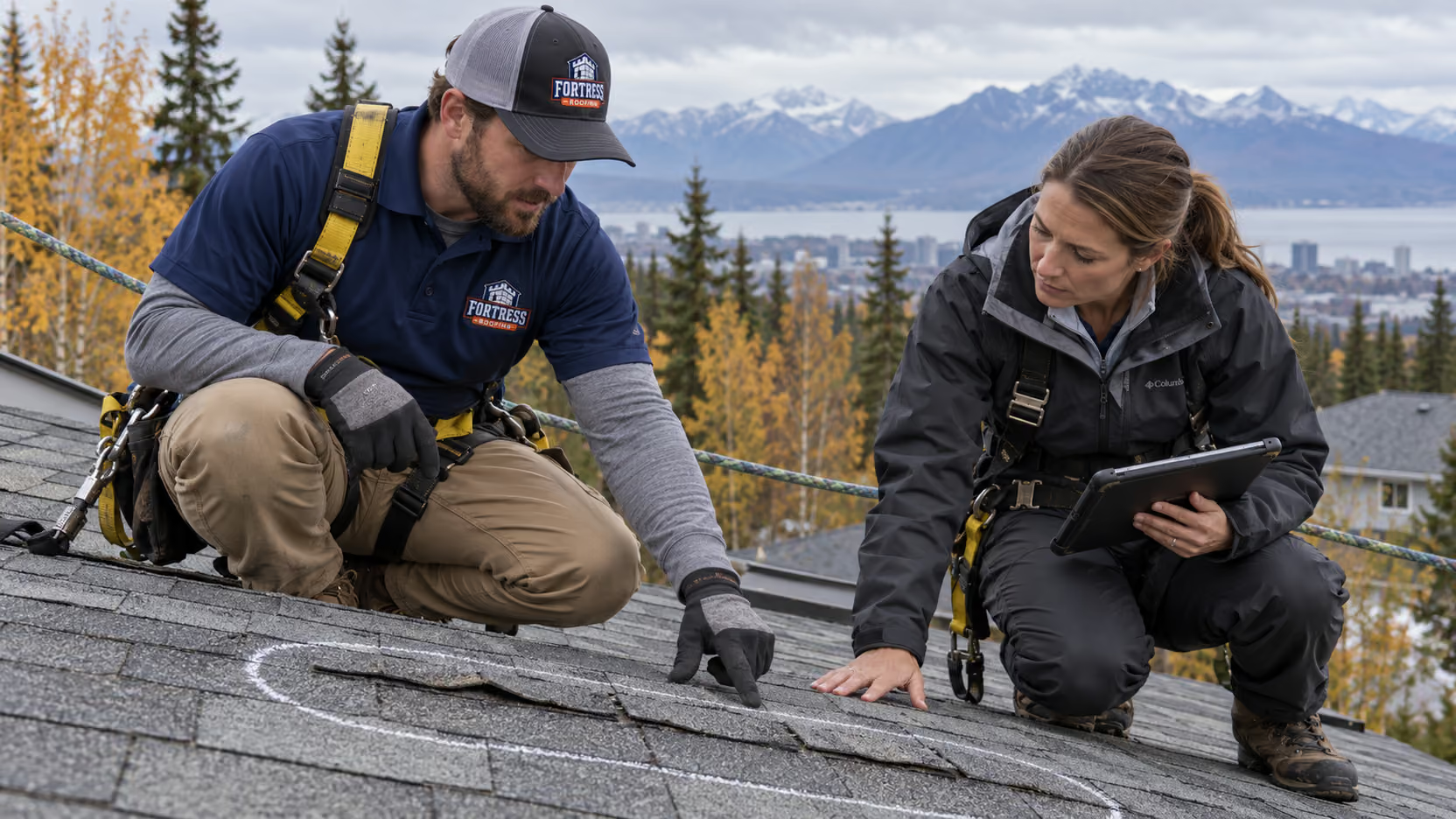
- We inspect and document. On the roof and in the attic, with photos of the damage and where it is.
- We write the scope. Line by line, matched to the damage.
- We meet the adjuster on site. With the photos in hand, so they see what we saw.
- We follow up on what was missed. If the insurer’s scope leaves out damage, we send documentation for it.
- You file and own the claim. The policy and the claim are between you and your insurer.
- We don’t negotiate coverage. That’s a job for an attorney.
What roof insurance usually covers, and what it doesn’t
Your policy and your adjuster decide. In general:
Sudden damage
Shingles and trim torn off in a Chugach wind event, hail, a beetle-killed spruce through the roof, damage from snow load, and ceilings and walls ruined by an ice dam leak. It happened at once, and you can point to the day. Storm damage repair →
Wear and age
Shingles worn out after twenty years, granules gone, a pipe boot cracked with age, or a leak that got worse because it wasn’t fixed. The ice dam itself usually isn’t covered either, even when the water damage it caused is.
We tell you which side your damage looks like it’s on. If it’s wear, we’ll say it doesn’t look like a claim and price the repair on its own.
How a roof insurance claim works, step by step
- Inspection. Free, with a photo report and a written scope and price within 24 hours. Free roof inspections
- You file. Report the damage to your insurer right away, since most policies require prompt notice, and share our photos when you have them.
- The adjuster visits. We meet them on site and walk the damage together.
- Scope and estimate. The adjuster writes the insurer’s estimate. If it misses damage, we send documentation for it.
- Approval. The insurer approves the scope and sends the first payment, often the actual cash value.
- The work. Done to the approved scope and photographed. Repairs happen year-round; full replacements run roughly May through October.
- Recoverable depreciation. Once the work is done, many policies release the money the insurer held back.
- Final paperwork. The final invoice and completion photos your insurer asks for.
Think it might be a claim?
Text photos of the damage and we’ll tell you what we see.
Actual cash value vs replacement cost
Which one your policy uses changes how the money arrives.
Actual cash value
What the damaged roof was worth the day it was damaged: the cost to replace it, minus depreciation for age and wear. On an older roof, that check can fall well short of the cost of the work.
Replacement cost
What it costs to replace the damaged roofing today. The insurer holds back the depreciation and releases it once the work is done and documented. That held-back money is the recoverable depreciation. An actual cash value policy doesn’t pay it.
Your policy says which one you have, and your agent can tell you if it isn’t clear. Up here, timing matters too: a replacement claim from a fall storm can mean the work, and that second check, wait for the spring season. Policies usually set a deadline to claim that money, so ask your insurer about yours early.
Who pays the deductible on a roof claim?
You do. It’s your share of the claim, so be wary of anyone who offers to cover it, including crews knocking on doors after a big Chugach wind. Claim checks often list your mortgage company as a payee too, which can add a step before the money reaches the work.
What if my roof claim is denied?
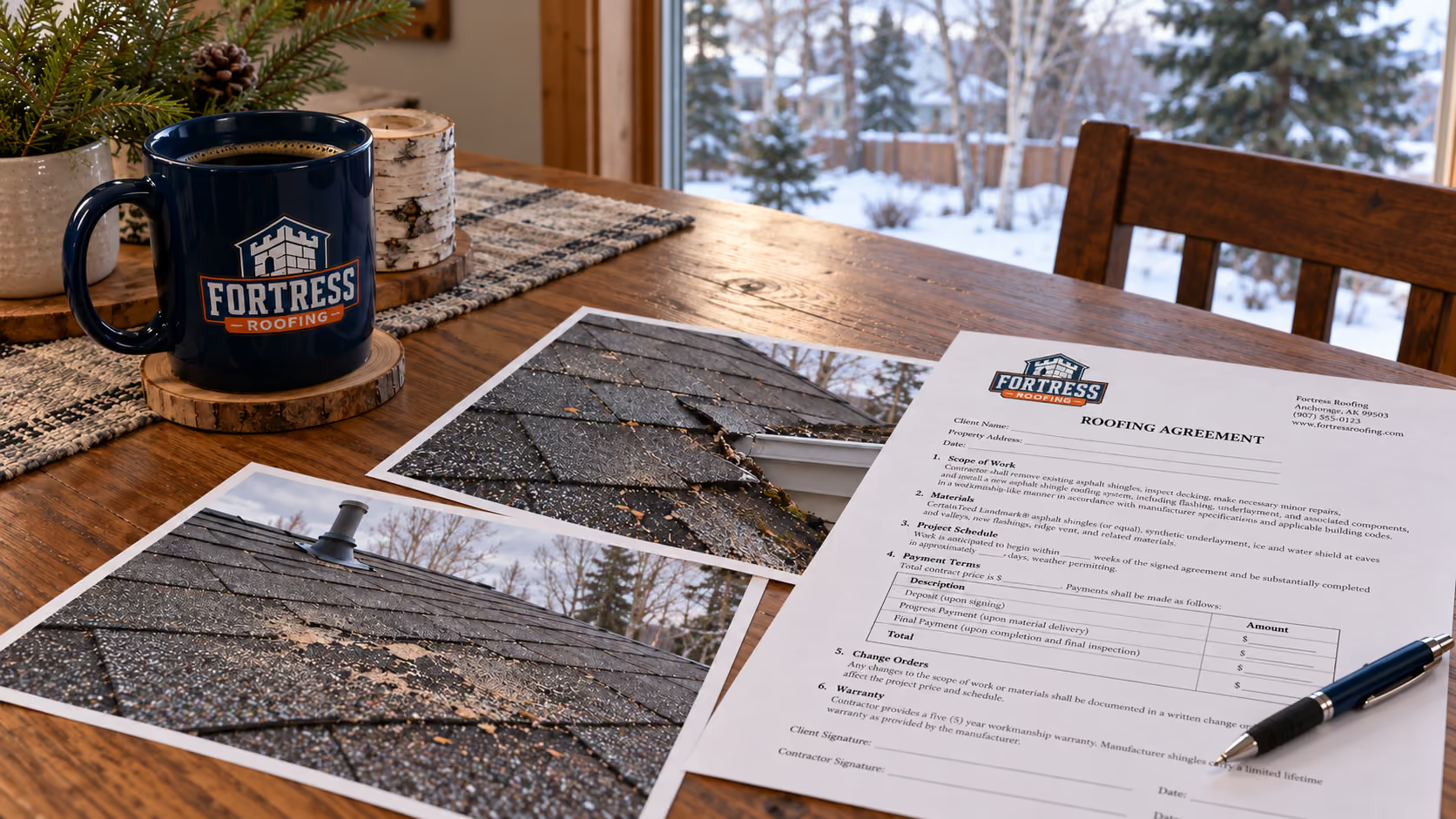
Ask for the reason in writing. Sometimes more documentation or a reinspection settles it, like when damage was under snow at the first visit and showed up after the melt. We can send photos and a written scope and meet the adjuster on site again. If it’s a dispute over what the policy covers, talk to an attorney, or file a complaint with the Alaska Division of Insurance.
Roof claims in an Alaska winter
Damage in January doesn’t wait for May, but the permanent repair sometimes has to. Most policies expect reasonable steps to prevent further damage, so the first job is a temporary fix, with receipts and photos. The permanent work follows when it can be done right, since some materials won’t seal below freezing. Tell your adjuster that timeline up front. Emergency roof repair →
With an ice dam leak, the water damage inside is often covered, the dam itself usually isn’t, and preventing the next one is attic and eave work, not a patch. Ice dam prevention →
We document roof damage for homeowners in Anchorage, Eagle River, Palmer, and Wasilla, and out to Knik-Fairview, Big Lake, and Girdwood.
What you pay on an insurance roof job
On a covered claim, your share is the deductible, any depreciation your policy doesn’t pay back, and anything you choose to add beyond the approved scope, like moving from asphalt to a metal roof. The inspection is free, the scope is line by line, and the price is in writing before we start. Roof replacement →
Every job starts with a free inspection.
Photo report and a written price within 24 hours, and no pressure after it.
Roof insurance claim questions
The questions we get most often about roof claims in Anchorage and the Valley. Don’t see yours? Text us and a roofer answers.
Text my rooferSometimes. If a storm, hail, a falling tree, or snow load damaged it badly enough, often yes. If the roof is simply old, usually not. Your adjuster decides from the policy and the damage. We document what’s there either way and tell you straight whether it looks like a claim before you file.
If you can see damage, call your insurer right away, since most policies require prompt notice. If you aren’t sure, a free inspection tells you, with photos and a written scope. If water is coming in, get the temporary fix done right away and keep the receipt.
No. We document damage, write the scope, meet the adjuster, and send documentation for anything the first scope missed. Negotiating coverage is work for an attorney, not us. If your claim turns into a coverage dispute, we’ll tell you it’s time to bring one in.
No. The deductible is your share of the claim, and you pay it. Be wary of any contractor who offers to cover it, whether it’s called a discount, a rebate, or something else. Your written price shows what the work costs, and your insurer’s paperwork shows what’s yours.
Because the lender has a stake in the house. Claim checks often list the mortgage company as a payee alongside you, so the check needs their endorsement before the money can go toward the roof. Lenders handle it differently, so call yours early and ask what they need.
It’s the part of a replacement cost claim that the insurer holds back until the work is done. The first check covers actual cash value: replacement cost minus depreciation for age and wear. Once the roof is finished and the insurer has the final invoice and photos, many policies release the rest.
Let’s document the damage first
Text photos or book an inspection. You get a photo report and a written scope and price within 24 hours, and no pressure after it.