Roof Maintenance in Anchorage & the Mat-Su Valley
Fall before the snow, spring after breakup. We check the roof, fix the small stuff while we’re up there with your OK, and photograph what we find.
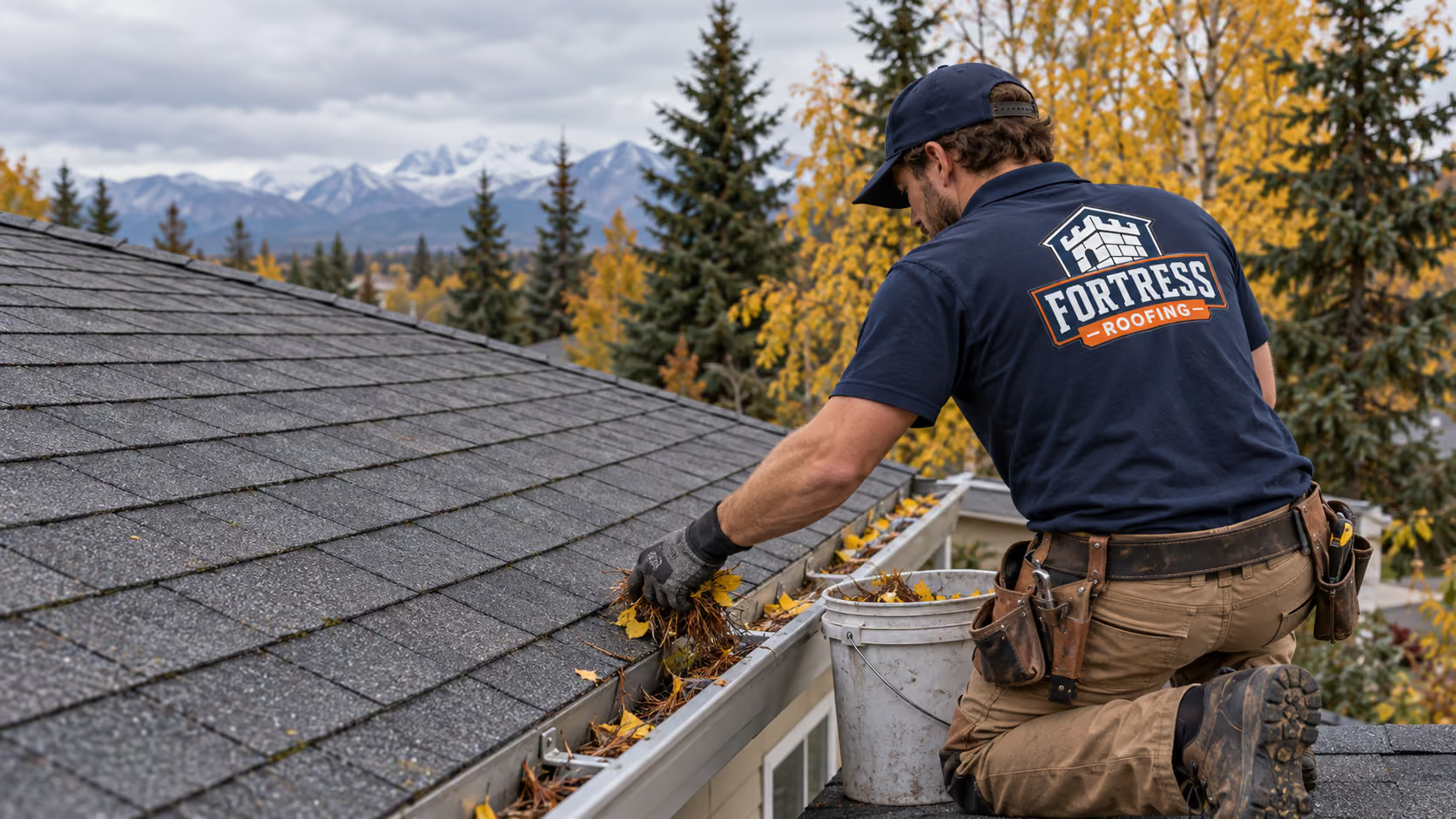
Roof maintenance up here follows the seasons. The visit that matters most is in the fall, before the snow: gutters and downspouts cleared, pipe boots and flashing checked, loose shingles or fasteners fixed, branches off the roof, and snow guards looked over. The second is in spring, after breakup, to see what the winter did. The melt finds whatever the fall missed, usually in March and April. A cracked pipe boot, the most common leak we see, is a small fix in October.
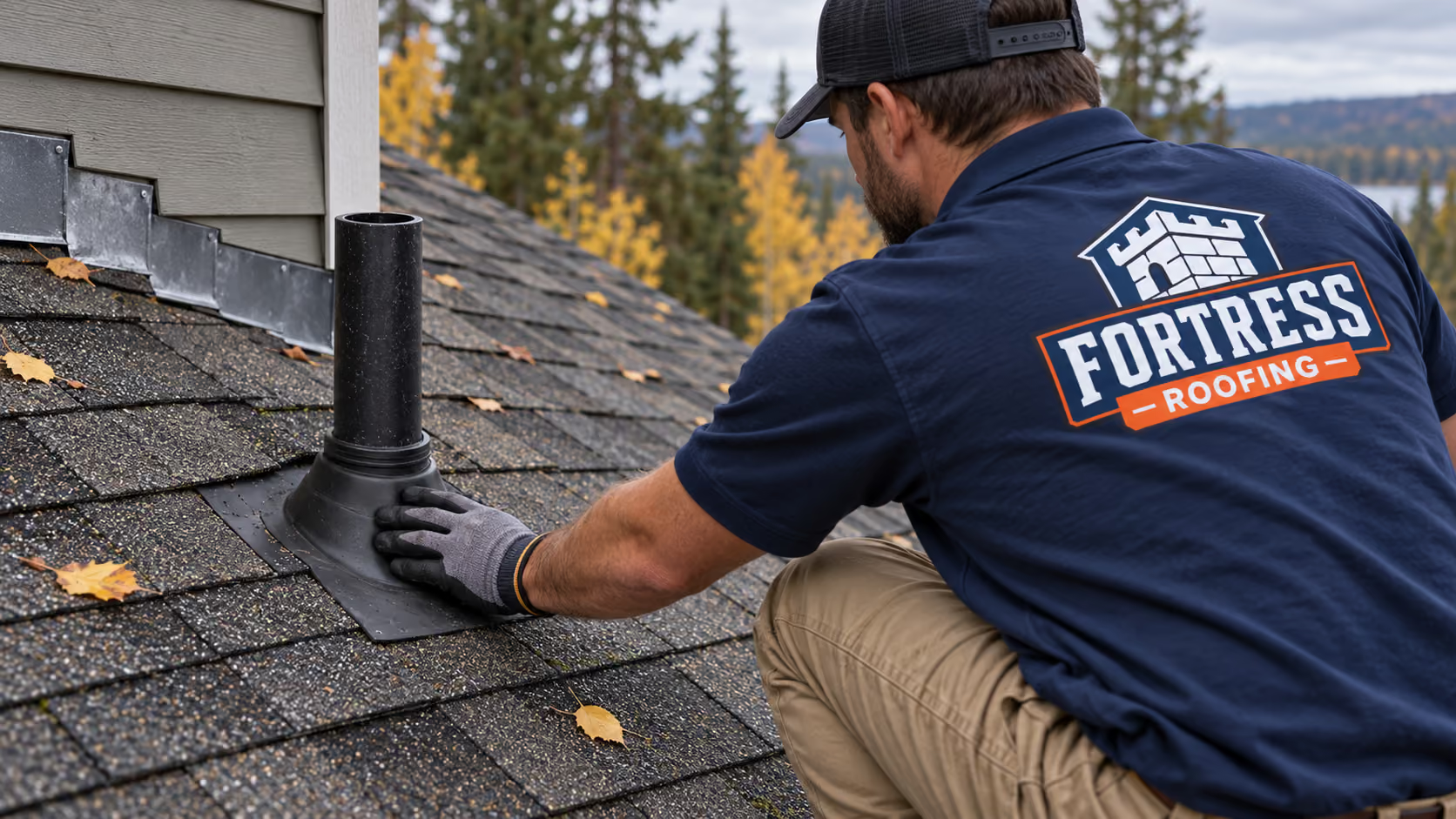
What a roof maintenance visit covers
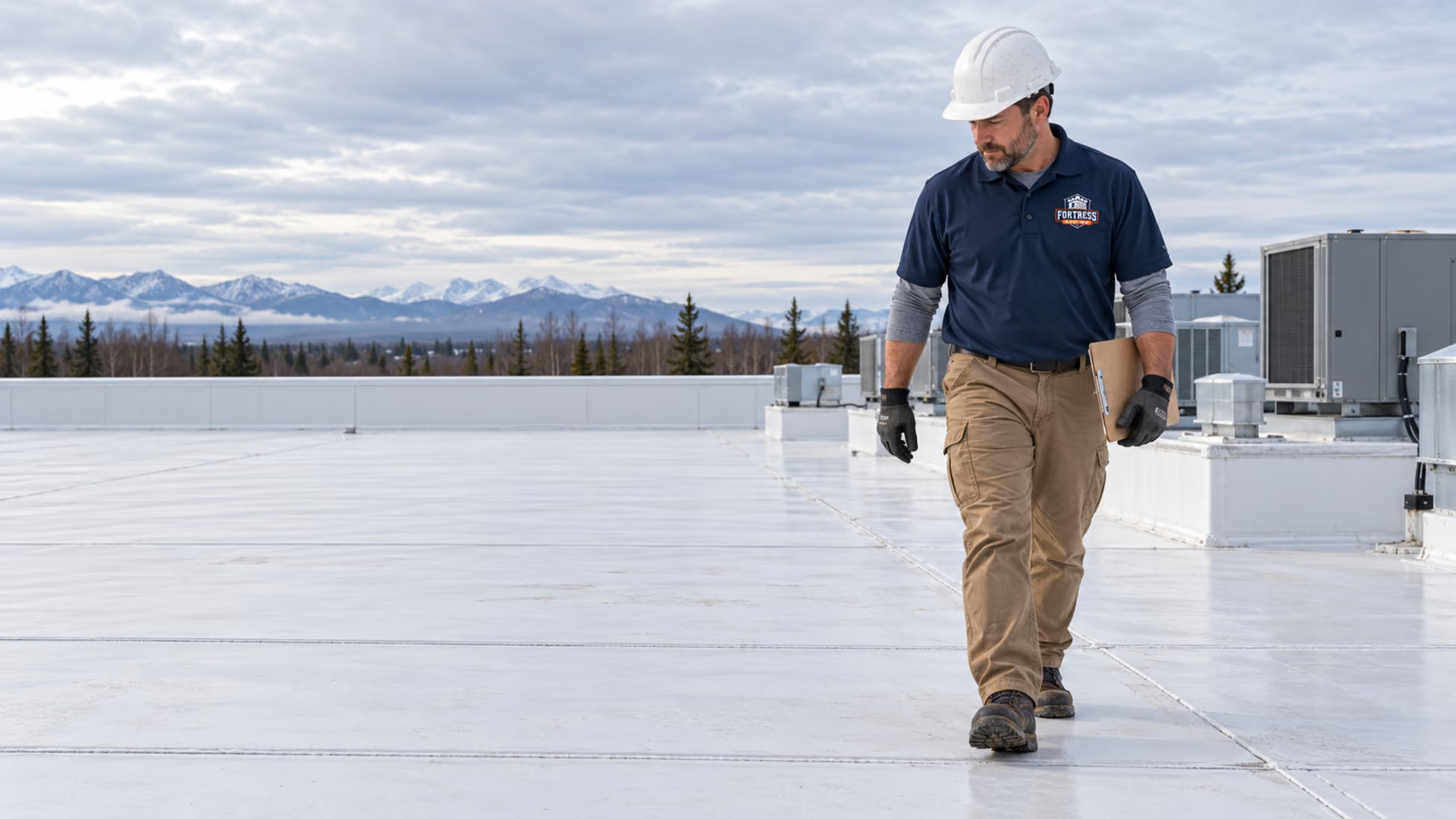
A roofer on your roof, going through the fall list:
- Gutters and downspouts, cleared so spring melt has somewhere to go
- Pipe boots, vents, and flashing at chimneys, walls, and skylights
- Loose shingles or fasteners, fixed before the wind finds them
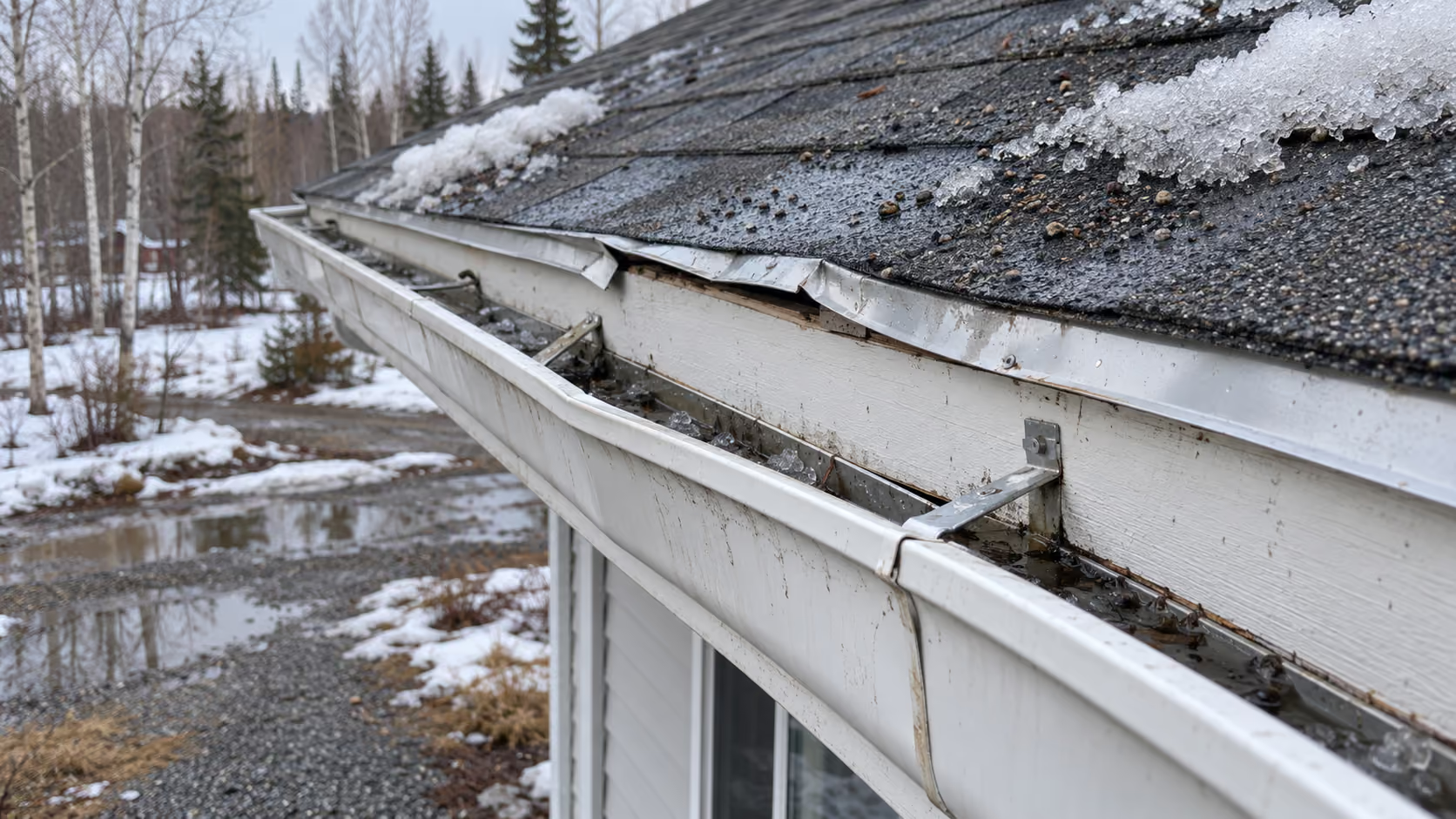
- Valleys, drip edge, and eaves, where ice and sliding snow do their damage
- Branches off the roof and out of the valleys
- Snow guards on metal roofs, checked for anything bent or loose
Small fixes, like a cracked boot or a few lifted shingles, get done while we’re up there, with your OK first. Anything bigger goes in the photo report with a written price. Roof repair →
A roof maintenance calendar for Southcentral Alaska
Up here, timing is most of it. A gap left in October spends the dark months under snow, and the melt finds it in March.
- Fall, before the snow. The big one: everything in the list above, done before the first real snowfall. Gutters →
- Winter. Mostly watching. Snow depth and drifts, ice building at the eaves, and frost in the attic. If the load gets heavy, roof snow removal takes it off.
- Spring, after breakup. Look for what the melt and the wind did: new leaks, lifted shingles, drip edge and gutters bent by sliding snow, and debris in the valleys.
- Summer. Replacement season. It’s warm enough for materials to seal, so anything spring turned up gets its permanent fix.
In Girdwood’s wet climate, add moss to the list, especially on shaded slopes.
Metal vs asphalt roof maintenance
We maintain both, and they wear differently.
Fasteners and sealant
Freeze and thaw move metal all winter, and exposed fasteners back out. Washers dry out. Sealant at trim and penetrations ages. Sliding snow bends trim and can tear a snow guard loose, which leaves holes. Metal roof repair →
Granules and seals
Shingles shed granules as they age, and you’ll find them in the gutters. Tabs lose their seal and lift in wind, especially after a Chugach blow on the Hillside. Rubber pipe boots crack. Caught in the fall, those are small fixes.
Not sure what shape your roof is in?
Text a photo and we’ll tell you what we see.
What not to do to your roof
- Don’t pressure wash it. It strips granules off shingles and drives water under the laps and flashing.
- Don’t walk a frosty roof. Frost on shingles or metal is as slick as ice. Wait for the sun, or let us do it.
- Don’t chip ice. A hammer or shovel blade breaks shingles and dents metal. Ice at the eaves means heat is getting out, which is the thing to fix. Ice dam prevention →
Roof maintenance vs a free roof inspection
An inspection is free and tells you what shape the roof is in, with a photo report and a written price within 24 hours. Maintenance is the work: gutters cleared, boots and flashing fixed, loose shingles and fasteners dealt with before the snow. If you don’t know where your roof stands, start with a free roof inspection.
We do maintenance visits from Girdwood to Big Lake: Anchorage, Eagle River, Wasilla, Palmer, and out toward Butte and Lazy Mountain.
What roof maintenance costs
Two things set the price: the size of the roof and what we find on it. It’s quoted up front, before any work, and nothing past the small stuff gets done without a written price and your OK.
Every job starts with a free inspection.
Photo report and a written price within 24 hours, and no pressure after it.
Roof maintenance questions
The questions we get most often about roof maintenance in Anchorage and the Valley. Don’t see yours? Text us and a roofer answers.
Text my rooferEarly fall, before the first snow sticks. That’s when a cracked boot or a loose shingle is still an easy fix, and the gutters can be cleared before they freeze full. Spring after breakup is the second look, to catch what the winter did. After a big windstorm or a heavy snow year, add one.
Yes. Gutters and downspouts still fill, sliding snow still hits the drip edge and gutters, and a Chugach wind still finds a loose piece of trim. On a newer roof the fall visit is mostly checking, and it keeps small things small.
Yes, just a different kind. Exposed fasteners back out as the panels move through freeze and thaw, washers dry out, and sealant at trim and penetrations ages. Sliding snow bends trim and can tear snow guards loose. A fall check catches those while the fix is a new fastener or the right sealant.
It goes in the photo report with the reason it matters and a written price, and you decide. If it can wait for summer, we’ll say so. If the roof is past maintaining, we’ll say that too, and put the reason in writing. No pressure either way.
Asphalt shingles run fifteen to twenty-five years up here, depending on the shingle. Metal goes somewhere past forty and usually outlasts two asphalt roofs. Maintenance doesn’t change the material, but it can keep a small leak from rotting the decking and cutting those years short.
From the ground, look for lifted or missing shingles, drip edge and gutters bent by sliding snow, and debris in the valleys. Inside, check the ceilings near the eaves for new stains, and look in the attic for wet insulation or daylight. Take photos and text them to us.
Let’s catch the small stuff early
Text a photo or book an inspection. You get a photo report and a written price within 24 hours, and no pressure after it.