
Flat Roofing & TPO in Anchorage & the Mat-Su Valley
TPO, EPDM, and modified bitumen on shops, warehouses, offices, and the flat sections of homes. Installed, re-covered, and repaired, with a written scope and budget before we start.
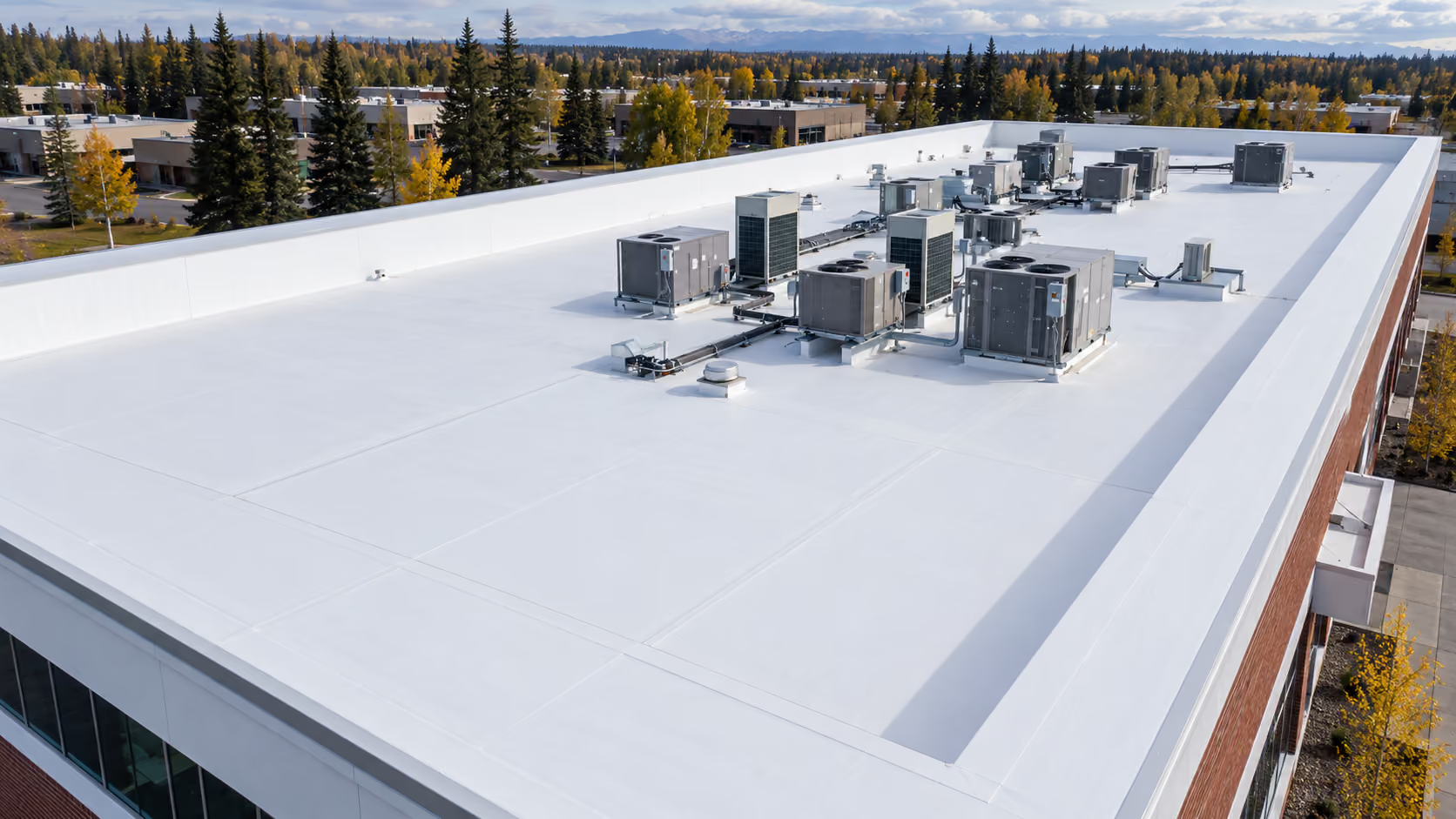
All three membranes work in Anchorage and the Valley when they go on right, so the choice comes down to the building. TPO has hot-air welded seams. EPDM stays flexible in deep cold. Modified bitumen is thick and handles foot traffic. What matters more than the sheet: slope to the drains, dry insulation under it, and an install inside the material’s temperature window. We install all three and tell you which we’d use, and why.
TPO vs EPDM vs modified bitumen
How they compare on an Alaska building. Metal panels, the fourth system we install, have their own page: commercial metal roofing.
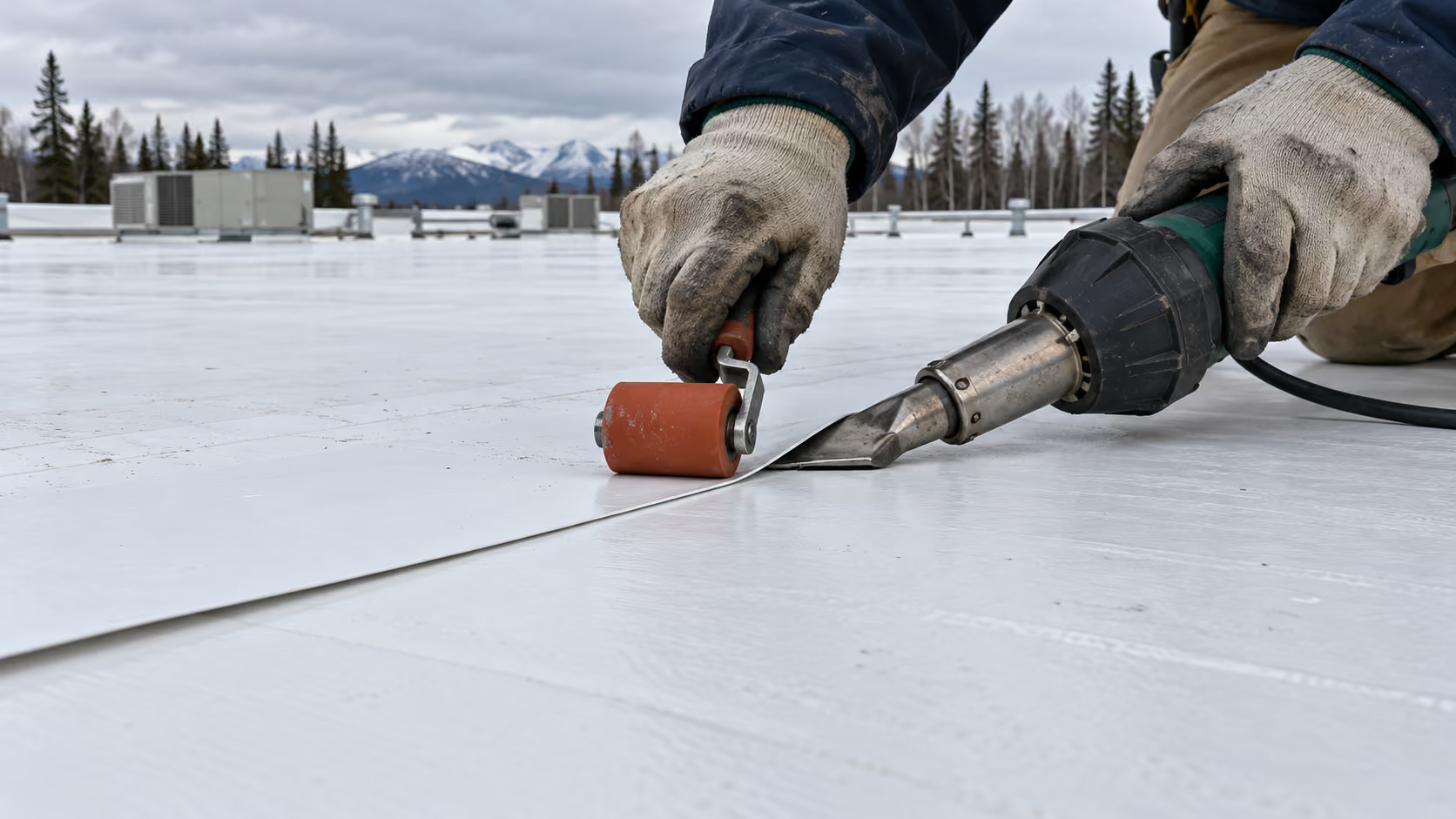
- TPO. A single-ply sheet with hot-air welded seams, its strong point. It stiffens in the cold more than EPDM, and repairs are welded too, on a clean, dry sheet. Fits larger roofs with a lot of seam.
- EPDM. A rubber membrane with adhered or taped seams. It stays flexible in deep cold, and punctures patch easily. The seams are its weak point, so it suits simpler roofs with few penetrations and light foot traffic.
- Modified bitumen. Asphalt-based sheets, torch-applied or self-adhered. The thickest of the three, it holds up to boots and dropped tools and patches with the same material. Fits smaller roofs, roofs people walk on to reach equipment, and flat sections on homes.
How much slope does a flat roof need?
At least a quarter inch per foot. Flat roofs aren’t flat: that fall moves water to the drains or scuppers. On a level deck it comes from tapered insulation under the membrane, plus crickets, small sloped sections that steer water around curbs and toward the drains.
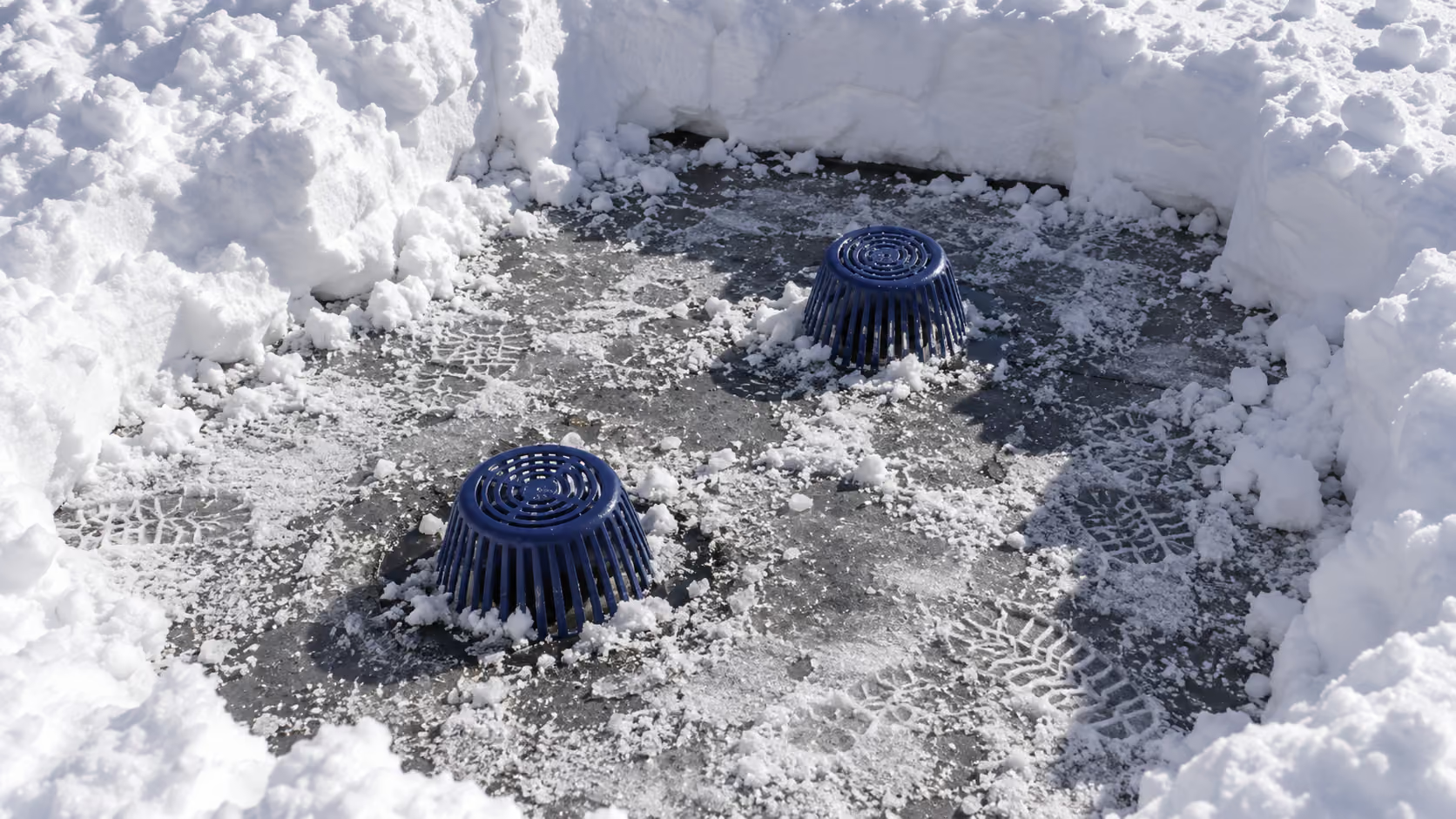
Water still standing 48 hours after rain is ponding. Up here a pond freezes, adds weight, and sits on the seams through every thaw. At breakup, a frozen or buried drain can’t take the melt, so the water spreads until it finds a seam. Clearing drains and scuppers is part of every commercial roof maintenance visit, and a new roof is the time to fix the slope.
Snow load on flat roofs in Anchorage and the Valley
A flat roof doesn’t shed snow, and wind piles it into drifts against parapets, at step-downs, and behind rooftop units, where it weighs far more than on the open field. The rule of thumb from the Insurance Institute for Business and Home Safety: 10 to 12 inches of fresh snow weighs about 5 pounds per square foot, and 2 feet of old snow plus 2 feet of new can reach 60 pounds per square foot. Rain on snow adds weight fast. When drifts build, get it cleared. If doors inside start sticking, get everyone out of the building, then call (907) 701-2233. Roof snow removal →
Water standing on your roof?
Text a photo and we’ll tell you what we see.
Insulation and condensation under a flat roof
On a heated building, the insulation usually sits above the deck, under the membrane. At twenty below, warm, moist air from inside condenses in it before it gets out. Without a vapor retarder on the warm side, a roof can soak its own insulation without a single leak.
Wet insulation loses much of its R-value, adds weight, and dries slowly, if at all, under the membrane. The signs are stains, sagging ceiling tiles, drips on cold days with no rain, and soft spots underfoot. A commercial roof assessment looks for them before anyone writes a budget.
Can you put a new flat roof over the old one?
Sometimes. A re-cover puts a new roof over the existing one, saving the tear-off and keeping the building closed up. It only works over one existing roof, and only when that roof and its insulation are dry.
Recover
One existing roof, dry insulation, a sound deck, and drains already at the low points. Less labor, less waste, and a faster job in a short season. It’s a real option, and when your roof qualifies, we’ll say so.
Tear-off
Wet insulation across large areas, two roofs already up there, a deck with soft spots or rust, or slope that needs rebuilding. Covering wet insulation traps the water under your new membrane. Everything comes off, the deck gets checked, and the new system goes down on dry material.
Can a flat roof be installed in winter?
Not easily. Every membrane and adhesive has a temperature window, and adhesives and self-adhered sheets need warmth to bond. New roofs go on in the warm months, roughly May through October, and the calendar fills from the front, so an assessment in early spring gets you a spot.
Repairs happen year-round. Some materials won’t seal below freezing, so a winter repair is sometimes a proper temporary fix, with the permanent version in the first warm stretch. Flat roofs tend to show their leaks at breakup, when the melt finds every gap the winter opened.
The same systems go on homes, over garages and additions. We install and repair flat roofs from Girdwood to Anchorage and Eagle River, and across the Valley in Wasilla, Palmer, and Big Lake.
What a flat roof replacement costs
It’s priced after the assessment, in writing, line by line. What moves the number: roof size, the membrane, re-cover or tear-off, wet insulation, tapered insulation to fix the slope, drains, curbs, and penetrations, parapets and edge metal, and getting material onto the roof. If a repair makes more sense than a new roof, the budget says so. How a commercial job goes →
Every commercial job starts with a free assessment.
A written scope and budget, and no pressure after it.
Flat roofing questions
The questions we get most often about flat roofs in Anchorage and the Valley. Don’t see yours? Text us and a roofer answers.
Text my rooferIt depends on the roof more than the climate. Both handle the cold here when they’re installed inside their temperature windows. EPDM makes sense on a simple roof with few penetrations and little foot traffic. TPO makes sense on a bigger roof with a lot of seam, because welded seams are its strength.
If it’s still there 48 hours after rain, yes. That’s ponding, and it means the slope or a drain isn’t doing its job. Up here a pond freezes, adds weight, and holds the next melt against the seams. A puddle that’s gone by the next day isn’t worth worrying about.
Because that’s when the whole winter’s water arrives at once. If drains are frozen or buried at breakup, the melt spreads across the roof and sits against seams, curbs, and flashing until it finds a gap. The fix is the detail it came through, plus getting water to the drains.
Repair it when the leaks trace back to a few details, like a curb, a drain, or a seam, and the insulation is dry. Replace it when leaks keep turning up in new places, seams are opening across the field, or wet insulation covers large areas. The assessment says which, in writing.
Yes. We roof flat sections on homes, like garages and additions, in modified bitumen, EPDM, or TPO. The detail that matters most is the tie-in to the wall or the pitched roof above, where snow and meltwater collect. Every home job starts with a free inspection.
Twice a year, in spring after the melt and in fall before snow, and after any big storm. Spring shows what the winter did to seams and flashing. Fall is the chance to clear drains and seal small problems while materials still bond, which costs less than finding them through a ceiling in April.
Let’s look at your flat roof
Text a photo or book an assessment. You get a written scope and budget, and no pressure after it.