Metal Roof Repair in Anchorage & the Mat-Su Valley
Backed-out screws, open seams, bent trim, and leaks at the pipes, found at the source and fixed with parts made for metal. Standing seam, stone-coated steel, and exposed-fastener panels.
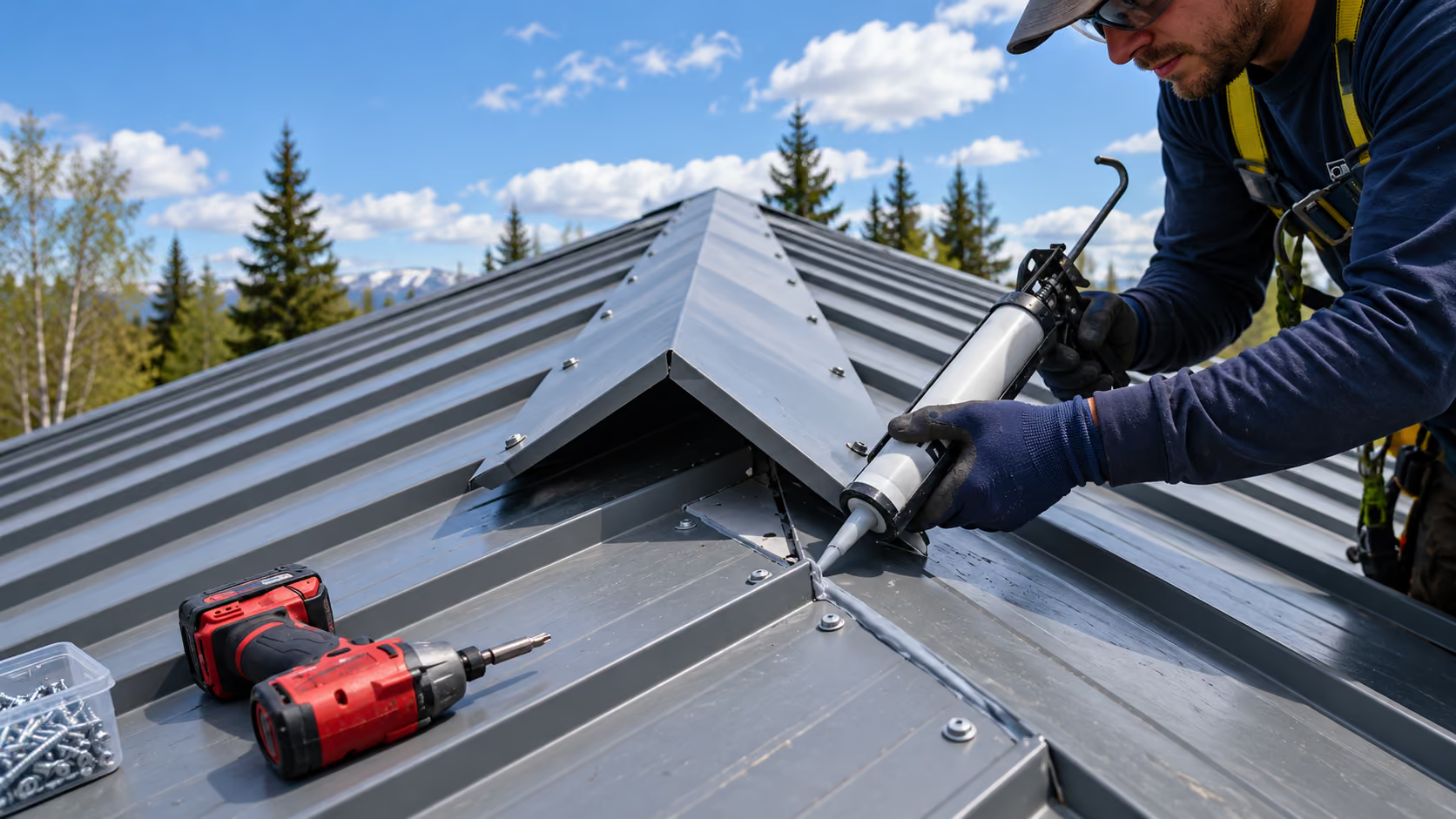
Metal roofs usually leak at the details, not through the panels. Screws back out, rubber washers dry and crack, a seam or trim piece opens up, or the sealant at a pipe lets go. Alaska’s freeze-thaw swings, a sunny afternoon and a hard freeze the same night, work on every one of them. We find the source on the roof and in the attic, then fix it with fasteners and sealants made for metal.
Why is my metal roof leaking?
Each kind of metal roof has its own weak spots.
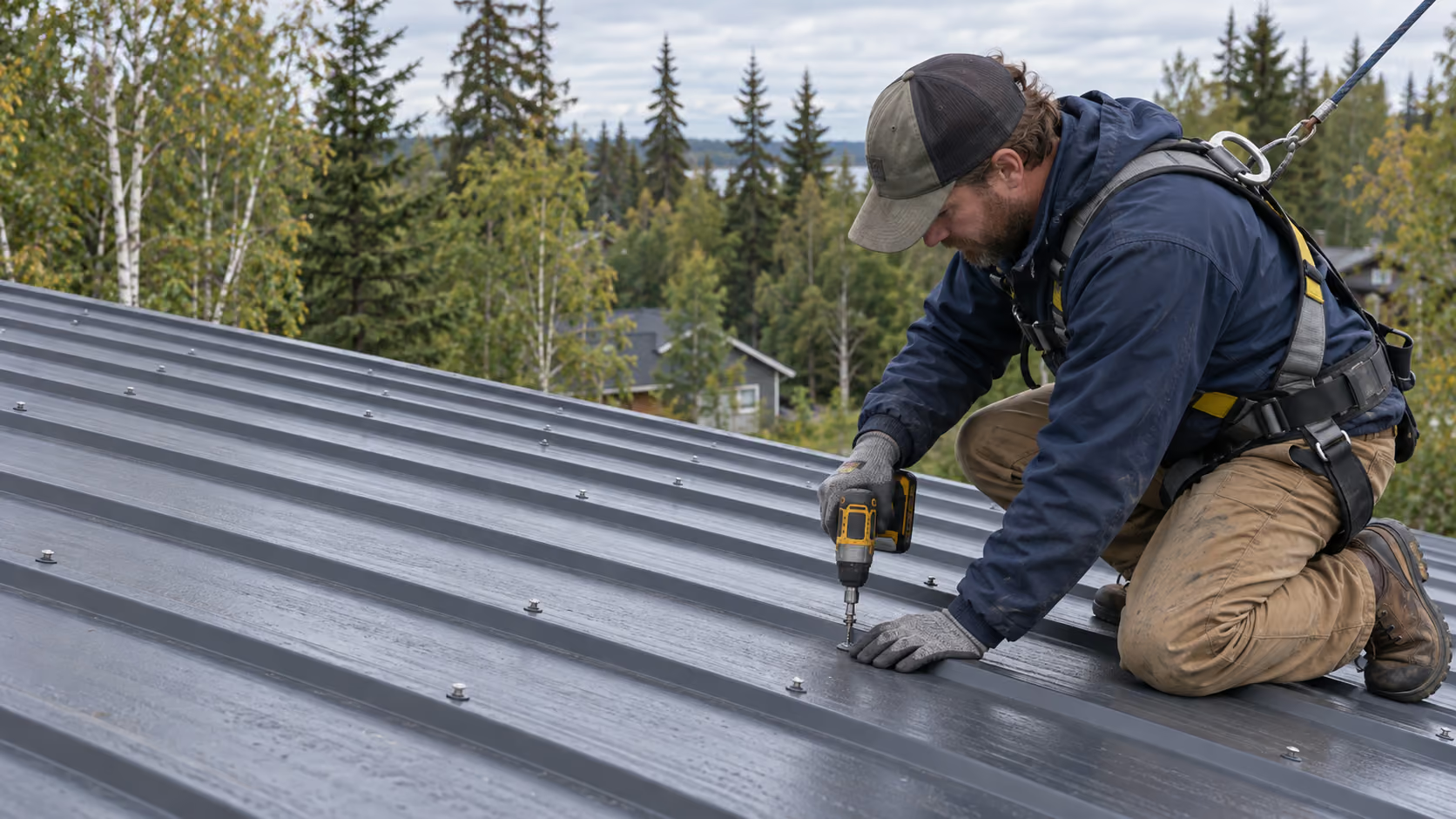
- Exposed-fastener panels. Screws backed out as the panels grow and shrink through every freeze and thaw, washers dried out and cracked, screws driven too tight or not tight enough, and rust starting at cut edges and around fasteners.
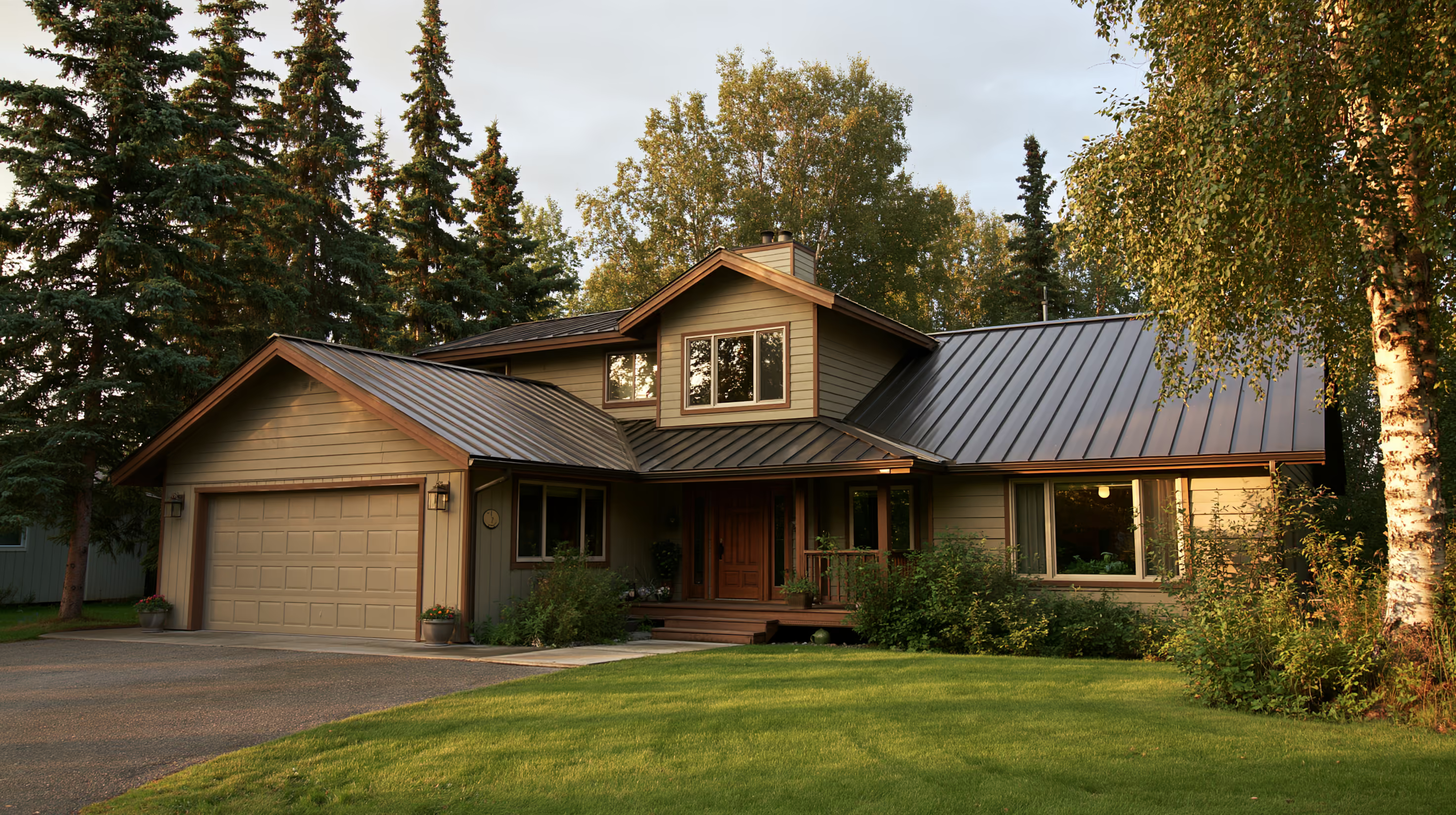
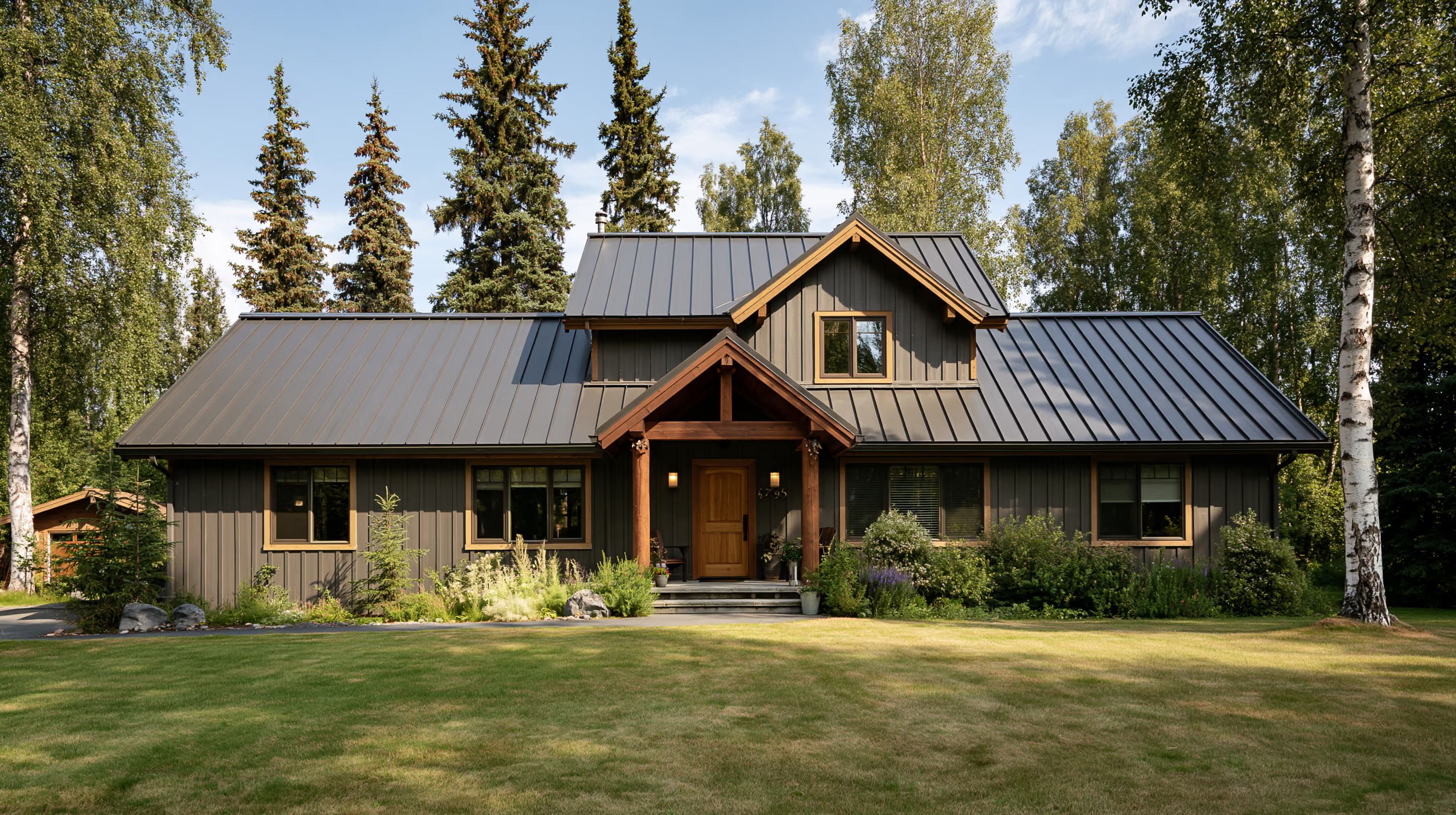
- Standing seam. No exposed screws to back out, so the trouble is elsewhere: seams that separated, clips that let go, trim and flashing that pulled loose, and failed sealant at pipes and vents. Standing seam roofs →
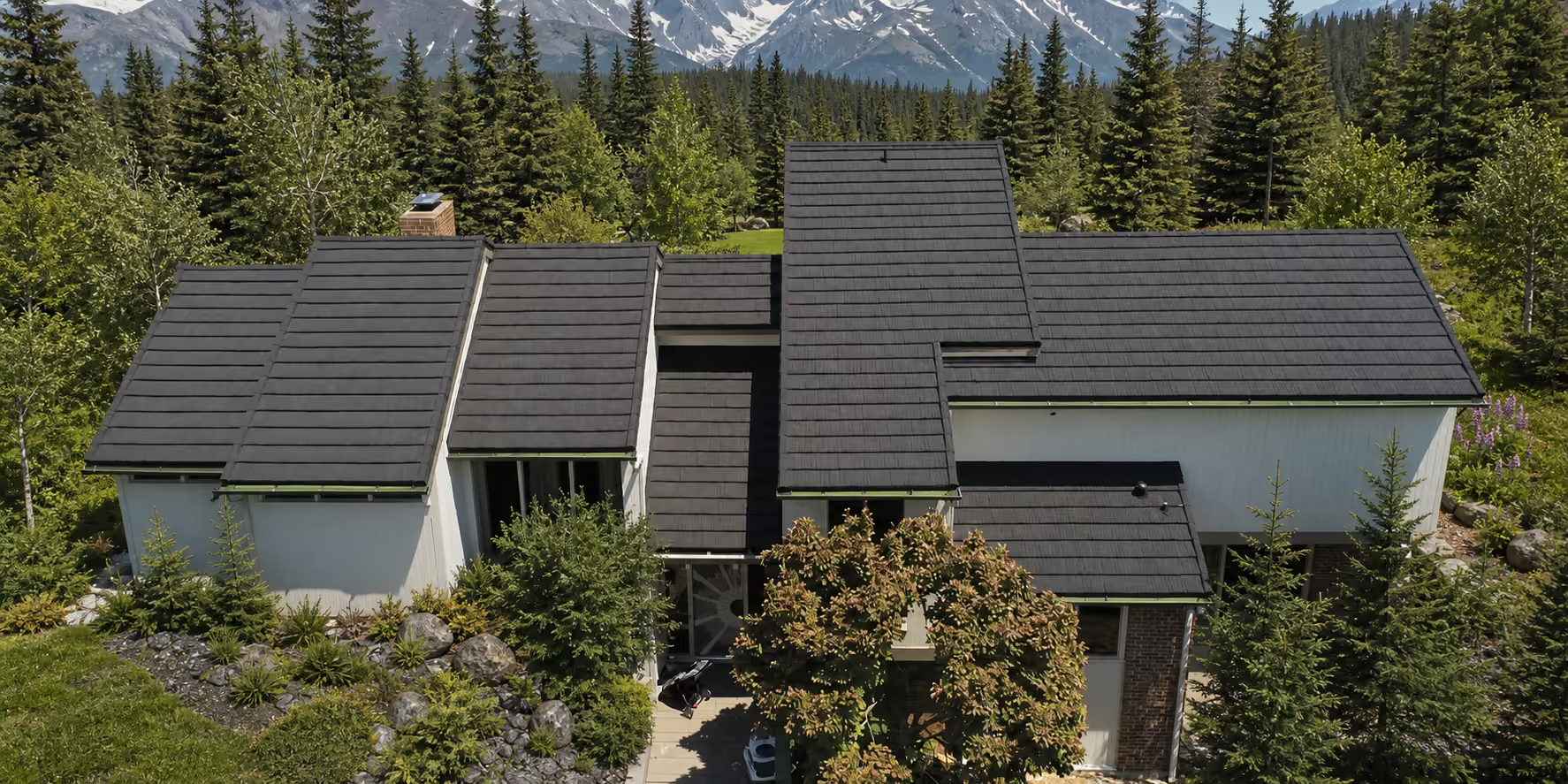
- Stone-coated steel. Panels dented or lifted by ice or foot traffic, loose trim, and bare spots where the stone chips came off. A few loose chips in the gutter the first year are normal. Bare patches on an older roof are worth a look. Metal shingles →
Pipe boots and flashing on a metal roof
Every pipe, vent, and chimney is a hole in the roof, and on metal each one seals to a ribbed or textured panel that moves with the temperature. Rubber boots crack after enough Alaska winters. We replace them with retrofit boots built for metal. Flashing at walls and chimneys that’s pulled away or rusted gets replaced, not caulked over.
Snow damage on metal roofs in Anchorage and the Valley
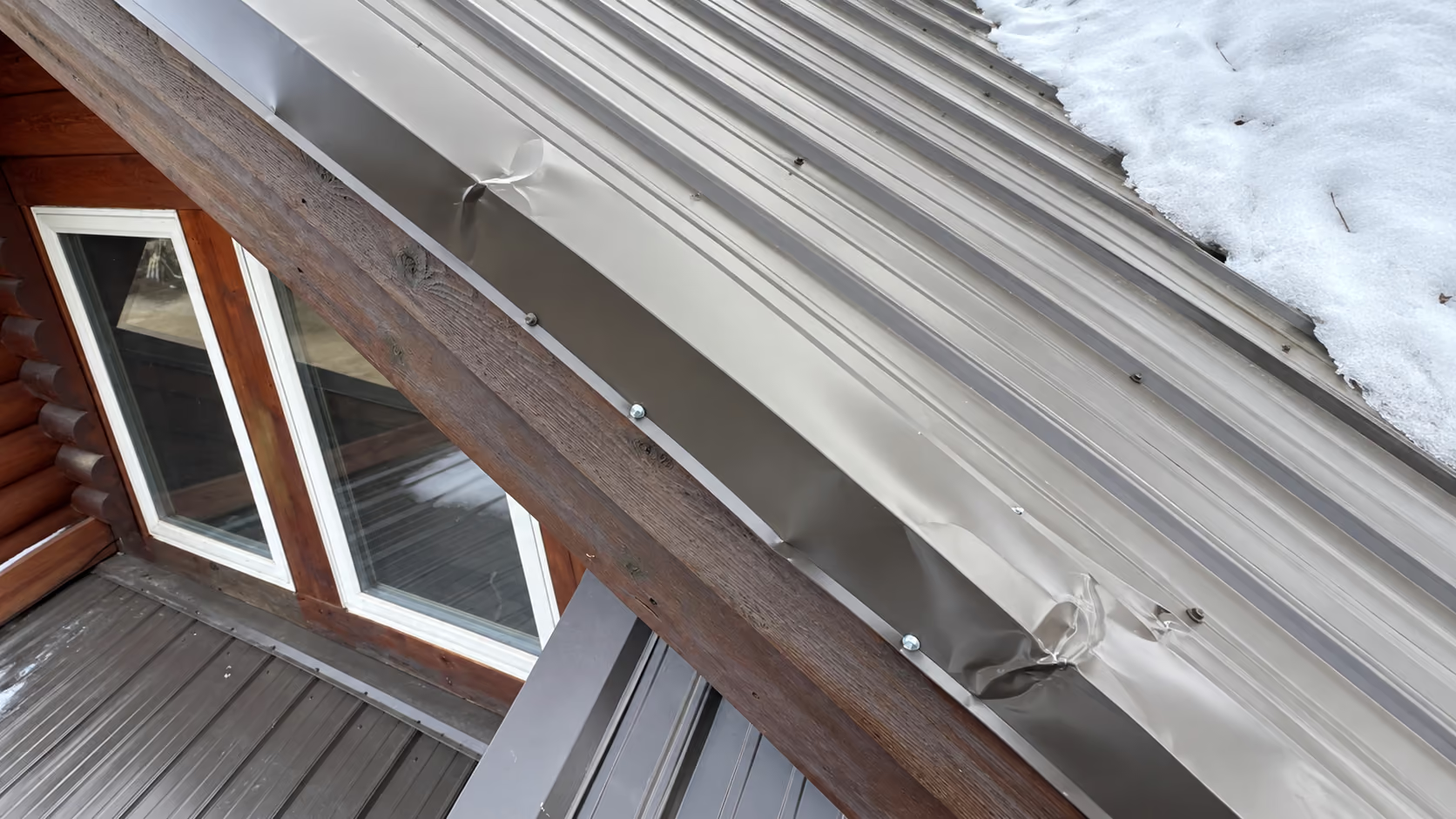
Snow sliding off a metal roof is hard on everything below it. A slide off a standing seam roof can bend eave trim, flatten gutters, and tear snow guards out of the roof, leaving holes that leak at the next melt. Guards that tear out were often too few for the load.
We replace bent trim and damaged panels, close up the holes properly, and show you the guard layout the roof actually needs. Snow guards →
Is it a leak or condensation?
Drips inside a shop or garage on a clear January morning, with no rain and no melt, are often condensation: warm, moist air hitting the cold underside of the metal. The fix is a vapor retarder, insulation, and ventilation, not sealant on the roof. We check for both before you pay to fix the wrong one. Open-framed shops and hangars are prone to it. Commercial metal roofing →
Metal roof leaking?
Text a photo and we’ll tell you what we see.
How we repair a metal roof
- We find the source. On the roof and underneath it. Water runs along ribs and purlins, so the drip is often feet from the hole.
- Fasteners the right size. Backed-out or stripped screws are replaced with the right size for the hole, with new washers, not just snugged down again.
- Sealants made for metal. Not hardware-store silicone, and applied in weather they’ll actually cure in.
- Matched panels and trim. Color-matched where the color is still available. On an older, faded roof a new piece may read a shade different, and we tell you that before we order.
- Photos before and after, so you see what was wrong and what’s there now.
We repair metal roofs we didn’t install. For shingle roofs and general leaks, see roof repair.
Repair or replace a metal roof?
A metal roof can go past forty years, so fixing the details on a sound one is usually money well spent. The inspection settles it, in writing.
Repair it
Leaks at a few screws, a pipe boot, or one run of trim. Snow slide damage along one eave. Sound panels with a seam or flashing that opened up. On a sound roof, those are worth fixing.
Replace it
Rust eating through the panels, not just at the cut edges. Screws backing out across the whole roof, every year. Leaks in several places at once. At that point you’re buying a new roof one repair at a time. Roof replacement →
Metal roof repairs in an Alaska winter
Repairs happen year-round. Some sealants won’t cure below freezing, so a winter fix can be a proper temporary one, with the permanent repair in the first warm stretch. You’ll know which one you’re getting. Snow around the damage comes off first, so we can see what we’re fixing.
If water is coming inside right now, text photos to (907) 701-2233 and see emergency roof repair for what to do first.
We repair metal roofs in Palmer, Wasilla, Anchorage, and Eagle River, and out to Big Lake and Girdwood.
What a metal roof repair costs
Repairs are priced after the inspection, in writing, by what we found: how much of the roof is involved, pitch and height, the system, whether matching panels or trim have to be ordered, and snow or ice on the roof. Replacing screws along a garage roof is a small job. A bent run of trim two stories up is a bigger one. If a repair heads toward the cost of a new roof, you hear that first.
Every job starts with a free inspection.
Photo report and a written price within 24 hours, and no pressure after it.
Metal roof repair questions
The questions we get most often about metal roof repair in Anchorage and the Valley. Don’t see yours? Text us and a roofer answers.
Text my rooferMetal grows and shrinks with every temperature swing, and an Alaska year has a lot of them. Over time that movement works exposed screws loose, and the rubber washers dry out and crack. Screws driven too tight or too loose at install make it worse. We replace them with fasteners the right size for the hole, with new washers.
It’s often condensation. Warm, moist air inside a shop or garage hits the cold metal on a winter morning, turns to water, and drips. It looks like a leak, but the fix is a vapor retarder, insulation, and ventilation. Sealant on the roof won’t stop it, so we check for both before recommending anything.
Often, yes. We replace dented or bent panels and trim, color-matched where the color is still available. How much work it is depends on the system and where the panel sits on the roof, which is why it’s priced after we see it.
Yes, repairs happen year-round. Some repair materials won’t seal in the cold, so a winter repair is sometimes a proper temporary fix, with the permanent one done in the first warm stretch. Snow has to come off around the damage first. We tell you which kind of repair you’re getting and why.
Yes. We repair standing seam, stone-coated steel, and exposed-fastener panel roofs no matter who put them on, on homes, garages, shops, and hangars. If you have leftover panels or trim in the garage, or paperwork that names the product, tell us. It helps with matching.
If the damage was sudden, often yes: wind, hail, a falling tree, or snow load. Wear, age, and screws that worked loose over the years usually aren’t covered. We photograph what we find either way, and if it looks like a claim we’ll say so, meet the adjuster on site, and write a scope that matches the damage. You own the claim.
Let’s find where the metal is leaking
Text a photo or book an inspection. You get a photo report and a written price within 24 hours, and no pressure after it.