Commercial Roof Assessments in Anchorage & the Mat-Su Valley
A free, written look at your building’s roof: what’s wrong, where it is, how urgent it is, and how many winters the roof has left. Options with budgets, and no pressure after it.
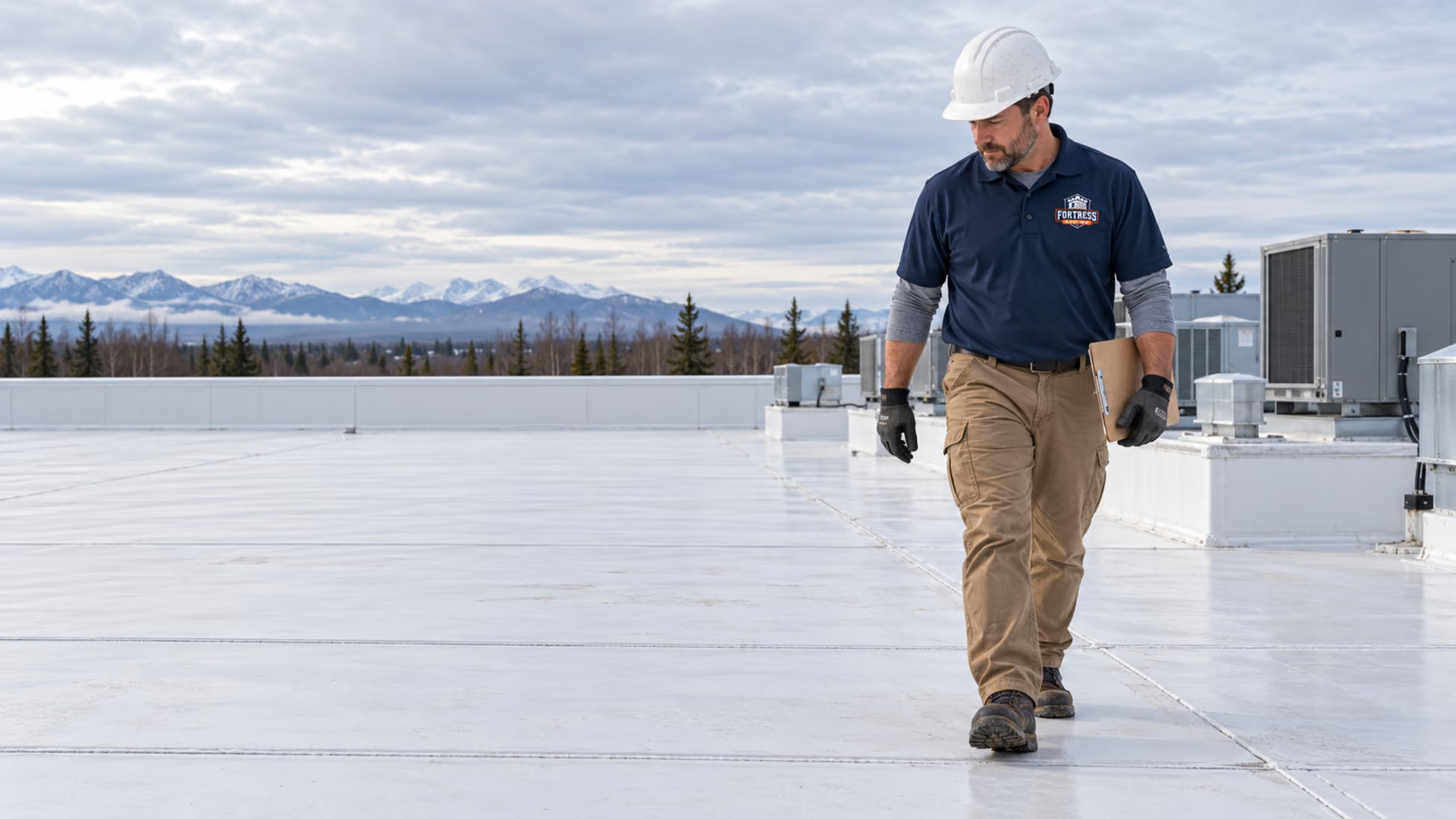
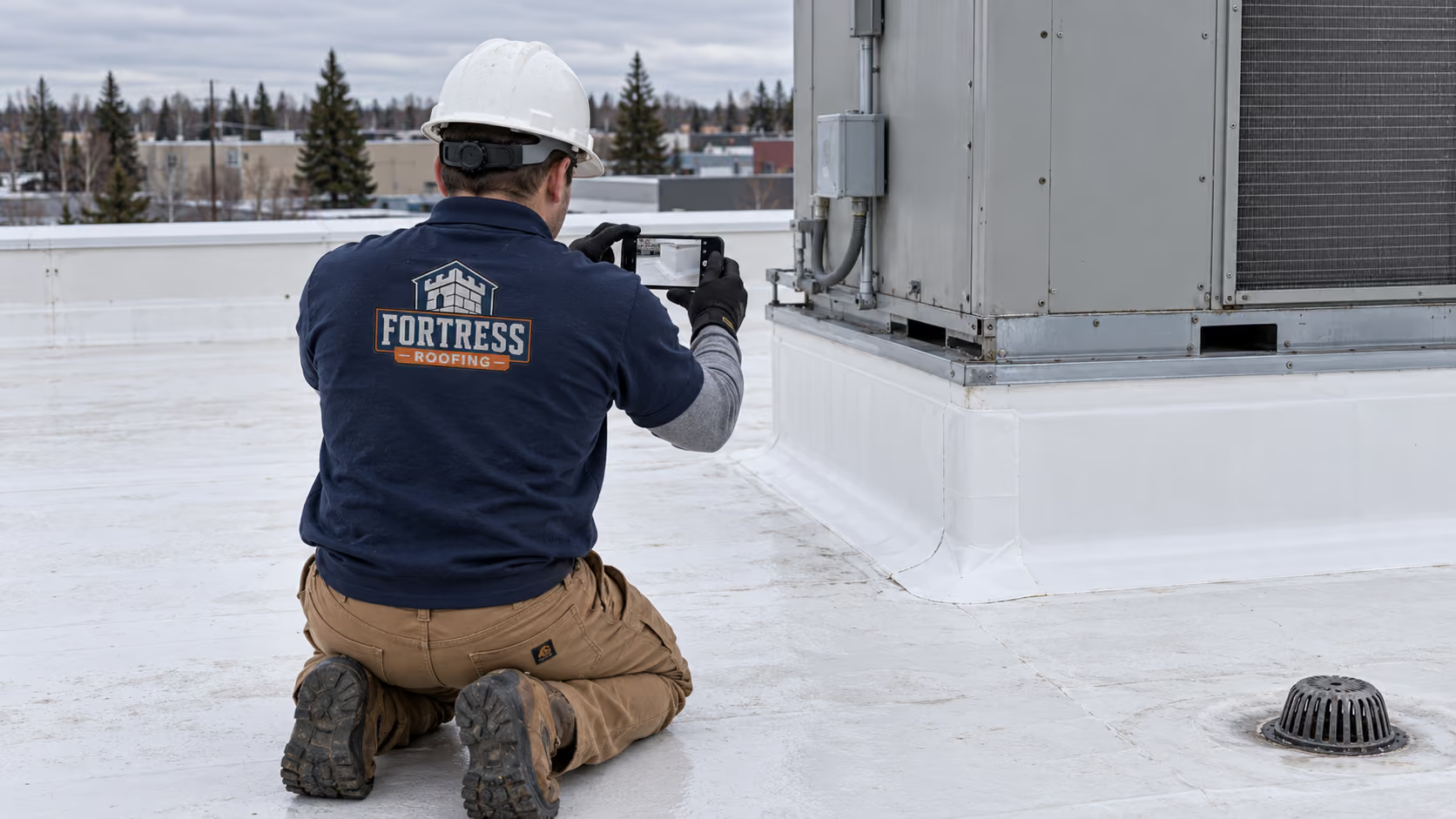
A commercial roof assessment tells you what shape the roof is in and what it’s going to need, in writing, before you find out from a leak during breakup. We walk the whole roof, check the ceilings and the deck from inside, and photograph each problem where we found it. You get findings ranked by urgency, our estimate of remaining life, and options with budgets. It’s free, and there’s no pressure after it.
What we check on a commercial roof assessment
On top, we walk the field and every edge:
- The membrane or panels: splits, blisters, punctures, rust, dents, and every seam.
- Flashing, penetrations, and curbs around pipes, vents, hatches, and rooftop units.
- Drains and scuppers: clear, at the low point, and not ringed by ice or ponds.
- Parapets, copings, and edge metal: open joints, loose fasteners, and wind damage.
- Rooftop equipment: the curbs under it and the paths worn by service traffic.
- Signs of wet insulation: soft spots underfoot, and ponds where the roof should drain.
Inside, we look at stains, sagging or spotted ceiling tiles, and the deck from below wherever we can see it.
What’s in a roof condition assessment?
A written report you can hand to an owner, a buyer, or whoever signs off on the budget:
- Photos tied to locations on the roof, so your maintenance staff, or ours, can walk straight to each one.
- Findings ranked by urgency: what needs doing before the next snow, what belongs in this year’s budget, and what can wait.
- Remaining life: our estimate of how many winters the roof has left, and what would shorten it.
- Options with budgets: repair now, repair and maintain, or replace, each with a written scope.
If the roof has years left, the report says so, and the budget is for upkeep, not a new roof. The checklist changes with the system: seams, drains, and ponding on TPO, EPDM, and mod bit roofs; fasteners, trim, and condensation on metal buildings.
When to get a commercial roof assessment
- Budgeting and capital planning. Know which year the roof needs money, and roughly how much, before it turns into an emergency.
- Buying or selling a building. The roof’s condition belongs in the deal. Get it in writing before closing.
- A new lease. Owner and tenant both want to know what shape the roof is in on day one.
- After a storm. A Chugach wind event on the Hillside or the Matanuska wind around Palmer can peel edge metal and open seams.
- Before winter. Drains, seams, and flashing fixed while materials still seal.
- A roof with a history of leaks. Replacing the same ceiling tile every spring means nobody has found the source yet.
After a storm, the assessment is also your documentation. We photograph the damage, meet the adjuster on site, and write a scope that matches it. You file and own the claim, and we don’t negotiate coverage. Insurance claims →
Buying, leasing, or budgeting?
Text us the address and we’ll set up a free assessment.
Assessing a roof in an Alaska winter
Snow hides a lot, and for much of the winter a low-slope roof here is under it. We won’t guess at what’s underneath.
Bare roof
We see the whole field, every seam, and every drain. This is the assessment to get for a sale, a lease, or a capital budget, and it’s when soft spots from wet insulation show underfoot.
Winter visit
We check what we can reach: edges, parapets, curbs, rooftop units, and exposed drains, plus everything inside. The report lists what we couldn’t see, so you know what the assessment covers, and a spring look after the melt fills in the rest.
How often should a commercial roof be inspected?
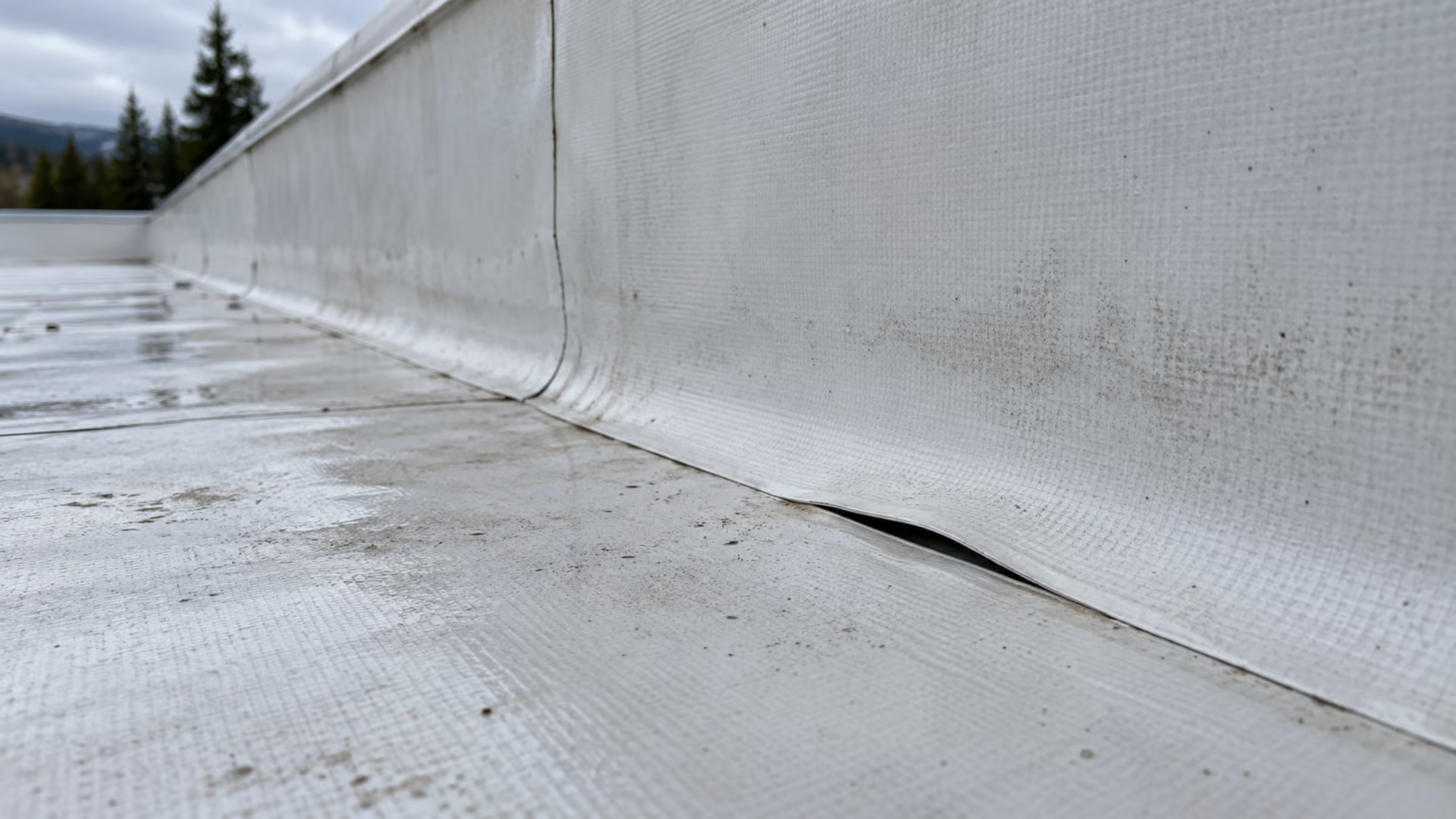
Twice a year, in spring after the melt and in fall before snow, and after any big storm. Spring catches what the winter did: seams worked open by freeze-thaw, flashing lifted by ice, drains full of debris. Fall gets the roof ready for snow while there’s still time to seal things. A commercial roof maintenance schedule covers both visits, with a photo report each time.
We assess commercial roofs in Anchorage and Eagle River, in Wasilla and Palmer, and out to Big Lake and Girdwood.
What does a commercial roof assessment cost?
Nothing. The visit, the photos, and the written report are free. What costs money is the work, and every option comes with a written scope and budget that shows what drives it: roof size, the system, wet insulation, drains and curbs, edge metal, and access. If the right move is to maintain the roof through a few more winters and plan the replacement, that’s what the report says. Commercial roofing services →
Every commercial job starts with a free assessment.
A written scope and budget, and no pressure after it.
Commercial roof assessment questions
The questions we get most often about commercial roof assessments in Anchorage and the Valley. Don’t see yours? Text us and a roofer answers.
Text my rooferYes. There’s no charge for the visit, the photos, or the written scope and budget, and no obligation after it. If the roof needs work, you get options with budgets. If it doesn’t, we tell you that, and when it should be looked at again.
An inspection tells you what’s wrong. An assessment adds what to do about it and when: findings ranked by urgency, an estimate of remaining life, and options with budgets you can plan around. For a building with an owner, a lender, or a board to answer to, that’s the version you need.
Yes. Before closing is the time to learn what the roof has left and what it’s going to need. You get photos, findings ranked by urgency, and budgets for the work, which gives you something concrete to plan with or to bring to the seller. If the roof is under snow, the report says what we couldn’t see.
It depends on the system, how it was installed, how well it drains, and how it’s been maintained, so we won’t guess from the parking lot. The assessment gives you our estimate of remaining life with the reasons behind it, and what would shorten or stretch it. That’s a number you can build a capital budget around.
It can. After a storm, the photos and written scope show what happened and where, and we meet the adjuster on site. Sudden damage from wind, falling trees, or snow load is often covered; wear and age usually aren’t. You own the claim, and coverage disputes are a job for an attorney.
It helps a lot. Stains, ceiling tiles, and the underside of the deck show where water has been, and they often lead us straight to the source on top. Plan on access to the roof hatch or ladder and the spaces under the roof, and give tenants a heads-up that we’re coming.
Find out what your roof has left
Text a photo or book an assessment. You get a written scope and budget, and no pressure after it.