Attic Ventilation in Anchorage & the Mat-Su Valley
A cold, dry roof deck means fewer ice dams and less frost in the attic. We size intake and exhaust to your attic and fix what’s blocked, missing, or working against itself.
Attic ventilation keeps the underside of your roof cold and dry. Through an Alaska winter, that means fewer ice dams at the eaves and less frost on the sheathing. How much you need comes from code: 1 square foot of net free vent area for every 150 square feet of attic floor. Some codes allow 1 for every 300 in narrow cases, but Anchorage doesn’t. It works when intake is low, exhaust is high, and the ceiling isn’t leaking house air into the attic.
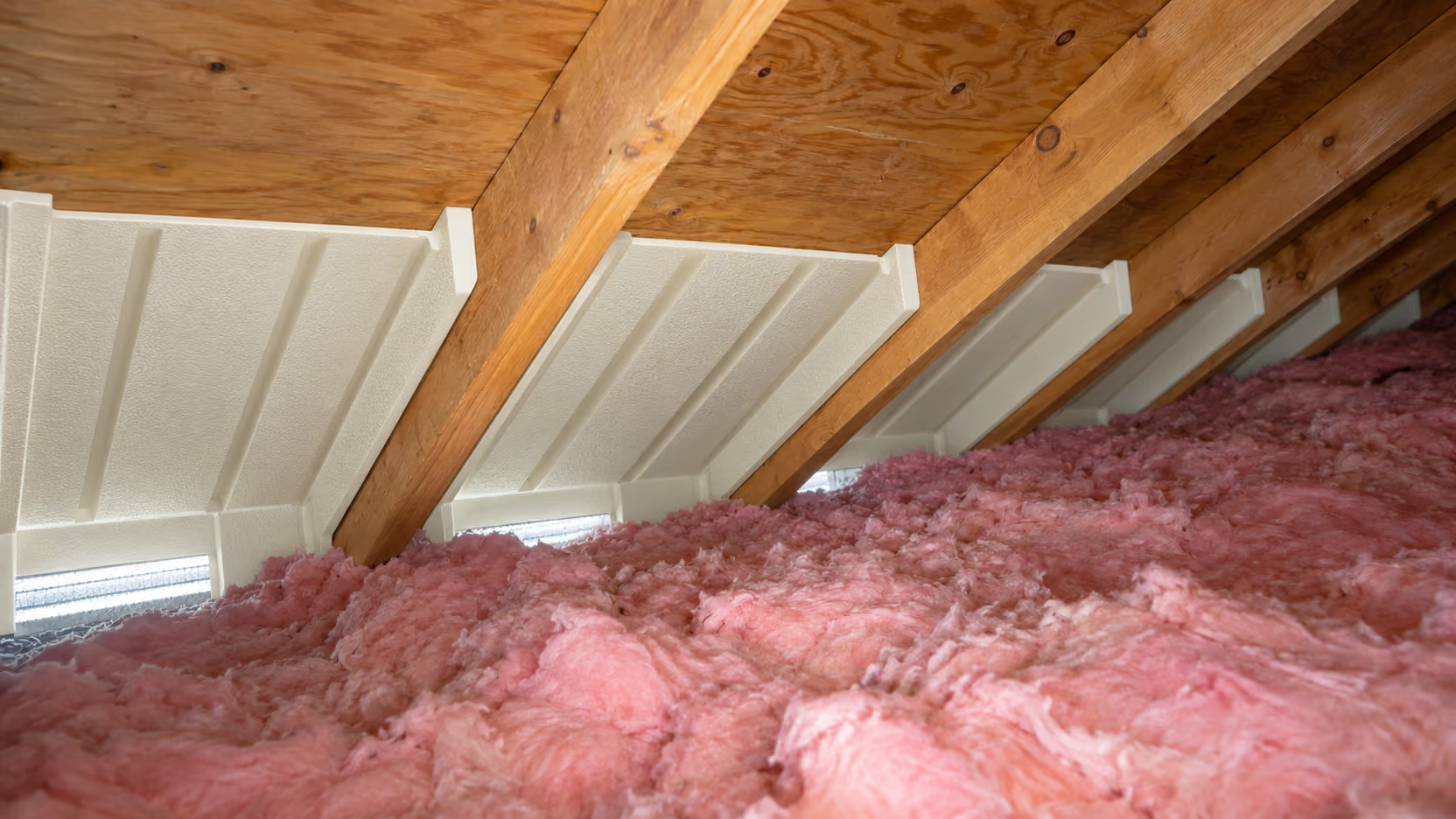
How much attic ventilation do you need?
Code sets the ratio, and the rules differ between Anchorage and the Valley, so two houses the same size can need different amounts.
- 1/150: the baseline for any attic.
- 1/300: some codes allow it with a vapor retarder on the warm side of the ceiling and 40 to 50 percent of the vent area within 3 feet of the ridge. Anchorage doesn’t allow it.
- An example: a 1,500 sq ft attic at 1/150 needs 10 sq ft of net free area. That’s 1,440 square inches, split between the eaves and the ridge.
- Air space at the vents: at least 1 inch between the insulation and the roof deck. That’s the job baffles do.
The inspection works it out for your house, attic included. Free roof inspections →
What ventilation does in an Alaska winter
Your house leaks heat into the attic all winter. Ventilation carries it out before it warms the roof deck, so less of the snow up there melts, runs down to the cold eaves, and refreezes into an ice dam. Ice dam prevention →
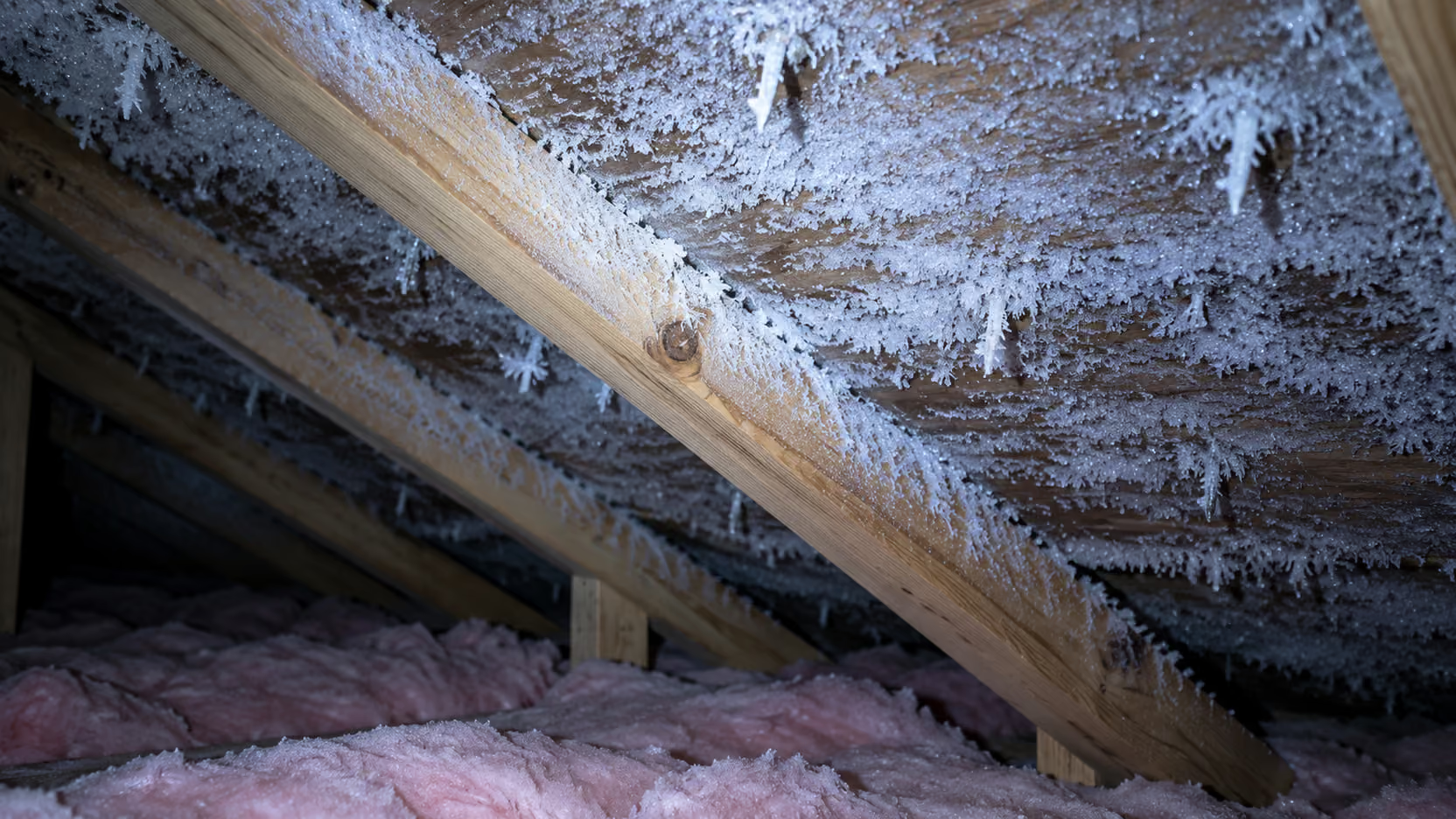
It carries moisture out, too. When it can’t, house moisture freezes on the sheathing as frost, then melts on the first warm day and drips into the insulation. That’s “attic rain,” and it looks a lot like a roof leak.
Signs yours isn’t keeping up: big icicles, snow melting off the upper roof while the eaves stay loaded, and frost on the sheathing when you look in from the hatch.
Ridge vent vs box vents vs gable vents
Every attic needs both halves: intake low, where cold air comes in, and exhaust high, where it leaves. Roughly half the vent area goes in each.
Intake
Soffit vents under the eaves let cold air in along the underside of the deck. It’s the half that gets blocked: insulation pushed into the eaves, no baffles, or too few vents. Up here, weak intake means a warm deck.
Exhaust
A ridge vent along the peak, box vents near the top, or gable vents in the end walls. Pick one. A ridge vent next to gable or box vents short-circuits, pulling air from the other vent instead of from the eaves.
We don’t love powered attic fans. They can pull warm, moist house air up into the attic, the exact air you want out of it in January.
Frost in your attic?
Text a photo from the hatch and we’ll tell you what we see.
Common attic ventilation problems
- Blocked soffits and missing baffles. Insulation covers the vents from inside and no air moves.
- Too little intake. Plenty of exhaust up top, not enough at the eaves.
- Mixed exhaust types. A ridge vent with the old box or gable vents still open.
- Bath fans venting into the attic. Every winter shower sends warm, wet air up to freeze on the sheathing. Code says bath fans exhaust outside, not into the attic.
- Attic frost, and attic rain when it melts.
Why ventilation can’t fix a leaky ceiling
Vents can’t keep up with a hole. If warm house air pours in around recessed lights, the attic hatch, or the chases for plumbing stacks and chimneys, more vents won’t keep the deck cold through the dark months. We’ll show you where the air gets through, with photos. We don’t sell insulation, so there’s nothing to upsell.
What we fix, with a new roof or without one
Ventilation is part of every roof replacement we do, ridge and intake sized to the attic and on its own line in the estimate. It’s also a standalone fix on a roof with years left:
- Intake at the eaves, opened up or added where the attic is short
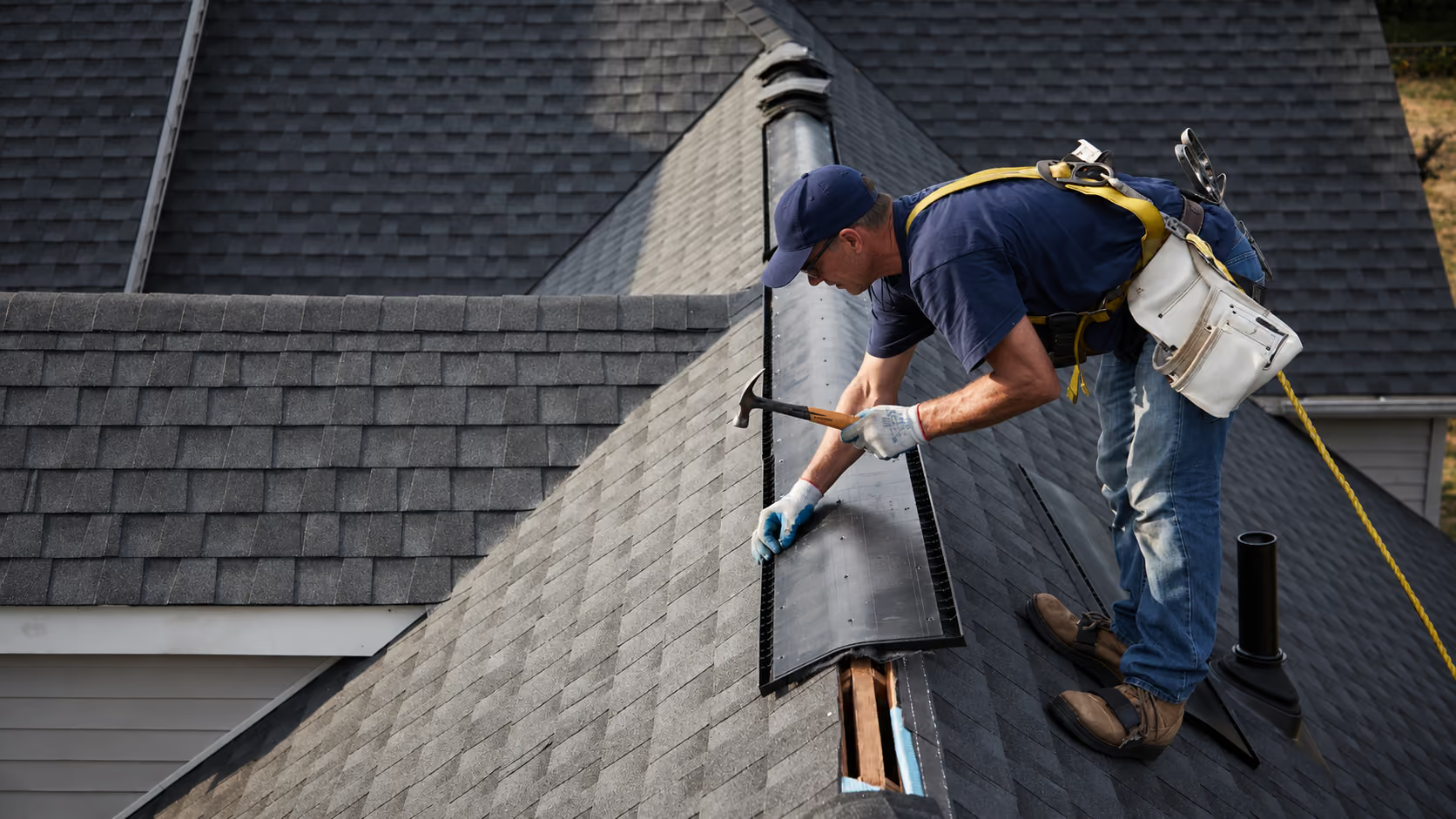
- Ridge vent, cut in along the peak and sized to match the intake
- Conflicting vents closed off, so the roof has one exhaust type instead of two fighting
- Roof caps for bath fans, so the duct ends outside instead of in the insulation
The code math is the same under asphalt shingles or a metal roof. If attic rain or an ice dam has already stained a ceiling or rotted the fascia, we fix the ventilation along with the roof repair.
We fix attic ventilation in Anchorage and Eagle River, across the Valley in Wasilla, Palmer, and Big Lake, and down to Girdwood.
What attic ventilation work costs
It’s priced after the inspection, in writing, by what your attic needs: how much intake to open or add, whether a ridge vent gets cut in, how many old vents to close off, bath fan caps, and the pitch and roofing we’re working on. If a small fix solves it, that’s the one we’ll quote.
Every job starts with a free inspection.
Roof and attic both. Photo report and a written price within 24 hours, and no pressure after it.
Attic ventilation questions
The questions we get most often about attic ventilation in Anchorage and the Valley. Don’t see yours? Text us and a roofer answers.
Text my rooferDivide the attic floor area by 150. That gives you square feet of net free area. A 1,500 sq ft attic needs 10, split between low vents at the eaves and high vents near the ridge. Some codes allow dividing by 300 in narrow cases, but Anchorage doesn’t.
No. A cold attic is the goal. Closed vents trap warm, moist air up there, which builds frost on the sheathing and melts the snow that becomes ice dams. Keeping the house warm is the job of the insulation and a sealed ceiling. Leave the vents open all year.
Either works if there’s enough of it and it’s the only exhaust type on the roof. We use ridge vent on replacements because it runs along the peak, where high vents belong. If your box vents are sized right and the intake matches, we won’t swap them just to swap them.
We don’t love them. A powered fan can pull warm, moist air out of the house through gaps in the ceiling, and in winter that air turns into attic frost. Paired with a ridge vent, the two short-circuit each other. Balanced passive vents do the job without a motor pulling on the house.
Warm, moist house air reaching a cold attic and freezing on the underside of the deck. The usual sources are bath fans venting into the attic and air leaks at lights, the hatch, and plumbing and chimney chases. On a warm day it melts and drips, which is why it gets mistaken for a leak.
Yes. On a roof with years left, it’s a standalone job: intake opened up or added at the eaves, a ridge vent cut in to match, conflicting vents closed off, and roof caps on bath fan ducts. You get a written price after the free inspection.
Let’s see what your attic is doing
Text a photo from the attic hatch or book an inspection. You get a photo report and a written price within 24 hours, and no pressure after it.