Storm Damage Roof Repair in Anchorage & the Mat-Su Valley
Shingles lifted in a Chugach wind event, trim peeled back by the Matanuska wind, or a spruce through the roof. We document it, fix it, and meet your adjuster if it’s a claim.
A lot of storm damage isn’t a hole in the roof. It’s shingles that lifted in the wind, broke their seal, and lay back down looking fine. Those can tear off or leak later, sometimes not until the spring melt. So after a big wind, a heavy snow, or a tree coming down, we get on the roof and in the attic, photograph what the storm did, and fix it. If it’s a claim, those photos go to your adjuster.
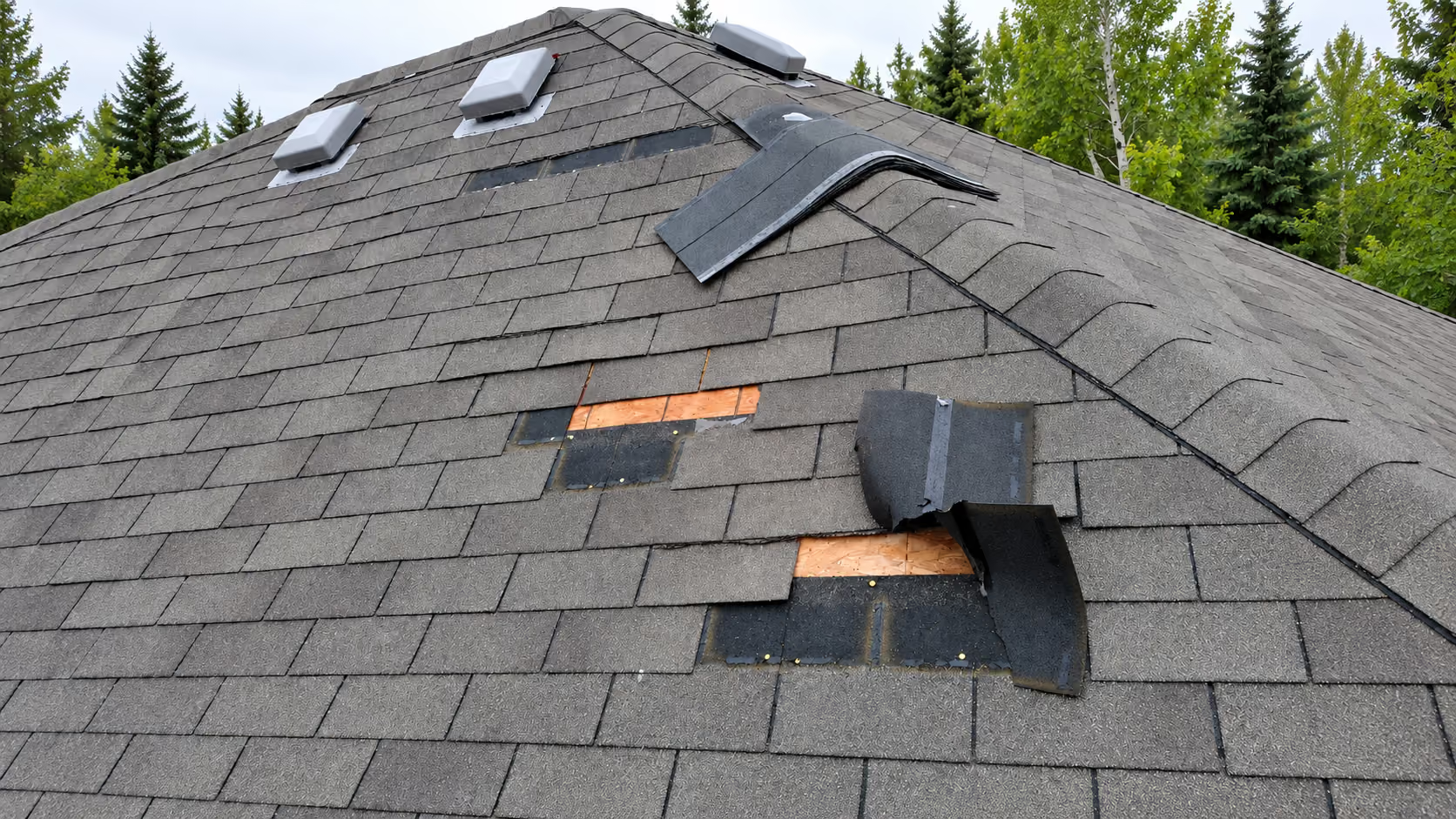
Signs of wind damage on a roof
Some of it shows from the driveway. Some only shows up close.
- Creased or lifted shingles. A crease across the shingle means it bent back in the wind and lost its seal.
- Missing shingles and ridge cap. Bare spots on the roof, and pieces in the yard or the gutters.
- Peeled metal trim and panels. Drip edge, rake, or ridge trim bent back, and panel edges lifted on a metal roof.
- Flashing pulled loose. At chimneys, walls, and skylights, where the next rain finds the gap.
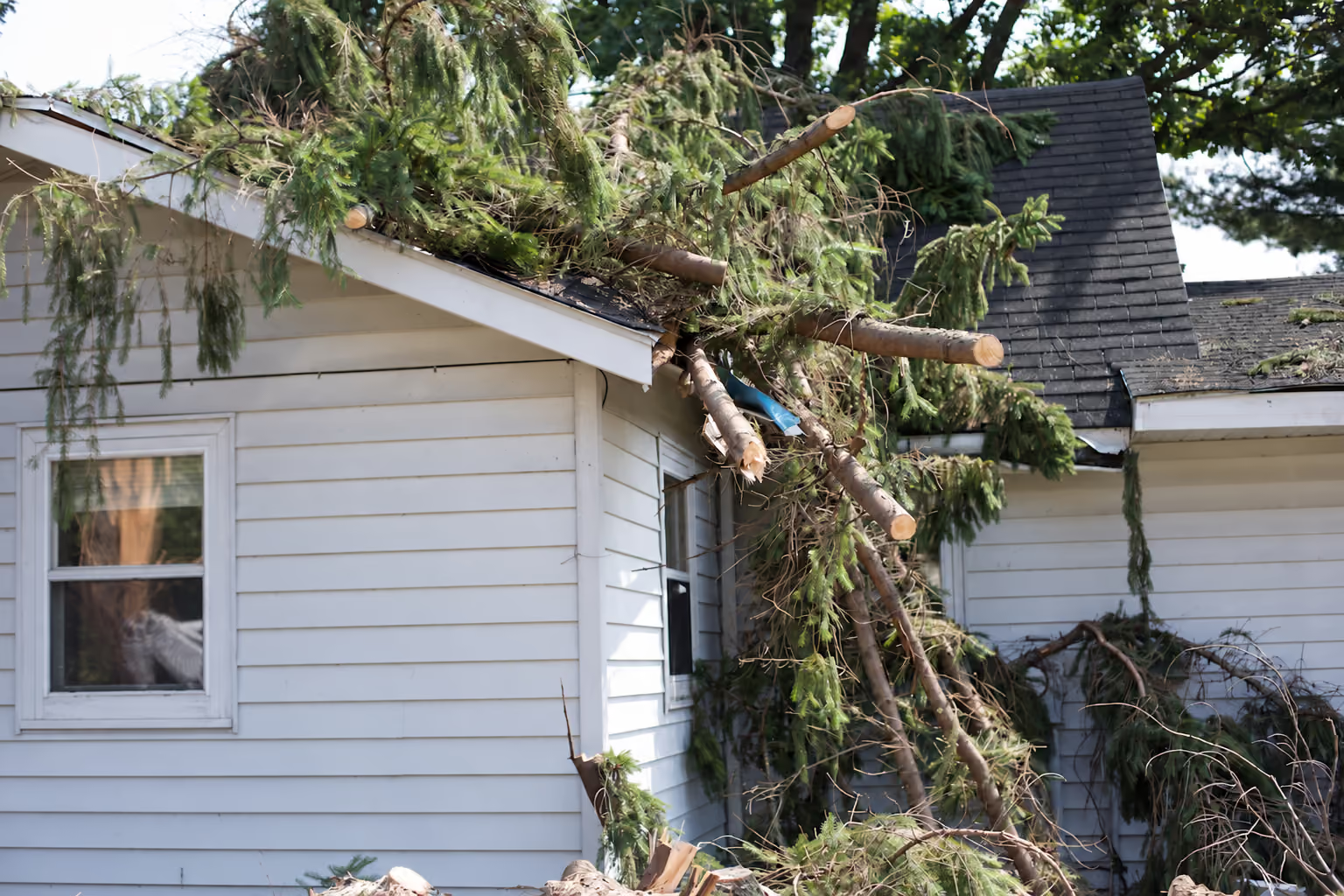
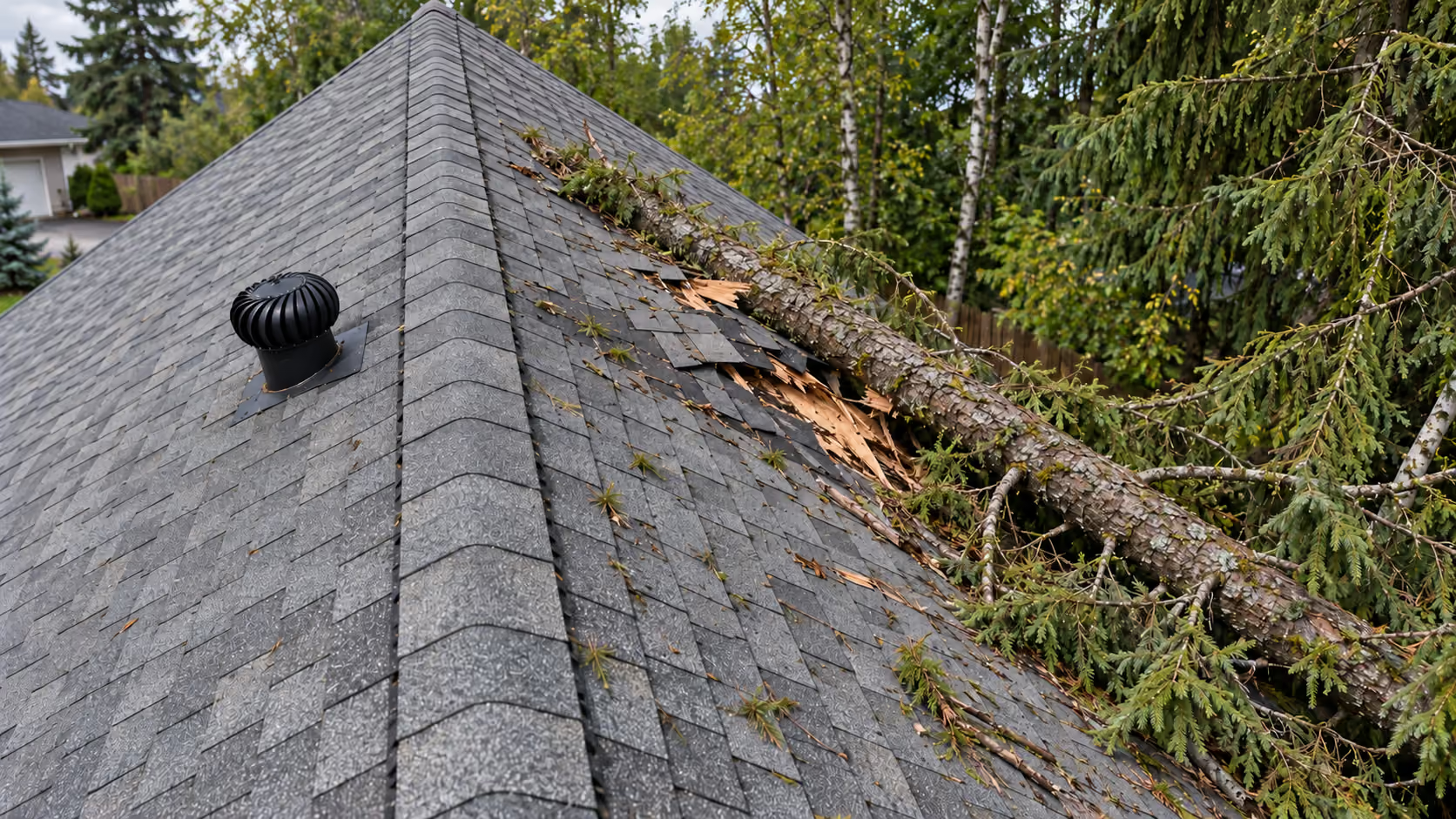
- Snow and tree damage. Cracked shingles and decking where a limb hit, and gutters and trim bent by sliding snow. If the roof is sagging under the load, get everyone out of the building, then call.
Storms that damage roofs in Southcentral Alaska
The damage depends on the storm and on where you live.
- Chugach wind events. On the Anchorage Hillside, they strip shingles, ridge cap, and trim, and find every loose edge a roof has.
- The Matanuska wind. Around Palmer and Butte, it works at the same edges and drifts snow onto the downwind side of the roof.
- Heavy snow, and rain on snow. Weight that builds all winter and climbs fast when rain soaks in, plus ice at the eaves.
- Falling spruce. Beetle-killed spruce in the Mat-Su comes down in wind. A limb can crack decking; a trunk can open the roof.
- Rare hail. Seldom big enough to hurt a roof here, but a summer storm can crack shingles and dent vents, gutters, and trim.
What to do after a storm damages your roof
- Photograph it from the ground. Each side of the house, then close-ups of shingles in the yard, bent trim, the tree, and any water inside.
- Write down the date. Your insurer will ask when the damage happened.
- Stay off the roof. Storm-damaged roofing can shift under your feet, and frost or snow makes it worse.
- Protect the house. If water is getting in, it needs a temporary fix now. Most policies expect reasonable steps to prevent further damage, so keep the receipts. Emergency roof repair →
- Get it inspected. A free inspection on the roof and in the attic finds what you can’t see from the ground. Free roof inspections →
Storm come through?
Text photos from the ground and we’ll tell you what we see.
Repair or replace after storm damage?
Plenty of storm damage is a repair. Two things decide it: how much of the roof took damage, and whether new roofing will match what’s left.
Repair it
A section of shingles, a run of ridge cap, trim or flashing, or a limb hole in otherwise sound decking. We replace what the storm damaged and photograph it before and after. New shingles on an older roof rarely match exactly, and we tell you before the work how close they’ll look. Roof repair →
Replace the slope or the roof
Creased shingles across a whole slope, a roof that was already near the end, or patches that won’t blend. Replacing the slope, or the roof, is often a better spend than a dozen repairs. If insurance is paying, the adjuster decides what’s covered, and our scope has to match the damage. Roof replacement →
Metal roofs take storm damage their own way: peeled trim, lifted panel edges, and holes where sliding snow tore out snow guards. Metal roof repair covers those.
Storm damage and your insurance claim
If a windstorm or a heavy snow year did real damage, it may be a claim. We photograph it, meet the adjuster on site, and write a scope that matches what the storm did. You file the claim and it stays yours. We don’t negotiate coverage. That’s a job for an attorney. How a roof claim works →
How to spot a storm chaser after a big wind
After a big wind, out-of-town crews knock on doors across Anchorage and the Valley. Some are fine. Some are gone before their work has seen a winter. Before you sign with anyone, us included:
- Check the license. Look up any contractor on the State of Alaska Professional License Search. Ours is AK #260001.
- Keep your claim. Don’t sign anything that hands your claim to a contractor.
- Skip the cash deposit at the door. Don’t hand a big cash deposit to someone who knocked.
- Pay your own deductible. Be wary of anyone who offers to cover it.
We repair storm damage from Turnagain to Muldoon in Anchorage, in Eagle River and Girdwood, and across the Valley in Wasilla, Palmer, and Big Lake.
What storm damage repair costs
We price it after the inspection, in writing, based on what the storm did: how many shingles or panels, the ridge and trim, the flashing, any decking, and how steep and high the roof is. Snow and ice on the roof add time in winter. On a claim, the same line-item scope goes to your adjuster, and the deductible is yours to pay.
Every job starts with a free inspection.
Photo report and a written price within 24 hours, and no pressure after it.
Storm damage questions
The questions we get most often about storm damage in Anchorage and the Valley. Don’t see yours? Text us and a roofer answers.
Text my rooferStart from the ground: missing shingles, pieces in the yard, bent trim, or a ragged ridge line. What you can’t see from there is creased shingles that lost their seal, and those can tear off or leak later. A free inspection, with photos from up top and from the attic, is how you know for sure.
Often, yes. Sudden damage from wind, hail, falling trees, and snow load is the kind policies often cover, while wear and age usually aren’t. Your policy and your adjuster decide. Our photos and written scope show the adjuster what the storm did, and we meet them on site to walk it.
Sometimes not. If the damage is a handful of shingles or a piece of trim, the repair can cost less than your deductible, and then a claim pays you nothing. Most policies require prompt notice of damage you can see, so call your insurer first. The inspection then gives you photos and a written price for the repair, so you can compare it with your deductible.
Close, but usually not exact. Shingles weather over the years, so new ones on an older roof can stand out up close. You’ll know how close the match will look before we start. When a patch won’t blend, replacing the whole slope is sometimes the better answer, and we’ll say so.
Use the State of Alaska Professional License Search and look up the business before you sign anything. Ours is AK #260001. After a big wind, check anyone who knocks on your door, and be wary of a crew that wants a big cash deposit or offers to cover your deductible.
Yes, and metal is our specialty. Wind peels trim and lifts panel edges, and sliding snow bends trim and tears out snow guards, leaving holes. We repair standing seam, stone-coated steel, and exposed-fastener panels, and photograph the repair before and after.
Let’s see what the storm did
Text photos from the ground or book an inspection. You get a photo report and a written price within 24 hours, and no pressure after it.